kalabhumitalkies.com

April 2026

'Ekam 2026' Brings Online Learners Together at Manipal University Jaipur

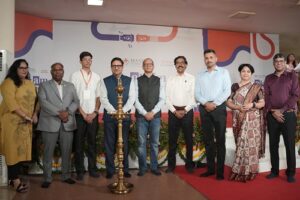
Manipal University Jaipur (MUJ) hosted Ekam 2026, a vibrant in-person engagement event that brought together its online learners from across India and abroad, offering them a rare opportunity to connect with peers and faculty members on campus.   Dignitaries present in the lamp lighting ceremony of EKAM 2026 at Manipal University Jaipur A total of 497 students enrolled this academic year in various online programmes including MBA, MCA, BCA, BBA, BCom, MCom, MA-JMC, M.Sc. Mathematics, and MA Economics, participated in the one-day annual event. Designed as an interactive platform, Ekam aims to foster collaboration, networking, and holistic development among online learners. The programme commenced with a traditional lamp-lighting ceremony, symbolising the pursuit of knowledge and enlightenment. The occasion was graced by Dr. N. N. Sharma, President, MUJ; Dr. Amit Soni, Registrar; Dr. Nitu Bhatnagar, Provost; Dr. Mallikarjuna Gadapa, Director, Centre for Distance and Online Education (CDOE); and Mr. Ambrish Sinha, CEO, UNext Learning Pvt. Ltd., along with the first registered learner for the event. Addressing the gathering, Dr. Mallikarjuna Gadapa expressed appreciation for the enthusiastic participation of students and described Ekam as a significant milestone in the online learning journey. He highlighted that the event provides learners with an opportunity to experience the university environment firsthand while gaining fresh perspectives beyond virtual classrooms. Welcoming the participants, Dr. N. N. Sharma, President, Manipal University Jaipur announced new initiatives for online students, including a Campus Immersion Program and Research Mentorship. These initiatives aim to enhance students’ academic exposure, strengthen research capabilities, and provide practical learning opportunities. He also emphasised on the opportunity for the learners in the campus immersion program in the world class Bloomberg lab here in the MUJ campus. Dr. Sharma said that the online learners are an integral part of Manipal fraternity. The event featured a range of activities that encouraged interaction and creativity. Students and faculty members showcased their talents through music, dance, theatre, and poetry performances, creating an engaging and inclusive atmosphere. Participants also engaged in meaningful face-to-face discussions with faculty, enriching their academic journey. The event concluded with a vote of thanks delivered by Dr. Kasinathan S, Deputy Director, CDOE, who expressed gratitude to all participants and dignitaries for making the programme a success. To know more about Manipal University Jaipur please visit: www.jaipur.manipal.edu.

'Ekam 2026' Brings Online Learners Together at Manipal University Jaipur Read More »

Tiger Shroff Invests in 'Breez by Danube,' Reinforcing Strong Global Confidence in Dubai Real Estate

Bollywood actor Tiger Shroff has invested in an apartment at ‘Breez by Danube,’ a premium waterfront residential tower by Danube Properties, founded by Rizwan Sajan, Founder and Chairman of the Danube Group. This investment further highlights Danube’s rising status as a preferred destination for global celebrities and investors.   Bollywood actor Tiger Shroff has invested in an apartment at ‘Breez by Danube,’ a premium waterfront residential tower by Danube Properties   Breez By Danube is a premium residential project located in Dubai Maritime City – one of the city’s emerging waterfront destinations. The development is known for its uninterrupted views of the sea and Dubai skyline, its close proximity to Dubai’s key landmarks, its fully furnished modern apartments, and its offering of 40+ amenities. Tiger Shroff’s investment reflects growing confidence in Dubai’s real estate market, particularly among high-profile international buyers seeking both an elevated lifestyle and long-term returns. Commenting on the investment, Rizwan Sajan, Founder and Chairman of Danube Group, said, “We’re delighted to welcome Tiger Shroff to the Danube family. His investment in Breez reflects the strong trust global personalities place in both Danube and Dubai, as well as our commitment to delivering quality homes with exceptional value. Breez is strategically positioned to make real estate ownership more accessible through our signature 1% payment plan, zero-interest charges, and fully furnished apartments in a prime location.” Sharing his perspective, Tiger Shroff said, “Dubai has always impressed me with its energy, lifestyle, infrastructure, and growth potential. When I was looking to invest in the city, I knew Breez by Danube would be the right choice. It offers a unique opportunity to own a part of Dubai’s future, especially as demand for prime waterfront properties continues to rise. I am truly happy to call Breez by Danube and Dubai my second home.” Dubai continues to attract global attention due to its strong economic fundamentals, investor-friendly policies, and world-class infrastructure. With consistent growth, high rental yields, and a tax-efficient environment, Dubai presents a compelling proposition for both end-users and investors. About Danube Properties Danube Properties, a subsidiary of the Danube Group founded in 1993 by Rizwan Sajan, is among the UAE’s leading private real estate developers. Known for pioneering the 1% payment plan, the company delivers fully furnished apartments complemented by over 40 lifestyle amenities, supported by a strong track record of quality construction and timely delivery.

Tiger Shroff Invests in 'Breez by Danube,' Reinforcing Strong Global Confidence in Dubai Real Estate Read More »

Blue Blocks Montessori School — India's Only School at the 30th AMI Montessori Congress — Presents Alongside Dr. Gabor Mate and Dr. Adele Diamond

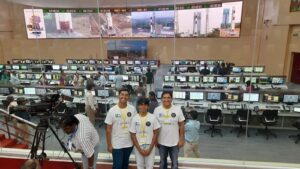
Blue Blocks Montessori School and Blue Blocks Micro Research Institute, based in Tellapur, Hyderabad, will present at the 30th International AMI Montessori Congress 2026 — taking place May 1–4, 2026 at the Centro Internacional de Congresos, Merida, Yucatan, Mexico. The congress is the triennial global conference of the Association Montessori Internationale (AMI), the organization founded by Dr. Maria Montessori in 1929.   Blue Blocks Montessori School students and founder Pavan Goyal at ISRO Mission Control during the PSLV-C62launch of their student-built satellite, January 2026 Co-founders Pavan Goyal and Munira Hussain will lead an official breakout session at the congress on May 3rd — the same day that Dr. Adele Diamond (Canada Research Chair Professor of Developmental Cognitive Neuroscience, University of British Columbia) delivers her keynote address. The congress also features Dr. Gabor Maté (Order of Canada, New York Times bestselling author of The Myth of Normal) as opening keynote and workshop leader, Dr. Angeline Stoll Lillard (Professor of Psychology, University of Virginia; author of Montessori: The Science Behind the Genius), and AMI President Professor Alain Tschudin (UNESCO Gandhi-Montessori-Luthuli Chair on Education for Peace, Stellenbosch University). Blue Blocks Montessori School is the only school from India represented as speakers at this congress, one of only two Indian voices at a global gathering spanning speakers from over 15 countries. Official Breakout: Montessori and Innovation: A Design Thinking Workshop for a Changing World On May 3rd, 2026, from 12:00 to 13:00, Pavan Goyal and Munira Hussain will lead the session ‘Montessori and Innovation: A Design Thinking Workshop for a Changing World’ — confirmed on the official AMI Congress programme at montessoricongress2026.org/program. The session is listed alongside breakout sessions by Junnifa Uzodike and Simone Davies (co-authors of The Montessori Baby and The Montessori Child, translated into over 30 languages). The session combines a presentation on how Montessori pedagogy builds innovative capacity across the developmental continuum with a hands-on Design Thinking workshop where educators and students practise together as active collaborators. Participants — both adults and young learners — work through empathy, ideation, and prototyping in real time. The session draws on Blue Blocks Micro Research Institute’s 19-year longitudinal data panel of 1,047 Indian children across the AMI Montessori continuum from birth to 18 years — the only data panel of its kind in India. The pre-registration for this congress presentation is published with open access on OSF (DOI: 10.5281/OSF.IO/ST9H2). “The session demonstrates the Blue Blocks approach in real time,” said Pavan Goyal. “Children are not just capable of learning — they are capable of designing, constructing, creating, innovating, and inventing. Not someday. While still at school.” Blue Blocks Adolescents at the Congress Blue Blocks adolescents will also be present at the congress, sharing the story of SBB-1 — the CubeSat satellite payload designed and built entirely by school-age students at Blue Blocks — alongside presentations by adolescents from Montessori schools worldwide. SBB-1 received formal authorization from the Indian National Space Promotion and Authorization Centre (IN-SPACe), Department of Space, Government of India, under reference PMA/IN-SPACe/AUTH/2026/115 — the first such authorization issued for a payload whose primary engineering authorship sat with school-age learners. The payload was integrated with ISRO’s PSLV-C62 launch vehicle. The launch experienced an anomaly during the ascent phase on January 12, 2026, and the payload was lost along with the rest of the manifested cargo, through no fault in the SBB-1 hardware, which had completed its full qualification campaign. Blue Blocks treated the loss not as a programme failure but as a documented research protocol. Three independent observation streams were active across the build and launch period: the engineering record, the learner-development record tracking how adolescents processed a public and irreversible loss, and the programme-level record. Blue Blocks Micro Research Institute holds the position — explicitly and on the record — that an educational programme whose outcomes are inadmissible to failure cannot be a serious vehicle for adolescent development. At the congress, Blue Blocks formally announces SBB-2 — the second-generation student-built satellite payload. SBB-2 will be designed by the next adolescent cohort, with SBB-1 alumni serving as mentors and reviewers. Three methodological improvements distinguish SBB-2: an external academic partner involved from the concept phase, a pre-registered observation protocol with an external co-investigator, and an independently auditable data pipeline for any on-orbit data received. The student presentation also highlights additional innovation outcomes: five patents filed by school-age children in drone design, dedicated to Dr. Maria Montessori on her 150th birthday, and ongoing work in biomimicry, space education, and autonomous vehicle systems — all designed and built by students within the AMI Erdkinder framework. “These are not students presenting a school project,” said Munira Hussain. “They are the engineers who designed, prototyped, tested, and built a satellite payload that received formal authorization from the Government of India. They are presenting their own work, in their own words, to the world’s foremost Montessori community.” About Blue Blocks Montessori School Blue Blocks Montessori School, established in 2005 in Hyderabad (Gachibowli and Tellapur campuses), offers a Montessori continuum from birth to age 18 with the highest concentration of AMI-trained guides of any school in India. Founder Pavan Goyal holds AMI international diplomas at all four developmental levels (0–3, 3–6, 6–12, and 12–18) — the first person globally to hold this combination. Co-founder Munira Hussain is an AMI Auxiliary Trainer holding AMI diplomas for the 3–6 and 6–12 levels. Together, they have over 19 years of experience and have worked with more than 45,000 parents worldwide. Blue Blocks is listed on the Association Montessori Internationale website — the only school to receive a hyperlinked listing. Pavan Goyal serves as a Trustee of the Indian Montessori Foundation (IMF) and leads the AMI Bold Goal Movement’s research initiative. About Blue Blocks Micro Research Institute Blue Blocks Micro Research Institute is India’s only K–12 institution functioning as an independent research publisher. The institute has published 30+ open-access research records on Zenodo, OSF, SSRN, and Harvard Dataverse, and maintains a longitudinal observational data panel spanning 19 years and 1,047 Indian children across the

Blue Blocks Montessori School — India's Only School at the 30th AMI Montessori Congress — Presents Alongside Dr. Gabor Mate and Dr. Adele Diamond Read More »

Science Meets Compassion in Lucknow, India's Model City for Street Dog-community Coexistence

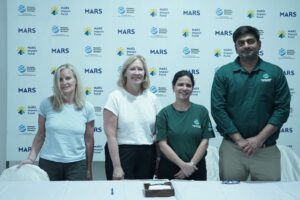
Today, representatives from the Mars Impact Fund, the philanthropic entity of Mars, Incorporated, a global pet care, snacking, and food company, visited (1)Humane World for Animals India’s Animal Birth Control centre in Lucknow to observe the city’s integrated humane street dog management and community engagement program. The visit showcased how dog sterilization and anti-rabies vaccination initiatives can flourish through strong community engagement, a key factor in Lucknow’s prominence as a model city for humanely managing street dog populations, reducing conflict and promoting human-dog co-existence in India.   Mars Impact Fund, the philanthropic arm of Mars, Inc., visited Humane World for Animals India’s Animal Birth Control centre in Lucknow   In India, millions of street dogs live in close proximity to people, which can present a complex urban challenge. The program model emerging from Lucknow demonstrates that when science-led strategic solutions are combined with compassion and community ownership, there is a replicable pathway for cities seeking effective, lasting and humane solutions to human-dog conflict.   What sets this approach apart is its emphasis on communities and street dog caregivers as active participants in the solution, not just beneficiaries. Community volunteers, residents, Resident Welfare Associations and community dog caretakers play a central role, from monitoring street dogs to managing designated feeding zones and collaborating with field teams to identify unsterilized dogs. Today, more than 475 Abhay Sankalp societies—local resident groups formed to support humane street dog management and coexistence— are active across the city, bringing together over 15,000 community members.   This Humane World for Animals program is supported by the Mars Impact Fund, which is helping strengthen community-led approaches to companion animal welfare in urban India. Since its inception, the program has sterilized and vaccinated over one lakh street dogs, achieving more than 80% sterilization coverage in the city. Notably, 25% of these efforts have been enabled through community participation, reflecting a growing shift towards shared responsibility in humanely and sustainably managing street dog populations.   During their visit, members of the Mars team also interacted with community members and volunteers directly involved in the program, gaining insight into how local participation is shaping outcomes. The visit included a dog behavior awareness workshop with children, offering a glimpse into how early education helps to explain dog behaviour, reduce fear-driven responses, prevent conflict, and foster empathy and safer interactions between people and animals.   “Witnessing the Lucknow program firsthand is a powerful reminder of what’s possible when science, compassion, and community come together. This is exactly the kind of sustainable, scalable impact we aim to support through the Mars Impact Fund. Humane World for Animals India has created a replicable model that not only improves the welfare of street dogs but also strengthens the bond between people and pets. At Mars, we believe in creating a better world for pets, and this program is a perfect example of how we can achieve that by empowering local partners to drive meaningful change from the ground up,” said Michelle Grogg, Executive Director, Mars Impact Fund.   Keren Nazareth, senior director, Companion Animals and Engagement, Humane World for Animals India, said, “Lasting change for street dogs is as much about people as it is about dogs. While interventions like sterilization and vaccination remain critical, when community residents are informed, involved and supported, they become the strongest drivers and agents of coexistence. The Mars Impact Fund‘s support allows us to deepen that engagement on the ground and build solutions that are humane and sustainable.”   Facts: Humane World for Animals India, in collaboration with the Lucknow Nagar Nigam in Uttar Pradesh, started the ABC program in Lucknow in 2019. More than one lakh dogs have been sterilized so far. Chitti, the 100,000th community dog sterilized under the program, was found by a resident volunteer injured on the street and brought to the Lucknow facility. Each week, 250-300 dogs are sterilized, vaccinated and released back to their original locations. The initiative is supported by a team of over 30 trained staff members, six vehicles and a strong network of community volunteers. A monitoring survey in December 2024 found that 84.3% of Lucknow’s street dogs have been sterilized and vaccinated. Over 31,000 public concerns related to street dogs were effectively addressed through humane interventions such as sterilization, vaccination and community awareness. The Mars Impact Fund was launched in 2026 as an $85 million global fund dedicated to complement the company’s existing sustainability and philanthropic efforts with long-term, strategic investments that strengthen communities, advance scientific opportunity and improve companion animal wellbeing. The fund builds upon Mars long-standing global partnership with Humane World for Animals, and its support for the organization’s programs in India began in 2020. ​ Humane World for Animals (formerly known as Humane Society International) works in India and across the globe to improve the welfare of street, community and companion dogs and cats. We promote humane, sustainable approaches to reduce street animal populations and support peaceful coexistence with people, offering solutions in place of lethal or inhumane methods. Since 2013, more than 400,000 street dogs have been sterilized and vaccinated in India through Humane World for Animals’ programs. The charity’s street dog programs, in addition to its work to increase access to care for companion animals in underserved communities, help people care for their animals and prevent cruelty and abandonment, is advanced in North America, South Africa, Mexico, India, Chile, Costa Rica, Romania and Bolivia.   About Humane World for Animals Together, we tackle the root causes of animal cruelty and suffering to create permanent change. With millions of supporters and work happening in over 50 countries, Humane World for Animals—formerly called Humane Society International—addresses the most deeply entrenched forms of animal cruelty and suffering. As the leading voice in the animal protection space, we work to end the cruelest practices, care for animals in crisis and build a stronger animal protection movement. Driving toward the greatest global impact, we aim to achieve the vision behind our name: a more humane world. For more information,

Science Meets Compassion in Lucknow, India's Model City for Street Dog-community Coexistence Read More »

Why VinFast VF MPV 7 Just Works for Indian Families: More Room, Less Running Cost

Let’s be honest. Buying a family car is almost never just about the transaction and the price tag on day one. It is more like signing up for a long relationship. You live with the car every day, in traffic, on highways, during school runs, grocery runs, wedding trips, and those “let’s just go for a drive” evenings. That is where the recently launched VinFast VF MPV 7 tries to make its case, quietly building its appeal once you start thinking about real life.   With generous space, smooth electric driving, free charging, and low upkeep, the VinFast VF MPV 7 fits right into everyday family life while quietly cutting down what you spend over time A car that gets how Indian families travel Picture this. A Sunday trip. Two kids in the back, parents in the front, maybe grandparents joining in, and somehow three extra bags that no one remembers packing. That is a normal day here in India. But with the VF MPV 7, you will feel like it is built exactly for that kind of chaos, starting with its long 2,840 mm wheelbase, which is basically the reason everyone gets more legroom to stretch out. The third row is not just there for show either. It is actually usable for adults, not the “only kids allowed” kind. For the cabin, you get 126 litres of boot space even with all seats up, and it can stretch all the way to 1,240 litres when you fold things down. That means groceries, luggage, random extra bags, everything just fits without a puzzle. The overall size, 4,740 mm long and 1,872 mm wide, gives it proper road presence without feeling too bulky to handle in city traffic. Now add the EV bit into this. No engine noise humming in the background, no shaking when you are crawling through traffic, and no fuel smell sneaking into the cabin. It is quiet and smooth, almost like the car is just gliding along. The automatic AC with PM 2.5 air filter is one of those things you do not think about much, but cleaner air inside the cabin can and will make long drives feel less tiring, especially for kids and older passengers. The MPV 7 comes with a 60.13 kWh battery that delivers a range of up to 517 km on a full charge, which means you are not constantly worrying about charging every other day. For daily city use and even weekend trips, that is more than enough. And when you do need to charge, fast charging can take the battery from 10 percent to 70 percent in about 30 minutes, which is roughly the time you would spend grabbing a coffee or having lunch anyway. Now comes the part people don’t talk about enough: the money after buying. Here is where things get real. The VF MPV 7 is not trying to win by being the cheapest car upfront. But owning a car is like a monthly subscription. Fuel, servicing, small fixes, it all adds up. With this one, a lot of that pressure just drops. One of the biggest cost pressures the MPV 7 removes is fuel spending, since charging is free on the V-Green network till March 2029. That means your day-to-day driving cost can drop massively. That also means the next time you hear someone complaining about rising fuel prices, you can confidently say, “Oh, really, I didn’t notice since switching to an EV.” No more checking fuel prices before planning a trip. No more mental math at petrol pumps. You just plug in and move on. Over time, that saving can reach thousands, even tens of thousands of rupees. If you are switching to a MPV 7 from a petrol or diesel car, VinFast also offers a financial support of nearly INR 200,000, combined with an extra 3% discount thanks to the Trade Gas for Electric program running until the end of April, which helps bring down the effective cost even more. Maintenance is another area where things feel lighter. You get 3 years of free maintenance, and after that, EVs are just simpler machines. Fewer moving parts means fewer things to wear out. What’s more, you can sleep peacefully after buying the VF MPV 7 with its industry-leading warranty: a 10-year battery warranty, 7-year vehicle warranty, 5-year suspension warranty and 7-year paint warranty. It means you are not constantly worrying about big repair bills. There is also roadside assistance for 7 years and additional coverage for key components, which means fewer “what if” moments. And then there is the buyback promise of up to 75 percent, so you know your car will still hold value down the line instead of dropping off a cliff, which is admittedly one of the perceived weaknesses of EVs right now. Easy to drive, easy to live with Despite being a big family car, the VF MPV 7 is not intimidating to drive. The motor puts out 150 kW of power and 280 Nm of torque, which is more than enough for city runs and highway overtakes. It can go from 0 to 100 km/h in under 10 seconds, so it never feels slow or heavy. At the same time, the power delivery is smooth, which makes it friendly even for drivers who are new to EVs. Little things also make a difference. The 10.1-inch infotainment screen with Android Auto and Apple CarPlay keeps things familiar. Features like keyless entry, electronic parking brake, and even a “Camp mode” that keeps the AC and lights running while you relax inside, these are the kinds of touches that make the car feel modern without being complicated. As you can see, the VF MPV 7 is not the kind of car that shouts for attention. It does not try to win with flashy tricks or super aggressive pricing. Instead, it slowly makes sense the more you think about it. More space, smoother drives, lower running cost, and fewer headaches over time. It

Why VinFast VF MPV 7 Just Works for Indian Families: More Room, Less Running Cost Read More »

Euronics Concludes ECCL Season 3, Bringing 200+ Companies Together Through Sport-Led Workplace Engagement

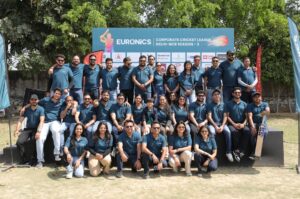
Euronics India has wrapped up Season 3 of the Euronics Corporate Cricket League (ECCL), bringing together over 200 companies across Hyderabad, Bengaluru, Delhi NCR and Mumbai in a growing sport-led initiative focused on workplace engagement and cross-industry collaboration.   Viknesh Jain & Abhishek Jain with the Euronics Team at ECCL Season 3   At a time when the popularity of the Indian Premier League has reinforced cricket’s ability to bring people together across cities, industries and communities, corporate cricket leagues are emerging as a new way for brands and businesses to create stronger employee engagement and industry relationships. In India, cricket has increasingly moved beyond being just a sport to becoming a platform for connection, identity and shared experiences, and ECCL reflects that same shift within the corporate ecosystem. The Mumbai leg marked the culmination of the multi-city tournament, featuring 24 teams competing across 23 matches. Over the season, ECCL saw participation from companies spanning real estate, architecture, design and allied corporate sectors, with 20 to 50 organisations participating in each city edition. Leading brands such as K Raheja Corp, Sobha Limited, CBRE, Prestige Group, Colliers, Knight Frank, Cushman & Wakefield and Space Matrix were among the participants. Moving beyond conventional networking formats such as meetings, exhibitions and conferences, ECCL is positioned as a sport-led platform that enables professionals to build relationships outside formal business settings. By bringing teams together on the field rather than across boardrooms, the initiative creates a more informal and collaborative environment for engagement across the ecosystem. Delhi NCR saw the highest participation with 48 teams, where Design Forum International emerged as champions and Proion Consultants finished as runners-up. In Bengaluru, Team Zyeta secured the title, with Team CBRE as runners-up, while Hyderabad hosted 16 teams, with RK Interiors CFS (India) Pvt Ltd emerging as champions and Interia finishing as runners-up. The Mumbai finale saw Architect Hafeez Contractor crowned champions, with HOSMAC India Pvt. Ltd. finishing as runners-up. Speaking on the conclusion of Season 3, Viknesh Jain said: “Cricket has always had a unique ability to bring people together in India and the IPL has shown how the sport can create a sense of community, identity and engagement far beyond the game itself. ECCL brings that same spirit into the corporate world. What started as a cricket tournament has steadily evolved into a platform where professionals step away from formal roles, connect more openly and build stronger business relationships. The scale we are seeing today, with participation from over 200 companies across four cities, reflects a growing need for more human, experience-led ways of building business ecosystems.” Abhishek Jain added: “What makes ECCL work is the shift in context. When architects, developers, consultants and corporate teams come together on the field, conversations change and hierarchies dissolve. It creates a more natural way for people to connect, which is often difficult to achieve in formal business environments. Increasingly, brands are recognising that cricket can be a powerful platform not only for visibility, but also for building stronger communities within and around their organisations.” Over three seasons, ECCL has steadily evolved into a platform that brings together diverse industry voices through shared experiences, reinforcing Euronics’ focus on building communities alongside its core business.

Euronics Concludes ECCL Season 3, Bringing 200+ Companies Together Through Sport-Led Workplace Engagement Read More »

Indian Peacock Brings Handloom into Everyday Fashion to Support Artisan Livelihoods

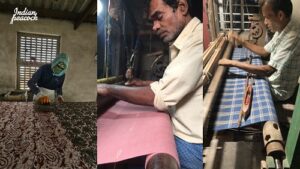
Indian handloom weavers, masters of generational craft, were being written out of their own story. Their textiles ended up in museums or marked “ethnic wear,” while their livelihoods grew uncertain and their knowledge faced quiet extinction   The hands behind every Indian Peacock piece     Not because the craft wasn’t valuable. Because the path from loom to life had too many barriers. Indian Peacock attempts to bridge these gaps through direct collaboration. Founded by architect Preethi Pathireddy, The Indian Peacock is where her decade-long journey in architecture meets her deep-rooted love for texture, form, and cultural heritage. An Ivy League alumna, Preethi has always been intuitive in her design approach, drawing connections between structure and softness, craft and utility. What began as a personal exploration of India’s textile legacy soon grew into a brand committed to slow fashion and conscious living. We collaborate with handloom artisans across India. Jamdani weavers of West Bengal, Ikat weavers of Telangana, handblock print artisans of Rajasthan, and Mangalgiri weavers of Andhra Pradesh. They are not vendors, but partners. We know their craft, their processes, and their stories. We support them with fair wages, and consistent work, not just seasonal demand. This isn’t about “modernizing” traditional craft. We do something simple: we make their work wearable for everyday life. We design structured shirts, versatile kurtas, and thoughtfully made coord sets for everyday wear. We don’t approach craft as fusion or occasionwear. Our intent is to bring handwoven textiles into the rhythm of life, to be worn often, lived in, and relied on. Because craft survives not through occasional admiration, but through relevance and consistent use. A handwoven garment becomes something you reach for week after week. Instead of a mass-produced alternative, it creates quiet continuity. It keeps looms active, skills relevant, and livelihoods steady. Handloom survives not through admiration or occasional wear, but through everyday choices that keep the craft alive, relevant, and in motion. This is how we reclaim the narrative: by putting artisan craft back to where it’s always belonged. Indian Peacock isn’t rescuing artisans, they need markets, respect, and fair economics. We’re providing that. We’re not preserving tradition in amber. We’re proving it’s alive and necessary. Every garment carries the maker’s presence. Every collection starts with the textile, not the trend. Every decision asks: does this serve the craft and the craftsperson? Because when Indian textiles move from heritage looms to modern streets, wearing the artisan’s dignity along with their weave, the story becomes theirs again. This work extends beyond the loom. In our Hyderabad studio, every garment moves through the hands of a team that cuts, stitches, and finishes each piece with the same attention to detail the textile began with. Craft does not exist in isolation, and neither do we. Fair wages, consistent work, and a supportive environment are principles we apply across everyone involved in the process, not just in idea, but in practice. And we’re just here to make sure it gets told, thoughtfully, consistently, and with the care of a team that believes in it.  

Indian Peacock Brings Handloom into Everyday Fashion to Support Artisan Livelihoods Read More »

SIMATS Breaks Into Asia's Top Tier: Outperforms Established Institutions on Research Impact in THE Asia Rankings 2026

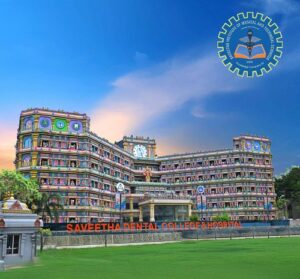
Saveetha Institute of Medical and Technical Sciences (SIMATS) has delivered a decisive and high-impact performance in the Times Higher Education (THE) Asia University Rankings 2026, securing a Top 150 position in Asia (Rank 128)—a milestone that places it firmly among the continent’s emerging academic powerhouses. In a ranking landscape traditionally dominated by long-established institutions from China, Japan, Singapore, and Hong Kong, SIMATS has not merely entered the conversation—it has disrupted it with measurable, data-backed excellence.   SIMATS Breaks Into Asia’s Top Tier: Research Impact Drives Growth Benchmarking Against Asia’s Best: A Standout in Research Impact While many legacy institutions rely on historical prestige, SIMATS’ performance is driven by contemporary academic strength, particularly in research influence, with a research quality score of 90.7 that places it in a rarefied bracket of Asian universities demonstrating near-elite citation impact, often rivaling and exceeding far older institutions. Its international outlook score of 71.8 reflects strong global engagement, cross-border collaborations, and international academic visibility, while an overall score of 52.0, securing Rank 128 in Asia among nearly 1,000 universities, highlights balanced excellence across teaching, research, and industry engagement. A Data-Driven Disruption in Asian Higher Education The THE framework evaluates universities across 18 calibrated performance indicators, making this achievement statistically robust and globally comparable. SIMATS’ exceptional research quality score underscores high citation density per publication, the global relevance of its research outputs, and strong recognition within the international academic community, positioning the institution alongside top-tier Asian research universities as a serious contender rather than merely an emerging player. Outpacing the Conventional Growth Curve SIMATS represents a new model of institutional excellence in Asia through rapid yet structured academic scaling, the translation of research output into real-world impact, and the integration of multidisciplinary domains such as health sciences, engineering, and technology into a unified research ecosystem. Unlike institutions that have evolved over centuries, SIMATS demonstrates how strategic focus and execution can accelerate growth without compromising quality or credibility. Strategic Positioning: From Participant to Contender The university is undergoing a significant transformation, evolving from a high-performing national institution into a globally competitive Asian university, shifting from volume-driven output to impact-driven research leadership, and expanding from regional engagement to strong international academic integration. Leadership Perspective Dr. Ashwani Kumar, Vice Chancellor of SIMATS, stated, “Our focus has never been on incremental progress—it has been on building an institution that can stand shoulder-to-shoulder with the best in Asia. This ranking validates that approach. We are not benchmarking ourselves locally; we are benchmarking globally—and delivering.” The Road Ahead  Building on this strong foundation, SIMATS is strategically advancing toward a Top 100 position in Asia, expanding global research collaborations and high-impact co-authored publications, strengthening innovation ecosystems connecting academia, healthcare, and industry, and scaling AI-driven academic and research infrastructure. About SIMATS Saveetha Institute of Medical and Technical Sciences (SIMATS), Chennai, is a leading multidisciplinary university recognized for high-impact research, innovation-driven education, and global engagement. With a clear vision to redefine academic excellence in Asia, SIMATS continues to emerge as a next-generation global university.

SIMATS Breaks Into Asia's Top Tier: Outperforms Established Institutions on Research Impact in THE Asia Rankings 2026 Read More »

दिनेश हिंगू

86 साल की उम्र में काम करने को मजबूर दिनेश हिंगू, झेल रहे हैं बड़ी परेशानी

एक्टर दिनेश हिंगू एक बेहद ही फेमस बॉलीवुड के कॉमेडियन रह चुके हैं। जोकि कम से कम 300 फिल्मों में काम कर चुके हैं। लेकिन इन सबके बावजूद वो 86 साल की उम्र में जिंदगी गुजारने के लिए काम करने को मजबूर हो रहे हैं। दरअसल सोशल मीडिया पर एक वीडियो वायरल हो रहा है, जिसमें एक्टर दिनेश ये बताते हुए दिखाई दे रहे हैं कि डॉक्टर के पास जाने के लिए उन्हें पैसों की जरूरत है। इसीलिए वो 86 साल की उम्र में काम के लिए मजबूर हैं। दिनेश हिंगू ने अपनी बात रखते हुए कहा, मैं 86 साल का हूं। कभी-कभी काम के लिए बाहर जाता हूं। हाल ही में गिर गया था, जिसके चलते चोट लग गई थी। अब ठीक है, लेकिन डॉक्टर के पास जाने के लिए पैसे चाहिए। डॉक्टर कभी 5 हजार मांगते हैं तो कभी 6 हजार। कैरेक्टर आर्टिस्ट्स को इतने पैसे नहीं मिलते हैं। वहीं, मैंने ब्लैंक एंड व्हाइट फिल्मों में काम किया है। गुजराती और राजस्थानी फिल्मों में भी काम किया है। एक्टर और कॉमेडियन ने अपनी बात करते हुए कहा कि इस उम्र में भी वो काम पर जाते हैं। डॉक्टर के पास जाने के लिए माल भी तो चाहिए। वो लूटते हैं। कभी-कभी जब काम पर बुलाया जाता है तो मैं जाता हूं। कैरेक्टर आर्टिस्ट को कोई ज्यादा पैसा नहीं देता है। आपकी जानकारी के लिए बता दें कि दिनेश हिंगू ने अपने करियर में बाज़ीगर, हेरा फेरी, नो एंट्री और कई अन्य हिट फिल्मों में काम किया है। उनकी कॉमिक टाइमिंग और अलग अंदाज ने उन्हें दर्शकों के बीच खास पहचान दिलाई। लेकिन उनकी मौजूदा हालत यह दिखाती है कि फिल्म इंडस्ट्री में लंबे करियर के बावजूद हर कलाकार को आर्थिक सुरक्षा नहीं मिल पाती।

86 साल की उम्र में काम करने को मजबूर दिनेश हिंगू, झेल रहे हैं बड़ी परेशानी Read More »

Sustainability is No Longer a Choice – It is a Collective Responsibility Says Dr. Payal Kanodia

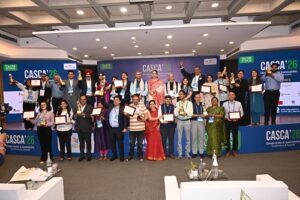
Reinforcing its commitment to advancing climate action and sustainability, M3M Foundation, under the leadership of Dr. Payal Kanodia, Chairperson & Trustee, co-hosted the second edition of the Climate Action & Sustainability Conference and Awards (CASCA’26) in collaboration with TheCSRUniverse at India International Centre, New Delhi, on the occasion of World Earth Day.   Dr. Payal Kanodia, Chairperson & Trustee, M3M Foundation, with the awardees at CASCA’26 Held under the theme “LiFE in Action: Powering India’s Sustainable Future & Net Zero Goals,” CASCA’26 brought together 250+ participants, 40+ speakers, and sustainability leaders from 18 states, creating a dynamic platform for dialogue, collaboration, and recognition of impactful climate solutions. The conference featured distinguished speakers including eminent environmentalist Peepal Baba, the Waterman of India Rajendra Singh, Dr. Vivek Kumar, Head, CRTD, IIT Delhi, along with policymakers, sector experts, and grassroots changemakers, who shared insights on advancing India’s climate agenda through innovation and community-led action. In her keynote address, Dr. Payal Kanodia stated, “Climate action must be rooted in ownership, not obligation. At M3M Foundation, we are building ecosystems where sustainability is led by communities themselves—especially women—who are not just participants but decision-makers. When climate solutions are localised, inclusive, and scalable, they create lasting impact far beyond policy frameworks.” CASCA’26 also recognised excellence in sustainability leadership. The conference received 56 nominations across diverse categories, out of which 18 organisations were honoured for their impactful contributions. Among the awardees, PAHAD Trust was conferred with the Editorial Choice Award, while Earthrakshak Foundation was recognised in the Waste Management and Circular Economy category. The conference hosted engaging panel discussions on climate-resilient agriculture, water security and conservation, circular economy and waste management, climate technology and innovation, renewable energy transitions, and pathways to achieving net-zero goals, fostering actionable dialogue across sectors. Adding to the platform’s collaborative strength, Ashish Jha, Founder, TheCSRUniverse, highlighted the importance of creating credible ecosystems that recognise and scale impactful sustainability initiatives, further strengthening CASCA as a national platform for climate leadership. Dr. Aishwarya Mahajan, Managing Trustee & President, M3M Foundation emphasised that climate change today intersects deeply with livelihoods, health, and economic resilience, highlighting the urgent need to take sustainable solutions to the last mile—into villages, farms, and communities. Demonstrating its on-ground impact, M3M Foundation continues to drive large-scale sustainability initiatives, impacting over 5 million lives across 22 states, 90+ districts, and 1,300+ villages. Its focused climate interventions are being implemented across 6 states Ladakh, Himachal Pradesh, Haryana, Madhya Pradesh, Gujarat, and Karnataka—covering 170+ villages across 8 districts and engaging 3,500+ farmers. With a strong emphasis on women-led climate leadership, the Foundation has enabled 2,200+ women farmers to adopt sustainable agricultural practices, while 450+ women have emerged as landowners, transforming rural decision-making and economic participation. Further strengthening sustainable agriculture, the Foundation has established 850+ Sankalp Vatikas and Sarvodaya Vatikas, promoting 100% chemical-free farming, improving health outcomes, and generating additional income for rural households. M3M Foundation’s environmental efforts also span water conservation, biodiversity protection, renewable energy adoption, and circular economy models, including the creation of 30 million litres of water storage capacity, plantation of 52,000+ saplings, and impacting over 3.1 million individuals annually through environmental programmes. As India accelerates towards its net-zero ambitions, CASCA’26 reinforced the importance of partnerships, innovation, and community-driven solutions. The conference stands as a testament to M3M Foundation’s continued efforts to translate sustainability into measurable, grassroots impact—building a more resilient and sustainable future for all.   About M3M Foundation M3M Foundation is the philanthropic arm of the M3M Group, working across education, health, livelihoods, sports, and environment. With a reach across 22 states and over 1,300 villages, the Foundation has positively impacted more than 5 million lives, driven by a vision of inclusive, sustainable, and transformative nation-building.

Sustainability is No Longer a Choice – It is a Collective Responsibility Says Dr. Payal Kanodia Read More »