kalabhumitalkies.com

newsvoir

International School of Design Receives Two National Awards at 15th National Education Excellence Conclave

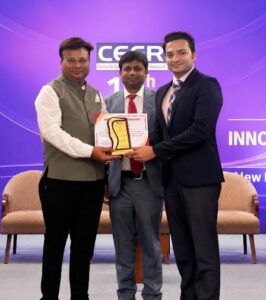
International School of Design (INSD), one of India’s Largest Design and Aviation Institute, received two prestigious awards at the 15th National Education Excellence Conclave, organised by the Centre for Education Growth and Research (CEGR) at Hotel Eros, New Delhi. At a distinguished ceremony attended by eminent personalities from the education, skilling and public policy sectors, INSD was recognised with two awards – “Best Design Institute in India 2026” and “India’s Most Promising Aviation Academy 2026” for its latest initiative, INSD Aviation.   Pranav Raaj Aggarwall receives the National Awards at the 15th National Education Excellence Conclave 2026   The event was attended by several distinguished dignitaries including Dr. Amit Dutta, Director, All India Council for Technical Education (AICTE); Dr. Alka Gurjar, Honourable Member of Parliament, BJP; Mr. Varun Tandan, CEO, Water Management and Plumbing Skill Council, and many other eminent personalities from the education and skilling sector. The prestigious awards were received by Mr. Pranav Raaj Aggarwall, Group CEO, International School of Design.   The “Best Design Institute in India 2026” award acknowledges INSD’s contribution to design education and its continued focus on developing skilled, industry-ready creative professionals. INSD has built its education model around skill-first learning, industry-driven curriculum, practical exposure, live projects, internships, portfolio development and career support. The institution offers programmes across disciplines including Fashion Design, Interior Design, Graphic Design, Jewellery Design, Animation & VFX, UI/UX, Textile Design, Photography, Beauty & Makeup and Luxury Education.   The second recognition, “India’s Most Promising Aviation Academy 2026”, was awarded to INSD Aviation, the latest initiative from International School of Design. The initiative marks INSD’s expansion of its skill-first education philosophy into air hostess training, cabin crew for business class training, hospitality, travel, retail and customer support, with a focus on creating professionally trained, industry-ready talent for these rapidly growing industries.   The institution today has a network of 75+ centres across 23 states and has trained more than 30,000 students. Its career ecosystem includes 500+ industry recruiters and placement partners, with INSD reporting a successful placement track record for thousands of students.   INSD students have gone on to work with leading organisations across design, fashion, interiors, jewellery, retail, technology and allied creative industries. Its industry and placement ecosystem includes names such as Lifestyle, Lenskart, Malabar Gold & Diamonds, Asian Paints, Lakmé, Gaurav Gupta, Jaipur Rugs and other leading brands. INSD provides students with career and placement support backed by practical training, live projects, internships, portfolio development and industry exposure. The highest salary package offered to INSD students has reached Rs. 18 lakhs per year (Rs 1 lac 50 thousand per month), reinforcing the growing career opportunities available to professionally trained creative talent.   Over its 15-year legacy, International School of Design has evolved from a design education institution into one of India’s largest networks for skill-based creative education, positioning itself as “India’s New Age Skill-School.” INSD has received multiple recognitions over the years for its contribution to design education and skill development, including recognition as the “Fastest Growing Design Institute in India” in 2023, presented by Shri Yogendra Upadhyay, Honourable Minister of Higher Education, Uttar Pradesh, and recognition for “Excellence in Design Education” in 2025by the Times of India Group. The two honours received at the 15th National Education Excellence Conclave 2026 — “Best Design Institute in India 2026” and “India’s Most Promising Aviation Academy 2026” — mark the next phase of INSD’s growth as it expands its skill-first education model beyond design into aviation, hospitality, travel, retail and other high-growth service sectors.   For more information, visit www.insd.edu.in.

International School of Design Receives Two National Awards at 15th National Education Excellence Conclave Read More »

Ai+ Smartphone Brings Flagship Innovation to Millions This Festive Season with Pulse 2 FE, NovaTab and LapTab

Ahead of Diwali, Ai+ Smartphone brings a festival of accessibility, expanding the ecosystem with new devices spanning smartphones and tablets  Sales go live on Flipkart at midnight on October 7   Ahead of the festive season Ai+ Smartphone today announced its portfolio expansion with the launch of Pulse 2 FE, NovaTab and LapTab, bringing three new technology experiences to consumers across communication, learning, entertainment and productivity.   Ai+ Smartphone brings a festival of accessibility, expanding the ecosystem with new devices spanning smartphones and tablets, Sale live on Flipkart midnight October 7   The launch comes at a time when consumers across India are preparing for one of the year’s biggest periods for technology purchases, upgrades and gifting. With the new portfolio, Ai+ Smartphone is expanding the choices available to consumers across different needs and price segments from someone purchasing their first smartphone to students looking for a connected learning device and consumers seeking a larger screen that can move seamlessly between entertainment and productivity.   Each product has been built around a distinct consumer need. Pulse 2 FE, positioned as the “First Step to a Smarter World,” brings essential smartphone experiences to consumers entering or upgrading their digital journey. The launch also marks Ai+ Smartphone’s entry into the 5G tablet category and the next phase of its connected ecosystem strategy with NovaTab and LapTab. NovaTab brings 5G connectivity to a larger screen, with a strong focus on education and learning. LapTab, on the other hand, combines entertainment with productivity through a large 13.2 display, and supports stylus and an attachable keyboard that enables a laptop-like working experience.   Across the portfolio, Ai+ Smartphone brings together Android 16 with nxtQ OS, high-refresh-rate displays, large batteries and 4G/5G connectivity, with the aim of making relevant technology accessible to a wider set of consumers.   All three devices will go on sale on Flipkart from October 7, 2026, 11:59PM onwards, giving consumers new options as they upgrade their personal technology or choose devices for their families this festive season.   “The festive season is a time when millions of consumers make important technology choices whether it is their first smartphone, an upgrade, a device for education or something that brings work and entertainment together,” said Madhav Sheth, CEO, NxtQuantum Shift Technologies (Ai+ Smartphone). “With Pulse 2 FE, NovaTab and Nova Nova LapTab, we wanted to create products for these different moments without losing sight of accessibility. This is also an important step in taking Ai+ Smartphone beyond smartphones and building a connected technology ecosystem designed in India with the ambition to compete globally. As families prepare for Diwali, we want more consumers to have access to technology that adds meaningful value to their everyday lives.”   Ai+ Pulse 2 FE: First Step to a Smarter World Built around “First Step to a Smarter World,” Pulse 2 FE is designed for first-time smartphone users and consumers looking to upgrade this festive season. It combines a 6.67-inch 120Hz display, MediaTek G81 processor, 50MP AI camera, 5000mAh battery and IP64 protection, with 4GB RAM, 64GB storage expandable up to 1TB, and Android 16 with nxtQ OS. Available in Black, Blue, Green and Purple, it brings together the everyday essentials for a simple, dependable smartphone experience.   Ai+ NovaTab: A Bigger Screen for Smarter Learning Designed as an accessible 5G learning companion, NovaTab combines an 11.97-inch 90Hz display, 5G connectivity and an 8000mAh battery to give students a larger, connected canvas for classes, reading, research and entertainment. Powered by the T760 processor with 6GB/8GB RAM and 128GB storage, it also features dual speakers, 13MP and 8MP cameras, and Android 16 with nxtQ OS. NovaTab will be available in Dark Blue and Cinnamon Brown.   Ai+ Nova LapTab: From Entertainment to Productivity, in a Tap Nova LapTab brings entertainment and productivity together in one versatile 5G device. Its 13.2-inch 2.4K 90Hz display, stylus support and attachable keyboard allow it to move effortlessly from streaming and entertainment to note-taking, study and laptop-like productivity. Powered by the MT8755 processor with 8GB RAM, 128GB storage and a 10,000mAh battery, Nova LapTab also features quad speakers, 33W charging and Android 16 with nxtQ OS. It will be available in Teal Green and Dark Blue.   Pricing and Festive Availability Pulse 2 FE, NovaTab and Nova LapTab have been launched in India today, September 28, 2026. Ai+ Pulse 2 FE (4 GB/ 64 GB): INR 9,999 onwards Ai+ NovaTab (6 GB/ 128 GB): INR 17,999* (including bank offers) Ai+ NovaTab (8 GB/ 128 GB): INR 20,999* (including bank offers) Ai+ Nova LapTab (8 GB/ 128 GB): INR 24,999* (including bank offers) Ai+ Nova 2 Pro (6 GB/ 128 GB): INR 16,999* (including bank offers) Ai+ Nova 2 Pro (8 GB/ 128 GB): INR 17,999* (including bank offers) Ai+ Nova 2 Ultra (6 GB/ 128 GB): INR 18,999* (including bank offers) Ai+ Nova 2 Ultra (8 GB/ 128 GB): INR 19,999* (including bank offers) Ai+ Nova 2 Power (6 GB/ 128 GB): INR 15,999* (including bank offers) Ai+ Nova 2 Power (8 GB/ 128 GB): INR 16,999* (including bank offers)   All three devices will go on sale on Flipkart from October 7, 2026, 11:59PM onwards, in time for consumers looking to upgrade, gift or bring home new technology ahead of Diwali.   About Ai+ Smartphone Ai+ Smartphone is a next-generation brand built in India, delivering reliable and high-performance mobile experiences. Powered by NxtQuantum OS, India’s first sovereign mobile operating system. The brand focuses on delivering a clean design, ensuring long battery life, and maintaining trusted software performance, all while keeping prices accessible without compromising the user experience.   From redefining smartphones to pioneering AIoT products as part of the company’s Connected Ecosystem, Ai+ Smartphone is creating a new standard for trust, immersive experience, and accessibility. Rooted in a privacy-first architecture and a commitment to equitable access, Ai+ Smartphone stands for more than specs — it stands for India’s next era of user-owned, future-ready technology.   About NxtQuantum Shift Technologies NxtQuantum Shift Technologies

Ai+ Smartphone Brings Flagship Innovation to Millions This Festive Season with Pulse 2 FE, NovaTab and LapTab Read More »

ARISE Learning Festival 2026 (In Collaboration with FICCI) Brings Together Education Leaders to Shape Connected, Future-ready Schools

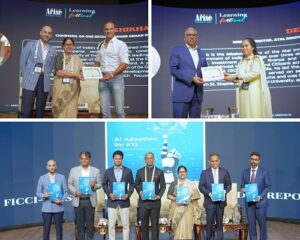
The Association for Reinventing School Education (ARISE), in collaboration with FICCI, concluded the ARISE Learning Festival 2026, bringing together school leaders, educators, policymakers, students, global experts and industry partners to exchange ideas, experiences and practices shaping the future of school education.   Highlights from the ARISE Learning Festival 2026—powerful conversations, distinguished voices, and the launch of AI Adoption for K-12: Moving Beyond Experimentation   Held around the theme ‘Connected Schools – Building Communities. Inspiring Futures,’ this year’s Festival was designed as an immersive, delegate-centred experience moving beyond a conventional conference format to combine school visits, keynotes and conversations with masterclasses, student voices, school showcases, partner and exhibitor engagements, peer learning and networking.   The Festival began with curated school tours across India on September 24 and across Delhi-NCR on September 25, offering delegates an opportunity to experience first-hand how schools are building collaborative cultures, strong communities and future-ready learning environments. The initiative brought together 6 host schools across India and 11 schools across Delhi-NCR*.   The learning continued at the Dr. Ambedkar International Centre, New Delhi, through interactive masterclasses and breakout conversations spanning teacher development, school leadership, institutional culture, technology and AI, digital resilience, student wellbeing, curriculum leadership and future readiness.   A key knowledge outcome of the Festival was the launch of the FICCI–ARISE–EY-Parthenon Knowledge Report, AI Adoption Plan for K12: Moving beyond Experimentation, focused on enabling schools to move from experimentation with artificial intelligence towards more purposeful and responsible adoption.   Perspectives shaping the future of education Deepak Bagla, Mission Director, Atal Innovation Mission, NITI Aayog, shared perspectives on how schools can evolve from standalone innovation initiatives into connected ecosystems linking young people with creativity, entrepreneurship, problem-solving, partnerships and real-world opportunities. He highlighted the role of leadership and collaboration in embedding innovation more deeply within school culture.   Bringing a perspective from beyond education, Shikhar Dhawan, Chairman, Da One Group and former Indian international cricketer, drew upon his journey in high-performance sport, entrepreneurship and community initiatives to reflect on resilience, discipline, confidence and purpose. The conversation explored how schools and communities can create the conditions that help young people navigate challenges, build self-belief and translate their potential into meaningful achievement.   Patrick Derham OBE, former Head Master of Westminster School, Rugby School and Solihull School, drew on his extensive experience of school leadership to reflect on the fundamentals that continue to matter in education purpose, service, shared values, relationships and the strength of the school community. His reflections reinforced the importance of looking beyond academic outcomes to the broader role schools play in shaping young people.   Nikole Blanchard, Head of Educational Technology and Innovation, LSU Laboratory School, brought the conversation to the intersection of technology and humanity, highlighting the distinctly human capabilities young people will continue to need including curiosity, creativity, empathy, judgement, collaboration, courage and imagination as schools prepare students for an increasingly unpredictable future.   Students at the centre Student voice formed an important part of the Festival. A main-stage student panel brought together students from government and private schools to share their perspectives on learning, wellbeing, belonging, creativity, purpose and what they would like the next generation of schooling to look like. The conversation placed students not simply as recipients of education, but as important participants in shaping its future.   Students were also visible across the Festival through presentations and showcases, bringing their ideas, creativity and work directly into the delegate experience.   From conference to experience A defining feature of this year’s Learning Festival was its emphasis on participation and experience. The ARISE Experience Zone, school showcases, student presentations, partner and exhibitor engagements and interactive formats created opportunities for delegates to discover new practices and solutions, engage directly with innovators and connect with peers.   Across the programme, practitioners and experts also explored some of the most pressing questions facing schools today from the changing role of teachers and curriculum leadership to AI-enabled school management, career readiness, wellbeing, safeguarding and institutional culture.   Together, these formats sought to ensure that delegates did not simply listen to conversations about the future of education, but could experience ideas in practice, interact with those implementing them and build connections that could continue beyond the Festival.   Celebrating excellence in school education The Festival culminated with the 4th Edition of the FICCI supported ARISE Excellence Awards, celebrating exemplary and innovative practices across school education.   The Awards drew participation from schools across the country, with an almost equal representation of government and private schools, reflecting the breadth and diversity of India’s school education ecosystem. Entries underwent a structured evaluation process involving an Interim Jury followed by a Grand Jury, with EY serving as the official tabulator.   The Awards ceremony also saw the release of the FICCI-supported ARISE Excellence Awards Compendium, showcasing exemplary practices and initiatives from participating schools and enabling their learnings to reach the wider education community.   Speaking on the occasion, Dr. Arunabh Singh, President, ARISE; Co-founder & Director, Healthy Planet Schools & Nehru World School, said, “Connected schools are ultimately about people students, teachers, leaders and communities learning from and strengthening one another. Through the ARISE Learning Festival, we wanted to move beyond a conventional conference and create an experience where delegates could see, participate, exchange and connect. The diversity of voices represented this year from government and private schools to students, policymakers, experts and industry demonstrates the power of bringing the ecosystem together.”   The ARISE Learning Festival 2026 (in collaboration with FICCI) reinforced the need for schools to remain connected, adaptive and deeply human-centred as they prepare young people for a rapidly evolving world. By bringing together ideas, lived experiences and on-ground practices, the Festival sought to translate conversations about the future of education into opportunities for learning, collaboration and action. *List of ARISE host schools: For Delhi NCR, Host School are as follows: 1. Pathways World School, Gurugram, Haryana 2. Healthy Planet School, Noida, Uttar Pradesh 3. Khaitan World School, Ghaziabad, Uttar Pradesh 4. Heritage International Xperiential School,

ARISE Learning Festival 2026 (In Collaboration with FICCI) Brings Together Education Leaders to Shape Connected, Future-ready Schools Read More »

Ramaiah Memorial Hospital Brings 700+ Citizens Together to Put Heart Health in Motion

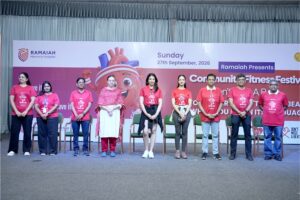
On World Heart Day, Ramaiah Memorial Hospital (RMH) brought together more than 800 citizens at its Community Fitness Festival, themed “Don’t Miss A Beat,” blending physical activity, cardiac health awareness, and hands-on CPR training to inspire people to make heart health part of their everyday routine.   Film Actresses Kavya Shetty, Shanvi Srivastava & Dr. Madan S Gaekwad – COO, Ramaiah Memorial Hospital and others participated in the heart care awareness programme organised by RMH   The morning event at Dwaraka Hall, Ramaiah Campus, was flagged off by Dr. Madan S. Gaekwad, Chief Operating Officer (COO), Ramaiah Memorial Hospital. Participants took part in Aerobics, Zumba, and Tai Chi sessions, stressing on the role of regular exercise in maintaining cardiovascular health.   The event was also graced by Kannada and Telugu film actresses Shanvi Srivastava and Kavya Shetty, who joined the initiative and urged citizens to prioritise fitness and heart health in their daily lives.   Moving beyond awareness, RMH’s medical experts led focused health sessions on cardiovascular wellness and conducted hands-on CPR training, equipping participants with the skills to respond confidently during a cardiac emergency. The festival concluded with a specially curated healthy-heart breakfast, reinforcing how everyday choices support long-term heart health.   Through the initiative, RMH brought preventive cardiac care into a community setting — encouraging citizens to stay active, understand their heart health, and be prepared to act when it matters most.   About Ramaiah Memorial Hospital Ramaiah Memorial Hospital (RMH), established in 2004, is a 500 bed, JCI-, NABH- and NABL-certified multi-disciplinary super specialty quaternary care hospital in Bengaluru, India. RMH received the Joint Commission International (JCI) Gold Seal of Approval in June 2025. The Gold Seal of Approval is a symbol of a healthcare organization’s commitment to meeting international standards of patient care and safety, demonstrating excellence in clinical quality, patient safety, and outcomes. In June 2025, RMH was also certified by the American Heart Association (AHA) as a Comprehensive Chest Pain Center and by the American Stroke Association (ASA) as a Comprehensive Stroke Center. The recent FACT (Foundation for the Accreditation of Cellular Therapy) accreditation of our Bone Marrow Unit and stem cell laboratory reflects our adherence to rigorous, peer-reviewed standards, ensuring the highest quality of patient care across the entire stem cell process—from collection and processing to administration and long-term follow-up.   Over the years, the hospital has touched the lives of over 5 million patients and performed more than two lakh surgeries. Its transplant milestones are close to 600 renal transplants, over 50 heart transplants, more than 210 bone marrow transplants, and liver transplant services initiated in 2025.   Ramaiah Memorial Hospital is affiliated with Mount Sinai International, New York from June 2024, marking a transformative collaboration focused on elevating healthcare through excellence in clinical care, quality, research, innovation, and technology.   Our Centers of Excellence, such as the Ramaiah Institute of Cardiac Sciences, Ramaiah Institute of Oncosciences, Ramaiah Institute of Nephro-Uro Sciences, Ramaiah Institute of Neurosciences, and the Ramaiah Institute of Gastro-intestinal Sciences are delivering comprehensive healthcare services under respective specialties along with other super-specialties.   RMH has received recognition from Newsweek as one of the World’s best hospitals in 2025. The ranking is based on hospital recommendations from peers, hospital quality metrics, patient experience, and PROMs implementation survey.

Ramaiah Memorial Hospital Brings 700+ Citizens Together to Put Heart Health in Motion Read More »

5 Reasons the VinFast VF MPV 7 Should be Your Top Choice for a Family MPV

The VinFast VF MPV 7 combines seven-seat practicality, family-friendly comfort, modern technology, and the lower running costs of an electric powertrain in one spacious package.   Seven-seat MPVs are popular for a reason. They give Indian families the flexibility to bring everyone along, whether it’s the daily school run, a weekend trip, or a longer journey out of town. But when all seven seats are occupied, comfort and practicality become just as important as having the extra seats in the first place.   The VinFast VF MPV 7 combines seven-seat practicality, family-friendly comfort, modern technology, and the lower running costs of an electric powertrain in one spacious package   If you’re looking for a family MPV that can handle all of that while giving you the benefits of an electric powertrain (less money spent on fuel, anyone?), the VinFast VF MPV 7 is worth a closer look. Here are five reasons why it deserves a spot on your family car shortlist.   Comfort for Everyone Let’s start with the most important thing in a family MPV: making sure everyone has a comfortable place to sit.   The VF MPV 7 measures 4,740 mm long and has a 2,840 mm wheelbase, giving it plenty of room to accommodate seven occupants. The second row gets 60:40 split seats with sliding, reclining, and one-touch tumble functions. Even the third row gets reclining seats, adjustable headrests, and its own air-conditioning controls.   That is complemented by air vents serving all three rows and a PM2.5 filter. So while the driver and front passenger get to set their preferred temperature, passengers further back are not simply left to whatever air happens to reach them.   The result is a cabin that puts some thought into the people sitting in every row, which is exactly what you want when the whole family is coming along for the ride.   Space That Works for the Family Of course, passengers are not the only things a family needs to carry. There are groceries, luggage, school bags, sports equipment, and all the other miscellaneous things that somehow find their way into the car but are surely very necessary.   The VF MPV 7 gives you 126 litres of boot space with all seven seats in use. Fold the third row and that expands to 606 litres, while folding both rear rows opens up as much as 1,240 litres.   The second row’s sliding and one-touch tumble functions also make getting into the back easier and give you more ways to configure the cabin. Whether you have seven people on board or need to make room for a larger load, the VF MPV 7 gives you the flexibility expected from a family MPV.   Smooth EV Performance Having seven seats is great, but that comes with more weight, meaning the car has to work harder to transport all seven passengers plus luggage. So you want a car that can move all those people without making every overtaking manoeuvre feel like hard work.   The VF MPV 7 is powered by a 150 kW electric motor producing 280 Nm of torque, with the power sent to the front wheels. The instant torque of an electric motor makes pulling away from traffic and getting up to speed feel smooth and straightforward.   You can also choose between Eco, Normal, and Sport driving modes, while regenerative braking can be adjusted between Off, Low, Medium, and High.   Underneath, the VF MPV 7 uses MacPherson independent suspension at the front and a multi-link setup at the rear. Its 185 mm of unladen ground clearance also gives it some extra breathing room when dealing with speed breakers and uneven roads that seem so ubiquitous these days.   Contemporary Tech The VF MPV 7’s modern cabin isn’t just for show either. There are plenty of features designed to make everyday driving a little easier.   The gear selector is integrated into the steering column, freeing up space around the centre console. The D-cut steering wheel is tilt- and telescopic-adjustable and comes with multifunction controls, including cruise control.   At the centre of the dashboard is a 10.1-inch infotainment screen with wired Apple CarPlay and Android Auto. The car also gets connected-car functions, smartphone controls, FOTA updates, and a virtual assistant to help with voice commands.   Safety was not overlooked either. The India-spec VF MPV 7 comes with four airbags, ABS, EBD, brake assist, electronic stability control, traction control, hill-start assist, and rollover mitigation. Rear parking sensors and a rear camera are also there to make parking a seven-seater in tighter spaces a little less stressful.   A Formidable Family Package All of this comes together with one of the biggest advantages of going electric: a different ownership equation.   The VF MPV 7 uses a 60.13 kWh usable battery and has a claimed 517 km range under the MIDC test cycle. When you do need to charge, DC fast charging at up to 80 kW can take the battery from 10% to 70% in 30 minutes.   VinFast also includes free scheduled maintenance for three years or 36,000 km, whichever comes first. Eligible V-Green charging stations provide free charging until March 31, 2029. The vehicle is covered for seven years or 160,000 km, while the battery gets 10 years or 200,000 km of coverage, whichever comes first. Free roadside assistance is also provided for the duration of the standard vehicle warranty.   More than anything, the VF MPV 7 has something for everyone in the family. The driver gets the smooth response of an electric motor and useful connected technology, passengers get space and dedicated climate control across all three rows, and the family gets a flexible cabin that can handle both people and cargo.   Add the long warranty, free maintenance, and complimentary charging at eligible V-Green stations, and the VF MPV 7 makes a compelling case for families looking to make the move to an electric seven-seater.   About VinFast VinFast (NASDAQ:

5 Reasons the VinFast VF MPV 7 Should be Your Top Choice for a Family MPV Read More »

Mumbai's Bystander Confidence Gap: 3 in 4 Mumbaikars Believe an AED is Only for Doctors, Fortis Hospitals Mumbai Survey Finds

Mumbai may have the willingness to help in a medical emergency, but a survey conducted by Fortis Hospitals Mumbai reveals a significant gap between willingness and the confidence to act. Findings from a survey of over 1,570 respondents released on the eve of World Heart Day 2026, conducted as part of Fortis Hospitals Mumbai’s Har Ghar Hero initiative, highlighted widespread misconceptions around CPR and use of automated external defibrillators (AEDs), limited awareness of publicly available AEDs and a lack of confidence in responding to cardiac emergencies.   The findings showed: 1. Training vs. Readiness Gap: 36% of respondents said they would not be able to perform CPR correctly without assistance, despite having received some form of prior training. It points to the need for regular revision and hands-on practice to ensure training translates into action during an emergency.   2. AED Confidence & Access Gap: 46% of respondents said they would not feel confident using an AED correctly even if the device was immediately available; and 23% were completely unsure about stepping in at all. 68% of respondents did not know where their nearest public AED was located. This lack of familiarity could result in critical delays during a cardiac arrest, when every minute can influence the chances of survival.   3. Community preparedness gap: 82% of respondents did not believe their neighborhood, workplace or housing society had enough people trained to respond to a medical emergency. 100% of respondents believed CPR & BLS training should be made compulsory in schools, colleges and workplaces   4. Misconceptions about who can act: 75% of respondents believed an AED is meant only for doctors. 32% of respondents believed a medical license is required even to attempt CPR. Overall, 75% of respondents believed one needs a medical degree to save a life during a cardiac emergency.   5. Fear of Legal Consequences: 32% of respondents were unaware of the legal protection available to Good Samaritans. It suggests greater public awareness of these protections could help reduce hesitation among potential bystanders.   Commenting on the findings and the Har Ghar Hero initiative, Dr S. Narayani, Regional Director-Operations, Fortis Hospitals Mumbai, said, “These findings are a call to action, not a statistic. Mumbai isn’t short on people willing to help, it’s short on the confidence that turns willingness into action. As a hospital network committed to the health of this city, we don’t see that as someone else’s problem to solve. Through our Har Ghar Hero initiative, our goal is simple: at least one trained responder in every household. That’s why we’re committing to train 2 lakh Mumbaikars in CPR by World CPR Day 2027; building a city where help is always closer than you think.”   Echoing the need for regular reinforcement of CPR skills, Dr Sandeep Gore, Director – Emergency Medicine, Fortis Hospital Mulund, said, “More than a third of respondents who’ve received CPR training say they couldn’t perform it correctly without assistance. This isn’t a training gap, it’s a confidence gap. In a cardiac arrest, hesitation costs lives. We need to move from ‘CPR-trained’ communities to ‘CPR-ready’ ones, where people have the skills, confidence and willingness to act when every second matters. That means revisiting and practising training regularly, so the response becomes instinct, not guesswork.”   Addressing the misconceptions around who can intervene during a cardiac emergency, Dr Amit Nabar, Director – Emergency Medicine & Community Medicine, S.L. Raheja Hospital – A Fortis Associate, Mumbai, said, “This is one of the most dangerous myths we encounter – that saving a life requires a medical degree. Three in four people think an AED is off-limits to anyone but a medic, and a third believe CPR requires a doctor’s license. In reality, both are designed for exactly the opposite; it is for the person standing next to the patient in that first critical minute, long before any doctor arrives. This belief alone costs the society lives.”   Dr Preetam Gaikwad, Head of Emergency Medicine, Fortis Hiranandani Hospital, Vashi, said, “Nearly half of respondents say they wouldn’t feel confident using an AED, and more than two-thirds don’t know where the nearest one is. For many, the device itself is unfamiliar. But an AED is built for exactly this moment: it is voice-assisted, guiding anyone through every step, so you don’t need to be trained or medical to use it. The device isn’t the barrier. Not knowing what it is, where it is, or that it will talk you through it, is. Every second lost to that hesitation reduces the chance of survival.”   Highlighting the importance of community-level preparedness, Dr Sudhir Gore, Head – Trauma & Emergency Services, Fortis Hospital Kalyan, said, “This is what we call the bystander effect in its most dangerous form. Eighty-two percent of people don’t believe enough people around them are trained to respond in a medical emergency. Everyone assumes someone else will step up, so no one does, and the patient loses the only window that matters. The fix is simple – the more trained people there are in a room, a society or a workplace, the less any one person has to carry that responsibility alone.”   The findings reinforce the need for CPR and BLS training to move from being a one-time certification exercise to a regularly practised life skill. Alongside training, greater visibility of public AED locations and awareness of how these devices work can help make emergency response more accessible to the wider community.   Through Har Ghar Hero, Fortis Hospitals Mumbai aims to build greater awareness and preparedness around CPR, BLS and AED use, encouraging individuals and communities to be better equipped to respond during the critical first few minutes of a medical emergency.   About Fortis Healthcare Limited Fortis Healthcare Limited is a leading integrated healthcare delivery service provider in India. The healthcare verticals of the company primarily comprise hospitals, diagnostics, and day care specialty facilities. Currently, the company operates 36 healthcare facilities (including JVs and O&M facilities) across 12 states and

Mumbai's Bystander Confidence Gap: 3 in 4 Mumbaikars Believe an AED is Only for Doctors, Fortis Hospitals Mumbai Survey Finds Read More »

Fortis Hiranandani Hospital, Vashi Empowers Navi Mumbaikars with Life-Saving CPR Skills Through 'Har Ghar Hero' Initiative

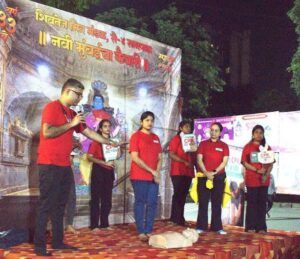
Hiranandani Hospital, Vashi — A Fortis Network Hospital  (a part of the IHH Healthcare multinational network) — took the ‘Har Ghar Hero’ initiative a step further, expanding the community CPR initiative to turn even more Navi Mumbaikars into first responders in their own homes & neighbourhoods. Moving beyond the hospital’s walls, the initiative reached residential societies, schools and colleges, corporate organizations, and Ganpati pandals across the city, empowering ordinary citizens to recognize a cardiac arrest, act in the critical first moments, and perform basic Cardiopulmonary Resuscitation (CPR) that can mean the difference between life and death.   Team from Fortis Hiranandani Hospital, Vashi Navi Mumbai training members of Shivtej Ganpati Pandal, Sanpada in life-saving CPR skills under the ‘Har Ghar Hero’ initiative   Planned around the Ganpati festival, when lakhs of people came together across community spaces, the initiative leveraged these gatherings to build greater awareness around emergency preparedness and the importance of timely CPR intervention. Through its outreach across Navi Mumbai, the programme directly engaged approximately 25,000 people, extending CPR awareness and basic life-saving knowledge to residents, students, employees and community members.   With a population of over 15 lakh residents, Navi Mumbai is among the fastest-growing urban centres in the Mumbai Metropolitan Region, underscoring the need for stronger community-level emergency preparedness. Most cardiac arrests occur outside hospital settings, often at home, where the first few minutes can significantly influence outcomes before professional medical assistance arrives. Against this backdrop, and with bystander CPR rates in India remaining low at approximately 1.3–9.8 per cent, ‘Har Ghar Hero’ initiative helped take practical CPR awareness directly into spaces where Navi Mumbaikars live, study and work. By improving familiarity with basic emergency response and encouraging timely action, the program strengthened confidence and preparedness among community members to respond during critical medical emergencies.   The sessions conducted across Navi Mumbai focused on helping participants recognise the signs of a cardiac emergency, understand the importance of seeking medical assistance immediately, and learn the basic steps involved in CPR. As part of the Ganpati outreach, the hospital covered prominent community locations including Vashi Cha Ganjraj (and Navi Mumbai Cha Raja (Vashi, Sec 17), Juinagar Cha Raja, Friends Group Seva Sanstha and nearby pandals, Shri Ganesh Mitra Mandal – Koparkhairane (Sec 10), Sarvajanik Utkarsh Mitra Mandal – Koparkhairane (Sec 9), Ichapurti Ganesh Mandal – Sanpada, and Sonar Cha Raja, among others. Through practical demonstrations and community interactions, the programme equipped participants with basic life-saving knowledge to help them respond appropriately during the critical first few minutes of a cardiac emergency until professional medical assistance arrived.   The residential outreach programme covered Moraj Residency – Palm Beach Road, Sanpada; FAM CHS, Kalash Udyan CHS and Balaji Garden CHS – Koparkhairane; and Himachal CHS – Vashi. Educational institutions also formed an important part of the initiative, with CPR awareness sessions conducted for students and staff at Navi Mumbai Vidyalaya (English Medium), SIES College, Tilak College and Anjuman-I-Islam College, extending emergency preparedness and basic life-saving knowledge to younger members of the community.   Speaking about the initiative, Dr. Ashutosh Pandey, Facility Director, Fortis Hiranandani Hospital, Vashi, Navi Mumbai, said, “A cardiac emergency can occur anywhere. Studies show that immediate CPR can improve a person’s chances of survival two to three times. Through ‘Har Ghar Hero’, we were able to take CPR awareness directly into communities and help address the hesitation and uncertainty that often accompany a medical emergency. Ganpati celebrations gave us an effective platform to engage with people where they naturally came together and reinforce the importance of timely action. The response to the initiative has strengthened our larger objective of building a community where more citizens have the knowledge and confidence to take the right first steps when every minute matters.”   To ensure that the programme continues beyond the 10-day Ganpati festival, Fortis Hiranandani Hospital, Vashi will conduct focused CPR training sessions at the hospital every Sunday from 4 pm to 5 pm throughout October 2026. Participants who complete the training will receive CPR certification. To register, contact +91 86579 58482   Through ‘Har Ghar CPR Hero’, Fortis Hiranandani Hospital, Vashi aims to progressively expand the number of CPR-aware citizens in Navi Mumbai and encourage emergency preparedness as a community responsibility, not just that of healthcare providers.   About Fortis Healthcare Limited   Fortis Healthcare Limited is a leading integrated healthcare delivery service provider in India. The healthcare verticals of the company primarily comprise hospitals, diagnostics, and day care specialty facilities. Currently, the company operates 36 healthcare facilities (including JVs and O&M facilities) across 12 states and union territories. The Company’s network comprises over 6,150 operational beds (including O&M beds) and 400 diagnostics labs.   For more information, please visit www.fortishealthcare.com   About IHH Healthcare (“IHH”) IHH is a leading multinational healthcare provider shaping the future of care. Driven by our aspiration to Care. For Good., we unite medical excellence and innovation, pushing boundaries through our trusted brands such as Acibadem, Gleneagles, Fortis, Island, Mount Elizabeth, Pantai, Parkway and Prince Court. Across 10 countries, including Malaysia, Singapore, Türkiye, India and Greater China, our 70,000-strong team delivers world-class excellence every day, within and beyond our 140 healthcare facilities, including more than 80 hospitals. Our comprehensive services span the full healthcare continuum, from primary and ambulatory to quaternary care, complemented by diagnostics, imaging, rehabilitation, telehealth and home care. In partnership with our stakeholders, IHH is advancing value-based care, building a sustainable healthcare ecosystem and creating meaningful impact, as we work towards our vision to become the world’s most trusted healthcare services network.   For more information, please visit www.ihhhealthcare.com.

Fortis Hiranandani Hospital, Vashi Empowers Navi Mumbaikars with Life-Saving CPR Skills Through 'Har Ghar Hero' Initiative Read More »

India's Maritime Energy Gateway Charts Path for Green Hydrogen Trade as Sector Moves Towards Industrial Scale

India’s emerging clean fuel corridors, expanding port infrastructure and growing maritime ecosystem are set to play a key role in the country’s transition towards a globally connected green hydrogen economy, according to discussions at S&P Global Energy’s Horizons Clean Energy Expansion India 2026.   S&P Global Energy launched “India’s Maritime Energy Gateway”, an infographic that brings together port-level trade data, clean fuel projects, fleet and shipbuilding activity and emerging green hydrogen corridors. Launched by Shri Venkatesapathy S., IAS, Joint Secretary (Shipping), Ministry of Ports, Shipping and Waterways, the gateway maps India’s evolving maritime energy landscape and its growing role in clean fuels, bunkering and shipbuilding.   The maritime focus formed part of a wider first-day discussion on moving India’s hydrogen ambitions towards execution, bankability, infrastructure readiness and demand creation. Opening the conference, Shri Pralhad Joshi, Hon’ble Minister, Ministry of New and Renewable Energy, highlighted India’s expanding renewable energy and manufacturing base, including more than 304 GW of non-fossil capacity and over 160 GW of solar capacity. Under the National Green Hydrogen Mission, SIGHT incentives have been awarded for around 8.62 lakh tonnes per annum of green hydrogen production and 3,000 MW per annum of domestic electrolyser manufacturing.   Discussions on the first day also highlighted dependable offtake, competitive renewable power, transmission connectivity, infrastructure readiness and access to capital as important components for moving projects towards final investment decisions. Power-to-X pathways, electrolyser development, storage and integrated project models were also discussed as enablers of large-scale commercialisation.   On the second day, the focus expanded to the wider ecosystem required to scale India’s green hydrogen market, with reliable and cost-competitive renewable power, stronger grid and maritime infrastructure, policy certainty and sustained industrial demand emerging as key themes.   The discussions also highlighted the importance of connecting hydrogen production centres with international markets through port readiness, shipping capacity, bunkering facilities and safety protocols for hydrogen derivatives such as ammonia, supported by long-term offtake agreements and contracts. Greater alignment of hydrogen policies and standards, transparent price benchmarks and effective price discovery were identified as important for enabling international trade.   Fertiliser, refining and steel were identified as significant potential sources of industrial demand as India advances the decarbonisation of hard-to-abate sectors. The conference concluded with an emphasis on coordinated development across the value chain, spanning renewable power and transmission to ports, pricing, policy and long-term industrial demand.   The two-day conference brought together stakeholders from the energy, infrastructure, shipping, policy and industrial sectors, reinforcing the role of integrated infrastructure and market development in shaping India’s next phase of clean energy expansion.  

India's Maritime Energy Gateway Charts Path for Green Hydrogen Trade as Sector Moves Towards Industrial Scale Read More »

The New Real Estate Map of India: How Tier-2 Cities Are Redefining Real Estate Growth

For years, India’s real estate map was drawn around a handful of large cities. Delhi-NCR, Mumbai, Bengaluru, Hyderabad and a few others absorbed most of the attention, capital and new supply. The map looks less concentrated now.   Tier-2 cities are emerging as key real estate growth destinations, driven by infrastructure, connectivity and urbanisation   A recent CII-Knight Frank study puts residential price growth across 11 emerging markets at 63% between 2021 and 2026, compared with 42% across India’s eight largest cities. Chandigarh Tricity and Lucknow are among the markets identified in the study. The numbers are significant, but the more interesting change is what is happening underneath them. These are increasingly cities with their own economic pull, rather than markets waiting for a metro to spill over into them.   Chandigarh Tricity offers a particularly clear example. Chandigarh itself has limited room for physical expansion, while Mohali and New Chandigarh have become increasingly important to the wider urban economy. Airport Road, regional road connectivity and the presence of education, healthcare and professional services have added to the appeal.   Umang Jindal, CEO, Homeland Group, said, “Tricity is increasingly being experienced as one connected market rather than three separate locations. Mohali’s growth has brought residential, commercial and social infrastructure closer to the expanding employment base, while the airport corridor has changed the importance of several locations. Buyers are also looking beyond the apartment itself and considering the surrounding ecosystem, access, retail, education and everyday convenience. That is gradually giving the region a more complete urban character.”   Gurinder Bhatti, Chairman & Managing Director, GB Realty, said, “The next phase of development in the Tricity is likely to be shaped by how well infrastructure and new residential districts work together. New Chandigarh and the Mohali belt are attracting attention because they are evolving into self-sustaining urban destinations rather than remaining peripheral extensions of the existing city. With improving connectivity and a growing ecosystem of commercial, institutional and social infrastructure, these markets are increasingly positioned to support sustained residential demand. This is the kind of urbanisation that creates a longer residential cycle rather than a short-term development pocket.”   Tejpreet Singh Gill, Managing Director, Gillco Group, said, “Punjab’s real estate story is increasingly linked to the way Chandigarh, Mohali and the surrounding urban areas are developing together. Infrastructure has made several locations more accessible, but the larger change is the emergence of a broader residential and commercial ecosystem. Buyers are looking for well-planned projects, while businesses and institutions are creating demand around them. That combination is giving the region a different scale of opportunity than it had a decade ago.”   A similar trend can be seen across other emerging urban markets, where improving infrastructure, evolving buyer preferences and expanding city boundaries are influencing the way residential development is taking shape. In this context, Lucknow is also witnessing a gradual shift in how and where demand is emerging.   Mr. Neeraj Gulati, Managing Director, Assotech Realty, said, “Emerging cities are being evaluated on the basis of new parameters. For example, Shirdi is a very different real estate story from a conventional real estate market. The strength of the destination comes from the steady flow of pilgrims, but today’s traveller also expects a certain level of comfort and hospitality around that visit. That is creating an interesting space between tourism, spirituality and real estate. A well-managed hospitality asset can become part of that experience rather than simply being a place to stay. The opportunity lies in understanding the character of the destination and building around the way people actually travel, stay and spend time there. In places such as Shirdi, the spiritual purpose of the journey remains central, but the expectations around the journey itself are changing.”   Kushgra Ansal, Director, Ansal Housing, said, “Connectivity has changed the way smaller cities and regional markets are viewed. In Haryana and Punjab, better road networks, expanding urban centres and stronger links with established employment hubs are bringing more locations into consideration for both homebuyers and developers. The demand is not confined to one type of buyer either. There is a wider base of families looking for better housing within the region, while business activity is creating new residential requirements around emerging urban corridors.”   Harvinder Singh Sikka, Chairman, Sikka Group, said, “The interesting change in Lucknow is the way demand is spreading across established as well as newer parts of the city. The buyer is more informed and has clearer expectations about location, planning and the amenities that should be available close to home. As infrastructure improves, residential development is also beginning to follow a broader urban pattern. This creates opportunities for projects that are planned around how people actually live, rather than around a single building.”   For developers, the new map is therefore not simply a list of smaller cities with rising prices. It is a map of where infrastructure, employment, urbanisation and buyer aspirations are beginning to overlap. The next real estate markets may not be the cities waiting to become the next Delhi or Mumbai, but the ones developing enough economic and urban depth to define their own markets.

The New Real Estate Map of India: How Tier-2 Cities Are Redefining Real Estate Growth Read More »

Anant National University Hosts Mass Timber Workshop 2026, Championing Sustainable Construction and a Greener Future

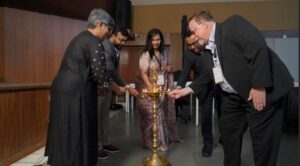
Anant National University co-hosted the Mass Timber Workshop 2026 on 24 and 25 September at its Ahmedabad campus. Organised by the US Softwood Export Council (SEC) and Anant National University, with support from the USDA Foreign Agricultural Service (FAS) under the Regional Agricultural Promotion Program (RAPP), the workshop brought together stakeholders to explore the role of mass timber in advancing sustainable construction in India.   Anant National University Hosts Mass Timber Workshop 2026, Championing Sustainable Construction and a Greener Future   As the construction sector grows, the need for environmentally responsible building practices becomes increasingly important. Mass timber offers an opportunity to explore alternatives to conventional construction materials and contribute to a more sustainable built environment. The workshop encouraged dialogue and collaboration around the role of such materials in shaping the future of construction.   At Anant National University, sustainability is central to its vision for education and its commitment to creating a better future. The University supports initiatives that encourage students, faculty and industry partners to address real-world challenges through sustainable architecture, responsible material use, climate-conscious design and interdisciplinary research.   The Mass Timber Workshop reflected this commitment by bringing together perspectives from academia and industry through discussions, knowledge-sharing and practical engagement. It provided a platform to explore how mass timber and other sustainable approaches can contribute to a more environmentally responsible built environment. Ahead of the workshop, participating Anant students also visited India’s landmark mass timber project in Umargam, Gujarat, gaining firsthand insights into the material’s practical applications.   By supporting initiatives such as this, Anant continues to create opportunities for its academic community to engage with emerging ideas and contribute to meaningful change. Through sustainability-focused learning, research and collaboration, the University remains committed to nurturing designers, architects and changemakers who can help build a more sustainable future.   About Anant National University At Anant National University, education begins with a simple belief: the future will not be inherited. It will be purposefully designed.   Guided by the philosophy: Come, Create the New, Anant brings together learners who are curious about the world as it is, but also ambitious about what it could become. The University encourages students to look beyond conventional answers and engage with the complex challenges of our times: Ranging from climate and sustainability to cities, communities, systems and technologies.   Anant offers undergraduate, postgraduate and doctoral programmes across design, architecture, climate action and visual arts. Its approach combines academic rigour with studio-based learning, emerging technologies, research, entrepreneurship, Indigenous Knowledge Systems and hands-on engagement with communities. The goal is not only to build practical skills but also to train diligent professionals who can connect disciplines, understand context and create meaningful change.   Recognised as a Centre of Excellence by the Government of Gujarat, Anant received a 5-Star Rating in Architecture and a 4-Star Rating in the University category under the Gujarat State Institutional Rating Framework (GSIRF) 2023-24. These recognitions reflect Anant’s abiding commitment to build an innovating institution where creativity, sustainability, innovation and purpose come together to help shape a more thoughtful and resilient future.

Anant National University Hosts Mass Timber Workshop 2026, Championing Sustainable Construction and a Greener Future Read More »