kalabhumitalkies.com

newsvoir

Manipal University Jaipur Celebrates Establishment Day with Pride, Reflection and Community Spirit

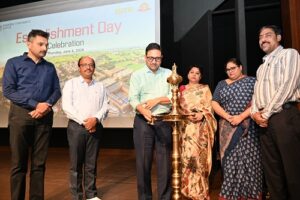
Manipal University Jaipur (MUJ) celebrated its Establishment Day 2026 with great enthusiasm and a sense of pride, commemorating its remarkable journey since its establishment on June 4, 2011, as a State Private University following an invitation and approval by the Government of Rajasthan. The occasion served as an opportunity for the university community to reflect on its achievements, growth, and contributions to higher education over the past 15 years. Manipal University Jaipur celebrates its Establishment Day 2026 The celebration was attended by Dr. Niti Nipun Sharma, President, Manipal University Jaipur; Dr. Karunakar A. Kotegar, Pro-President, MUJ; Dr. Amit Soni, Registrar, MUJ; and Dr. Nitu Bhatnagar, Provost. Deans, directors, heads of departments, faculty members, staff members, and representatives from the local community also participated in the event. Welcoming the gathering, Dr. Karunakar A. Kotegar paid tribute to the founder, Late Dr. T.M.A. Pai, whose vision laid the foundation of the Manipal movement. Emphasizing the themes of “Reflection, Introspection and Commitment,” he encouraged every member of the university community to remain dedicated to the institution, society, and the nation. In his presidential address, Dr. Niti Nipun Sharma remembered the founders of the university and the Manipal Group and acknowledged the contributions of his predecessors in shaping the growth and achievements of Manipal University Jaipur. Highlighting the university’s philosophy of inclusive development, he spoke about the importance of engaging with the local community and appreciated the support extended by community members who regularly assist students and the university fraternity. A unique highlight of this year’s celebration was a friendly cricket tournament organized on the eve of Establishment Day as part of MUJ’s community engagement initiatives. The tournament brought together members of the local community, auto-rickshaw drivers, university security personnel, and small business owners associated with the campus. For many participants, it was their first visit to the university, making the experience particularly memorable. Three teams—Boundary Riders, Trophy Fighters, and Master Blasters—participated in the tournament, demonstrating sportsmanship, teamwork, and camaraderie. The event was inaugurated by Dr. Amit Soni, Registrar, Manipal University Jaipur, who encouraged participants to strengthen their association with the university and continue working together for mutual growth and development. He emphasized the importance of strong community partnerships in creating a vibrant and inclusive ecosystem around the university. The tournament concluded with an exciting final match in which Trophy Fighters emerged as champions. During the Establishment Day celebrations, all winners and participants were felicitated with trophies and medals by the university leadership in recognition of their enthusiastic participation. Adding another milestone to the occasion, the jingles of the new programmes of Radio Manipal Jaipur 90.8 FM were officially launched by Dr. Niti Nipun Sharma. Delivering the vote of thanks, Dr. Amit Soni expressed gratitude to all stakeholders for their contributions in making Manipal University Jaipur one of the most sought-after destinations for higher education in the country. Community participants expressed immense appreciation for the initiative, describing it as a first-of-its-kind opportunity that allowed them to connect with the university and with one another beyond their daily responsibilities. The event successfully reinforced MUJ’s commitment to academic excellence, social responsibility, and meaningful community engagement.

Manipal University Jaipur Celebrates Establishment Day with Pride, Reflection and Community Spirit Read More »

"SHAURYA: A Father's Promise" Released by Harivansh, Deputy Chairman, Rajya Sabha, on International MPS Awareness Day 2026

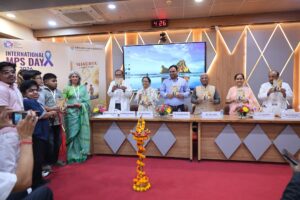
On the occasion of International MPS Awareness Day 2026, Harivansh, Deputy Chairman, Rajya Sabha, launched the book “SHAURYA: A Father’s Promise“ at Sir Ganga Ram Hospital, New Delhi, during a special event dedicated to raising awareness about Mucopolysaccharidosis (MPS) and rare diseases.   Written by Saurabh Singh, Co-founder of the Rare Diseases India Foundation (RDIF), SHAURYA: A Father’s Promise tells the story of his son Shaurya, but echoes the pain, courage, and hope of millions of rare disease families around the world. Through Shaurya’s courageous battle with MPS II (Hunter Syndrome), the book gives voice to families who refuse to give up despite immense challenges and calls upon society to ensure that no child is forgotten simply because their disease is rare.   Harivansh, Deputy Chairman, Rajya Sabha, releasing “SHAURYA: A Father’s Promise” at Sir Ganga Ram Hospital, New Delhi, on International MPS Awareness Day 2026   At its heart is a father’s promise to transform his son’s courage into a lifelong mission for awareness, timely diagnosis, access to treatment, dignity, and hope for every child living with a rare disease. Though Shaurya left this world in 2025 at the age of 13, his courage lives on as a beacon of hope, inspiring a movement to ensure that no child with a rare disease is left behind.   Beyond a personal story, the book sensitizes policymakers, decision-makers, healthcare stakeholders, and society at large to the urgent need for a comprehensive and effective National Rare Disease Policy that addresses the needs of all rare disease patients. It highlights the challenges faced by families in accessing timely diagnosis, treatment, and support, while advocating for equitable healthcare, stronger policy interventions, and a more compassionate ecosystem for rare disease communities.   Speaking on the occasion, Harivansh, Deputy Chairman, Rajya Sabha, acknowledged the extraordinary dedication of Saurabh Singh, Co-Founder of the Rare Diseases India Foundation (RDIF), who left a promising career in a multinational company to devote his life to the cause of rare disease patients and their families across India.   He remarked that Saurabh transformed his personal struggle into a national mission, turning pain into purpose and becoming a powerful voice for thousands affected by rare diseases. Appreciating the impactful work of RDIF, Harivansh noted that Saurabh Singh’s commitment, compassion, and perseverance have helped bring the concerns of the rare disease community to the forefront of public awareness and policymaking.   He emphasized that the voices of MPS and other rare disease patients must be heard at the highest levels of governance and that collective efforts are needed to ensure dignity, care, and hope for every affected family.   The event was organized by the Rare Diseases India Foundation (RDIF) in association with Sir Ganga Ram Hospital, New Delhi, bringing together leading voices from the medical, scientific, and rare disease communities, including Dr. Ratna Dua Puri of Sir Ganga Ram Hospital, Dr. Madhulika Kabra of ICMR, Dr. Neerja Gupta of AIIMS New Delhi, Dr. Sunita Bijarnia, Dr. Veronica Arora, and Dr. Swasti Pal, who shared valuable insights on the challenges, advancements, and future priorities in the field of rare diseases.   The occasion was also graced by the leadership of Sir Ganga Ram Hospital, including Dr. D. S. Rana, Chairman, Sir Ganga Ram Trust Society and Sir Ganga Ram Hospital; Dr. Ajay Swaroop, Chairman, Board of Management; Dr. Jaya Sood, Vice Chairperson, Board of Management; and Dr. A. K. Bhalla, Honorary Secretary and Director, Sir Ganga Ram Hospital. They were joined by eminent clinicians, researchers, patient advocates, policymakers, and rare disease families, reaffirming a collective commitment to improving the lives of those affected by rare diseases.

"SHAURYA: A Father's Promise" Released by Harivansh, Deputy Chairman, Rajya Sabha, on International MPS Awareness Day 2026 Read More »

Antara Senior Care Forays into Integrative Medicine, Launches One-of-a-kind Clinic for Treatment of Chronic Conditions

Antara, India’s most comprehensive senior care ecosystem offering end-to-end solutions across all stages of ageing, has opened an integrative medicine clinic in Gurugram, purpose-built for managing chronic conditions. The Antara Integrated Wellness Clinic (AIWC) brings integrative medicine, combining modern medicine with evidence-based holistic therapies, into Antara’s continuum of care for the first time. Here, a multidisciplinary team of doctors deliver personalised care plans that take a holistic view of a person rather than treating symptoms. The launch marks a significant evolution in how Antara serves seniors, and in how health and wellbeing can be approached as India’s population gets older, the disease burden grows, and the gap between lifespan and health span widens.   The Antara Integrated Wellness Clinic in DLF Phase 2, Gurugram   Globally, integrative medicine has gained acceptance for its role in improving outcomes in chronic disease management and enhancing quality of life. The World Health Organisation (WHO) recognises it as an interdisciplinary, evidence-based approach that combines conventional medicine with traditional therapies, such as Ayurveda and energy healing, to look at the mind, body and spirit together; the focus is on the root cause of illness, not just its symptoms.   Ms. Tara Singh Vachani, Executive Chairperson, Antara Senior Care, said, “Antara has spent more than a decade walking alongside families through all stages of ageing. We have seen them navigate the complexities of a fragmented healthcare system, disjointed treatment plans and episodic care that seldom restore quality of life. Antara Integrated Wellness Clinic is our answer to preserve seniors’ dignity and independence. It is built on the conviction that patients’ problems should be addressed holistically as good health is a combination of physical, emotional, mental, and social wellbeing. As India’s senior population and chronic disease burden grow, fully integrated, holistic wellness models will become key to unlocking a healthy society.”   Mr. Rajit Mehta, CEO & MD, Antara Senior Care, said, “Indians are living longer, but the years added are too often years lived with disease, dependency and fatigue. The gap between lifespan and health span is the gap we strive to close. Our goal is straightforward: help seniors live their best life possible; prevent the hospital visits we can, reduce medication where possible, and restore function where we can. At AIWC, seniors benefit from a coordinated care journey designed by one multidisciplinary team, beginning with a comprehensive health assessment, followed by personalised wellness plan, and multi-pronged approach that addresses physical, mental and emotional health.”   Dr. Pankaj Verma, Medical Director, Antara Integrated Wellness Clinic, explained, “In integrative medicine, modern medicine is the anchor, and traditional systems work alongside it to address lifestyle, stress, the inflammation that sits underneath chronic diseases. For a senior with diabetes, hypertension and joint pain, coming to AIWC means a clear focus on addressing the root cause—the hidden mind-body link that often feeds the disease. Over time, many of our patients can reduce their pill load and recover function they had given up on. This is what whole-person medicine looks like in practice.”   Antara’s integrative clinic offerings combine functional medicine consultations, Ayurvedaprakriti analysis, advanced therapies such as IV cellular nutrition (high-dose Vitamin C, Glutathione), medical-grade ozone therapy and Far Infrared sauna, classical Ayurveda and Panchakarma, acupuncture, energy and vibrational healing, and integrative counselling. Care is organised through 10 condition-focused programmes: JointCare, HeartCare, DiabetesCare, BreathCare, GutCare, LiverCare, MindCare, WeightCare, and CancerCare, the last designed as complementary support alongside standard oncology care.   For India, care pathways like integrative medicine are becoming increasingly important as its senior population is set to more than double to 347 million by 2050, bringing with it unique clinical needs that the traditional healthcare system cannot address alone.   About Antara Senior Care Launched in 2013, Antara is the senior-care business of Max India Limited, part of the USD 7-billion Max Group. It is an integrated ecosystem for senior care, operating in two main lines of business – Residences for Seniors and Assisted Care Services. Antara’s first senior residential community in Dehradun, comprising nearly 200 families, caters to their social, recreational, educational, wellness, and health-related needs. In the near future, it will open its second senior living community in Noida’s Sector-150, with families moving into the 340 apartments built in the first phase. Expanding its footprint in Gurugram, Antara will manage senior living residences, dedicated spaces for senior living, and primary healthcare services at Estate 360 and Estate 361, developed by Max Estates. Antara’s Assisted Care Services include Care Homes and Services, AGEasy, and Antara Integrated Wellness Clinic. This line of business caters to seniors, who need more immersive interventions in their daily lives due to medical or age-related issues. With eight facilities and 485 beds across Gurugram, Noida, Bengaluru and Chennai, Care Homes provide long-term care to seniors who require constant medical and nursing supervision, and short-term care services for the recuperation of seniors. Its care at home services, offered in Delhi NCR, Bengaluru and Chennai, provide well-equipped, trained professionals offering care to seniors inside their home’s comfort. AGEasy, an online and offline store focusing on senior-specific products and solutions to manage chronic health conditions at home, has touched over 6.5 lakh lives since inception in 2023. Antara Integrated Wellness Clinic combines modern medicine with evidence-based traditional therapies through a multidisciplinary team of doctors to deliver personalised care plans.

Antara Senior Care Forays into Integrative Medicine, Launches One-of-a-kind Clinic for Treatment of Chronic Conditions Read More »

Chitkara University Launches Punjab's First IRM India Affiliate-Licensed Global Centre for Enterprise Risk Management

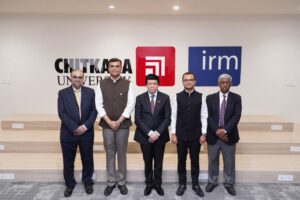
In a significant step towards strengthening India’s resilience and global competitiveness, the Institute of Risk Management (IRM) India Affiliate has established its third Global Centre for Enterprise Risk Management (ERM) at Chitkara University, Punjab. This development marks a key milestone for North India, positioning the region as an emerging hub for enterprise risk education, research, and thought leadership.   First in North: Chitkara University launches first ever Centre of Excellence in Enterprise Risk Management in collaboration with IRM   The Centre was formally inaugurated by Mr. Rajeev Tanna, CFIRM & Chairman of IRM India Regional Group with Mr. Sandip Datta, Ex-Chief Risk Officer, ITC Limited gracing the occasion, alongside Dr. Ashok K Chitkara, Chancellor, Chitkara University, Dr. Sandhir Sharma, Vice Chancellor, Chitkara University and Mr. Hersh Shah, CEO, IRM India Affiliate, and other distinguished leaders from academia, industry, and governance. The inauguration ceremony reflected a shared commitment to building future-ready institutions that integrate global frameworks with India’s evolving risk landscape.   Mr. Shailesh Haribhakti, Governance Board Member, IRM India Affiliate, also joined the inauguration virtually, sharing his perspectives on the growing importance of governance, resilience, and enterprise risk management in today’s dynamic environment.   Punjab, long recognised for its entrepreneurial energy, leadership ethos, and global outlook, provides a compelling backdrop for such an initiative. The establishment of this Centre aligns with the state’s legacy of enterprise and its growing role in shaping modern education and innovation ecosystems. By bringing global standards of enterprise risk management into the academic environment, the initiative seeks to equip students and professionals with the ability to navigate complexity, uncertainty, and rapid change.   The Global Centre for ERM at Chitkara University is envisioned as more than a physical facility. It represents a dynamic ecosystem designed to foster risk intelligence as a core leadership capability. Through access to IRM’s globally recognised ERM qualifications, academic resources, and industry-led insights, the Centre will enable learners to develop a structured understanding of risk across domains such as finance, technology, operations, governance, and sustainability.   As global economies continue to face interconnected challenges ranging from geopolitical shifts and cyber threats to climate risks and financial volatility, the importance of enterprise risk management has become more pronounced than ever. The Centre aims to bridge the gap between theory and practice by creating opportunities for research, dialogue, and collaboration between academia and industry, thereby nurturing a new generation of professionals who can anticipate, assess, and respond to complex risks.   The initiative also reinforces IRM India Affiliate’s broader vision of building a risk-intelligent and resilient India. With a presence across 140+ countries, IRM brings a legacy of over four decades in advancing enterprise risk management globally. Its collaboration with Chitkara University reflects a strategic effort to embed these global standards within India’s higher education ecosystem, ensuring that students are equipped with internationally relevant skills and perspectives.   Dr. Ashok K Chitkara, Chancellor, Chitkara University, stated, “Risk management has become increasingly important as organisations navigate a complex and uncertain global environment. At Chitkara University, we believe that risk awareness and strategic decision-making are critical competencies for future business leaders and this Centre of Excellence will play an important role in nurturing those capabilities.”   Mr. Hersh Shah, CEO, IRM India Affiliate, added, “Risk intelligence is now a leadership imperative. The launch of the Global Centre for Enterprise Risk Management at Chitkara University is a significant step towards embedding globally benchmarked ERM education in India. Through this Centre, we aim to equip students and professionals with the skills and mindset to navigate uncertainty, make informed decisions, and contribute to building a more resilient and future-ready economy.”   Mr. Rajeev Tanna, CFIRM and Chairman of IRM India Regional Group, remarked, “As organisations navigate an increasingly complex risk landscape, Risk Intelligence and Risk Resilience have become essential for leadership and sustainable growth. This Centre at Chitkara University will strengthen risk education, industry collaboration, and knowledge-sharing, while equipping students and professionals with globally relevant ERM practices and decision-making tools.”   Strategically located in Punjab, the Centre is expected to play a pivotal role in strengthening regional capacity for risk education and professional development. It will contribute to industry-academia engagement, encourage risk-aware entrepreneurship, and support policy-oriented thinking in areas of governance and resilience. The initiative is also aligned with India’s broader aspirations of becoming a globally competitive, innovation-driven economy.   As India navigates an increasingly complex and uncertain world, the launch of the Global Centre for Enterprise Risk Management at Chitkara University underscores the growing recognition of risk intelligence as a critical skill for the future. Anchored in Punjab’s spirit of ambition and progress, this initiative is set to create a lasting impact by developing leaders who can drive sustainable growth, informed decision-making, and long-term resilience.   About Chitkara University Chitkara University is a UGC-recognised and NAAC A+ accredited private university with campuses in Punjab and Himachal Pradesh, recognised among India’s leading institutions by NIRF, QS World University Rankings, and Times Higher Education. It offers undergraduate and postgraduate programs across Engineering, Business, Healthcare, Pharmacy, Design, Architecture, Hospitality, and emerging technologies including Artificial Intelligence, Data Science, and Machine Learning.   The University’s academic model integrates internships, live industry projects, and research into core curricula, supported by 2,000+ campus recruiters and 300+ international academic and industry partners. Global Pathway programs, developed in partnership with leading universities in the United States, Australia and Canada, allow students to complete part of their degree abroad. With a focus on innovation, entrepreneurship, and applied learning, Chitkara University prepares graduates for careers in India and internationally.   For more information, please visit: www.chitkara.edu.in

Chitkara University Launches Punjab's First IRM India Affiliate-Licensed Global Centre for Enterprise Risk Management Read More »

HDFC Growth for GOOD Portfolio, A Disciplined Investment Approach for Sustainable Growth

HDFC Asset Management Company Limited (HDFC AMC) introduces HDFC Growth for GOOD Portfolio, this Investment Approach is designed with an objective to align investments with principles of sustainability, governance, and societal well-being while aiming for long-term wealth creation.   About HDFC Growth for GOOD Portfolio The financial landscape is evolving. A growing segment of investors today seek more than just profits— they are keen for their capital to contribute towards a positive impact. HDFC Growth for GOOD Portfolio is HDFC AMC’s response to this shift, catering especially to those who value ethical principles, disciplined research, and sustainable growth in their investment choices. This Investment Approach aims to focus on companies that:   Exhibit strong governance and transparency Align operations with constructive societal outcomes Deliver quality metrics like ROCE, ROE, EPS, CAGR, and FCF growth Demonstrate long-term growth potential with efficient capital allocation   A key principle of this strategy is non-harm and sustainability and aiming to avoid investments in businesses that conflict with these values. The Investment Approach will avoid investing in equities of companies that generate revenues predominantly from – Defence, Alcohol, Cigarettes & Tobacco Products, Dairy Products, Leather Products, Animal testing (including Pharmaceuticals companies involved in such practices), Meat and poultry industries or any form of animal cruelty, businesses engaged in serving meat/alcohol, Gambling & Betting, to ensure investments align with values of non- harm and sustainable principles.   Mr. Navneet Munot, MD & CEO, HDFC AMC, commented, “Investing is not just about creating wealth, but also about shaping the kind of future we want to build. Through the ‘HDFC Growth for GOOD Portfolio’ approach, we seek to invest in businesses that combine sustainable growth with strong governance and responsible conduct. The strategy is anchored in the belief that long-term value creation goes hand in hand with being good for the planet, good for people, and good for society”   Mr. Ashish Jagnani, Senior Fund Manager – PMS and AIF, HDFC AMC, added, “HDFC Growth for GOOD Portfolio’ aims to pursue ethical principles, robust research and a focus on sustainable growth, with a view to deliver healthy risk-adjusted returns over the long term”   About HDFC AMC PMS HDFC Asset Management Company Limited, the Portfolio Manager, was incorporated under the Companies Act, 1956 on 10th December, 1999 and was registered vide registration number PM/INP000000506 with SEBI on 22nd December 2000 to carry out portfolio management services.   HDFC AMC PMS offers the following services: Discretionary Non-Discretionary Advisory Co-investment Services   As of 31st March 2026, HDFC AMC PMS manages assets worth ₹10,573.10 crore through its various Investment Approaches.   Direct Onboarding: The Portfolio Manager provides a direct onboarding option to clients who wish to avail HDFC AMC PMS services, without intermediation of persons engaged in distribution services.   To know more about direct onboarding, write to pms@hdfcfund.com

HDFC Growth for GOOD Portfolio, A Disciplined Investment Approach for Sustainable Growth Read More »

Ramaiah Institute of Science and Management and University at Albany Announce Landmark Collaboration to Redefine Higher Education in India

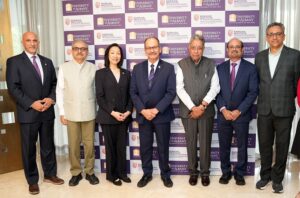
Ramaiah Institute of Science and Management (RISM), in collaboration with the University at Albany (State University of New York), today held a high‑level Curtain Raiser convening leaders from academia, industry, research and technology to outline a shared vision for reimagining higher education in India. Framed as a strategic forum, the event set out RISM’s institutional roadmap to close systemic gaps between learning, capability and measurable societal impact through interdisciplinary education, AI‑enabled pedagogy and translational research.   Dr. M R Jayaram and Havidán Rodríguez with senior leaders of RISM and the University at Albany during the launch of the Ramaiah Institute of Science and Management   Prof. Gurucharan, Executive Director and Chief Strategic Officer, Gokula Education Foundation (Medical), called for a fundamental reorientation of universities’ purpose: to prepare students for an AI‑shaped world where human judgement, creativity and ethics remain central. He urged institutions to ensure AI amplifies learning, not replaces it, and to shift academic programmes toward interdisciplinary problem‑solving and systems thinking that mirrors real‑world complexity.   A fireside conversation between Dr M. R. Jayaram, Chairman of Gokula Education Foundation (Medical) and Chancellor of RISM, and Dr. Havidan Rodriguez, President of the University at Albany, underscored the partnership’s global ambition. Dr. Jayaram described the new university’s mission to bridge the industry–academia divide and transition from publication‑centred output to deep science translational research that delivers products, processes and societal solutions. President Dr. Rodríguez emphasised co‑creation rather than replication: the collaboration seeks to build a new higher‑education model that augments, not replaces, human capabilities with AI.   Three focused panels explored actionable pathways: The Future of Engineering Education: Moderated by Prof. Shivakumar Sastry, experts from academia and industry highlighted the need to move beyond siloed curricula to outcome‑driven, systems‑oriented learning. Recommendations included embedded industry capstones, long‑term projects, faculty support for new pedagogy, and student agency in problem selection. AI in Higher Education — The Creative Disruptor: Led by Prof. C. Pandu Rangan, and panellists agreed that generative AI commoditises execution while increasing the value of critical thinking, ethics and process‑oriented assessment. Institutions must redesign learning and assessment to cultivate human–AI teaming and higher‑order skills. Translational Research & Industry Partnerships: Moderated by Mr Venkatesh Valluri, the discussion showcased case studies where industry collaboration and iterative, society‑engaged research accelerated product development and impact. Panellists urged prioritising translation over patents, and equipping students and faculty to innovate with market orientation.   In closing, Prof. B. N. Raghunandan Chairman RISM Task Force synthesised five priorities: systems approaches, social skills, unified multidisciplinary engineering, continuous faculty development, and a focus on translational research.   Dr. Jayaram Chairman and Chancellor said, “Our Vision for 2035 is RISM aims to be recognised as the university that prepared a generation not merely for jobs, but for shaping the future.”

Ramaiah Institute of Science and Management and University at Albany Announce Landmark Collaboration to Redefine Higher Education in India Read More »

Chemco Receives FSSAI Authorisation to Manufacture Food-Grade rPET Resin for Food Contact Applications

Chemco Group, an international manufacturing and plastic packaging group, has received authorisation from the Food Safety and Standards Authority of India (FSSAI) to manufacture food-grade recycled PET (rPET) resin for food contact applications under the Food Safety & Standards (Packaging) Regulations, 2018.   Chemco’s rPET recycling facility in Gujarat featuring the Starlinger recoSTAR PET art SSP line The authorisation places Chemco among a select group of companies in India approved to manufacture food-grade rPET resin suitable for direct food-contact packaging applications, marking an important milestone in the country’s transition towards a more circular and compliant packaging ecosystem.   Chemco’s rPET recycling facility in Gujarat featuring the Starlinger recoSTAR PET art SSP line The approval follows Chemco’s recent commissioning of its large-scale bottle-to-bottle recycling facility in Sanand, Gujarat, representing an investment of approximately Rs. 125 crore. The integrated facility has been developed to recycle more than 1 billion post-consumer PET bottles annually, converting them into high-quality food-grade recycled PET resin suitable for use in food and beverage packaging applications. Chemco’s food-grade rPET facility is supported by a state-of-the-art Starlinger bottle-to-bottle recycling system, incorporating globally recognised recycling technology designed for food-contact applications. The facility has been developed to meet India’s food-contact regulatory requirements under the Food Safety & Standards (Packaging) Regulations, 2018, along with applicable Bureau of Indian Standards (BIS) requirements governing recycled PET materials. Its compliance framework is supported by robust quality, traceability, and food safety systems, including FSSC 22000 certification, alongside recycling process frameworks recognised by US FDA and the European Food Safety Authority (EFSA) for food-contact recycled PET applications. FSSAI authorisation for food-contact applications represents a significant regulatory milestone for India’s recycled plastics sector, given the stringent standards governing recycled materials intended for direct contact with food and beverages. Under the Food Safety & Standards (Packaging) Regulations, 2018, manufacturers are required to demonstrate robust traceability, process control, testing, and compliance measures to ensure material safety and suitability for food-contact use. Commenting on the development, Vaibhav Saraogi, Director of Chemco Group, said, “Receiving FSSAI authorisation for food-grade rPET is an important milestone not only for Chemco, but also for the broader development of circular packaging infrastructure in India. As demand for compliant recycled content continues to increase, particularly in food and beverage packaging, it becomes essential to build credible domestic manufacturing capabilities supported by regulatory discipline, traceability, and consistent quality standards. Our investment in bottle-to-bottle recycling was made with a long-term view of supporting both sustainability and supply-chain reliability for brand owners. This approval reinforces our ability to offer food-grade recycled material that meets stringent safety and compliance expectations while supporting India’s transition towards circular packaging.” The approval comes at a particularly important time for India’s packaging industry as mandatory recycled-content obligations under the Plastic Waste Management (PWM) Rules continue to tighten. For Category I rigid plastic packaging, including PET bottles and containers, minimum recycled-content requirements have been prescribed at 40% for FY 2026–27, 50% for FY 2027–28, and 60% from FY 2028–29 onwards. These obligations are expected to significantly increase demand for domestically available, compliant food-grade recycled materials, particularly for beverage, food, and FMCG packaging applications. Industry participants are increasingly seeking reliable local sources of food-grade rPET capable of supporting both regulatory compliance and long-term sustainability commitments. The Sanand facility has been developed as a fully integrated bottle-to-bottle platform, strengthening Chemco’s ability to support brands with compliant recycled packaging solutions through an end-to-end manufacturing approach. By combining food-grade rPET resin production with downstream packaging capabilities within the Group, Chemco offers enhanced traceability, supply-chain reliability, and quality consistency. This integrated model positions the Group among very few packaging manufacturers in the world capable of supporting large-scale recycled-content packaging requirements for leading consumer brands. Beyond environmental impact, the project contributes to skilled employment generation, strengthens Gujarat’s position as a manufacturing and sustainability hub, and supports India’s broader objectives of resource efficiency, waste reduction, and circular manufacturing. With FSSAI authorisation now in place, Chemco further strengthens its position as a long-term partner for companies seeking credible, compliant, and scalable food-grade recycled packaging solutions in India. About Chemco Group Chemco is an international manufacturing group with over four decades of operating history across plastics and polymer-based products. The Group operates a diversified network spanning 23+ locations across India, the Middle East, and the United States, serving leading domestic and global brands across multiple industries. Chemco processes over 125,000 tonnes of plastic polymers annually and has established capabilities across rigid and flexible packaging, technical textiles, medical devices, baby care products, and sustainable materials. The Group serves a wide range of sectors through advanced manufacturing capabilities across moulding, extrusion, recycling, and engineered polymer applications. Sustainability and circularity remain central to Chemco’s long-term growth strategy, with recent investments focused on food-grade bottle-to-bottle rPET recycling and rPET FIBC and industrial packaging solutions. Chemco remains focused on responsible manufacturing, regulatory compliance, operational scale, and long-term value creation.

Chemco Receives FSSAI Authorisation to Manufacture Food-Grade rPET Resin for Food Contact Applications Read More »

Women's Cancer Awareness: Early Detection and Advanced Surgical Treatments Are Saving Lives

Cancer continues to be one of the leading health concerns among women worldwide. While breast cancer remains the most commonly diagnosed cancer among women, cancers of the cervix, ovary, uterus, and thyroid also contribute significantly to the disease burden. The encouraging news is that advancements in medical science, early diagnosis, and modern treatment options are helping women achieve better outcomes and improved quality of life.   Dr. Naveen Padmanabhan, Consultant & Head of Surgical Oncology at Equitas Hospital, Chennai, Expert in GI, breast, and thoracic oncology   The Importance of Awareness and Early Detection One of the most effective ways to combat cancer is through awareness and timely medical intervention. Many cancers develop gradually and may not show obvious symptoms in their early stages. Regular health check-ups, understanding family medical history, and paying attention to unusual changes in the body can play a crucial role in early diagnosis.   Common warning signs that women should not ignore include: Unexplained lumps or swelling Persistent abdominal bloating Abnormal bleeding or discharge Sudden weight loss Chronic fatigue Changes in bowel or bladder habits Persistent pain that does not resolve   Seeking medical attention at the earliest sign of concern can significantly improve treatment success rates.   How Cancer Treatment Has Evolved Cancer treatment has witnessed remarkable advancements over the past decade. Today, treatment plans are personalized based on the type of cancer, stage of disease, and overall health of the patient. Multidisciplinary teams comprising surgeons, oncologists, radiologists, and pathologists work together to deliver comprehensive care.   Among the most significant developments has been the evolution of surgical techniques that focus on effective cancer removal while preserving healthy tissue and improving recovery outcomes.   Advanced Surgical Options for Women’s Cancers Modern cancer surgery has moved beyond traditional open procedures in many cases. Advanced techniques now offer greater precision, reduced pain, and faster recovery.   Minimally Invasive Surgery Many gynecological and abdominal cancers can now be treated using minimally invasive techniques. These procedures require smaller incisions, resulting in less blood loss, reduced postoperative discomfort, shorter hospital stays, and quicker return to daily activities.   Laparoscopic Surgery Laparoscopic procedures utilize specialized instruments and high-definition cameras to remove tumors with exceptional precision. This approach has become increasingly common in the treatment of certain uterine, ovarian, and cervical cancers.   Robotic-Assisted Surgery Robotic technology has further enhanced surgical precision by providing surgeons with improved visualization and greater control during complex procedures. This enables more accurate tumor removal while preserving surrounding healthy structures whenever possible.   Organ-Preserving Surgeries Advances in surgical planning and imaging allow doctors to remove cancerous tissue while preserving organ function whenever clinically appropriate. Such approaches can significantly improve long-term quality of life for patients.   Dr. Naveen Padmanabhan, Consultant & Head – Surgical Oncology at Sringeri Sharada Equitas Hospital says that, “Cancer is no longer viewed solely as a life-threatening diagnosis. With increasing awareness, timely diagnosis, advanced surgical techniques, targeted therapies, and comprehensive cancer care, many women are successfully overcoming cancer and leading healthy, fulfilling lives.”   He also emphasized that awareness, regular medical consultations, and prompt attention to symptoms remain the strongest tools in the fight against cancer. By prioritizing their health and seeking timely medical advice, women can greatly improve their chances of successful treatment and long-term well-being.   Remember: Early action can make all the difference. Awareness today can save lives tomorrow.

Women's Cancer Awareness: Early Detection and Advanced Surgical Treatments Are Saving Lives Read More »

Leadership Transition at profine India: Farid Khan Elevated to Chairman cum Managing Director and Kamal Bajaj Appointed Chief Executive Officer

A subsidiary of Germany-based profine GmbH — profine India Window Technology Pvt. Ltd. — manufacturer of the iconic Koemmerling uPVC and aluminium window and door systems — today announced a significant leadership transition, effective 1st June 2026.   Mr Farid Khan, CMD (left) and Mr Kamal Bajaj, CEO, profine India Mr. Farid Khan, who has served as Chief Executive Officer of profine India since its inception, will assume the elevated role of Chairman cum Managing Director (CMD). In this capacity, Mr. Khan will focus on long-term strategic direction, group-wide governance, and profine’s international expansion across South Asia, the Middle East, and non-EU global markets — roles he already leads as MD of profine Middle East and Head of the group’s global non-EU Aluminium Business. Succeeding him as Chief Executive Officer is Mr. Kamal Bajaj, who has been serving as Chief Procurement Officer and Business Head – Aluminium at profine India. Mr. Bajaj brings deep operational expertise, a thorough command of the Indian market, and a values-driven leadership approach that the organisation is confident will carry profine India into its next phase of growth. “Over two decades, I have had the privilege of building profine India from the ground up – establishing world-class manufacturing infrastructure, taking the Koemmerling brand to industry leadership, and driving our strategic expansion into aluminium. As I step into the Chairman cum Managing Director’s role, I do so with full confidence in Kamal’s ability to lead this organisation with vision and integrity. Our best chapter is still ahead,” said Farid Khan, Chairman cum Managing Director, profine India. “I am deeply honoured to take on the responsibility of leading profine India as CEO. The foundation that Mr Farid Khan built is exceptional – in terms of people, product and market presence. My focus will be to accelerate growth, deepen our partner relationships and ensure that profine India continues to set the standard for quality and innovation in the fenestration and façade industry,” said Kamal Bajaj, Chief Executive Officer, profine India. About profine India Window Technology Pvt. Ltd. profine India is a 100% subsidiary of profine group, offering premium uPVC  and aluminium windows, doors, aluminium façade systems and polymer composite sheet solutions to the market. With a strong focus on innovation, quality, and customer satisfaction, profine India has established itself as a trusted partner for architects, fabricators, and builders across the country. About Farid Khan Farid Khan is a global business executive with over two decades of expertise in international market expansion, manufacturing scale-up, and strategic leadership within the building materials and fenestration industry. As CMD of profine India, MD of profine Middle East, and Head of the non-EU Aluminium Business for profine Group, he leads one of the industry’s most extensive multi-regional mandates. About Kamal Bajaj Kamal Bajaj has been a key member of the profine India leadership team, most recently serving as Chief Procurement Officer and Business Head – Aluminium. He brings deep institutional knowledge of profine’s Indian operations, strong cross-functional capabilities, and a people-first leadership philosophy to the role of Chief Executive Officer.

Leadership Transition at profine India: Farid Khan Elevated to Chairman cum Managing Director and Kamal Bajaj Appointed Chief Executive Officer Read More »

India's Unsung Education Champions Get their Due: Shikshagraha Awards 2026 Opens Nominations to Honour Educators Transforming Public Schools

India has over 1 million government schools, 121 million children who depend on them, and nearly 9.4 million teachers working within the system every day. Most of them work without recognition, without visibility, and often without institutional support. The Shikshagraha Awards exist to change that, and the evidence shows it is working.    Nominations for the 3rd Shikshagraha Awards, instituted by SFPI, are open until July 31, 2026 Shikshagraha, the people-led movement to improve public schools across India, has announced that nominations for the 3rd edition of the Shikshagraha Awards, instituted by The Shibulal Family Philanthropic Initiatives, are now open until July 31, 2026. The awards recognise educators, community leaders, and grassroots changemakers who are reshaping public education from the inside out. “India’s public education system is the single greatest lever we have for an equal society. For too long, the educators doing extraordinary work in the most difficult conditions have gone unrecognised. When we celebrate these leaders, we inspire a thousand more to step forward,” SD Shibulal, Co-founder, Shibulal Family Philanthropic Initiative. Now in its third year, the awards have already proved that recognition is not symbolic; it is a catalyst. Past winners have used the financial support, credibility, and network that come with the award to scale their work in measurable ways. In Bihar, Kumari Guddi expanded her work beyond her school to create a community helpdesk, a scholarship fund, and a supply store for girls in neighbouring communities, now supporting 50 to 100 children across multiple schools.  In Andhra Pradesh, Nellore Subhrahmanyam used the award to fulfil a two-decade-old dream: a mobile science bus that has now reached nearly 50 rural schools, up from 20. His work was featured in the March 2026 edition of Samagra Shiksha, and a documentary team from Pune is set to film his journey.  In Madhya Pradesh, Muskan Ahirwar grew her community library Kitaabi Masti from 2,000 to 3,500 books and watched children begin showing up on their own, without being pushed. In Meghalaya, Batskhem Thabah saw media coverage of his award inspire teachers across the state to come forward with their own ideas. “For nearly 20 years, I spent much of my own salary on this work. The award reassured my family and my community that this work was meaningful,” Nellore Subhrahmanyam, Shikshagraha Award Winner, Andhra Pradesh. “Every child deserves the chance to step into the future with confidence and dignity, and across India, there are communities working every day to make that possible. Across two editions of the Shikshagraha Awards, we have seen proof that the solutions already exist — in teachers, community leaders, and youth who refuse to accept that some children deserve less. When we recognise these leaders, we are saying clearly that every child who walks out of a government school must walk out ready — with the foundations to learn, the confidence to lead, and the skills to navigate a world being reshaped by technology and climate,” Khushboo Awasthi, Co-Weaver of the Shikshagraha movement & Co-Founder of ShikshaLokam. Winners of the Shikshagraha Award receive financial support, national media coverage, access to a network of changemakers and civil society organisations, and the institutional credibility that opens doors to government departments, NGOs, and funders. The 2027 awards will be presented at InvokED, an annual global dialogue on education leadership where experts, educators, and changemakers come together to shape the movement towards education equity. The next InvokED is scheduled for February 26 & 27, 2027. Nominations are open to educators, school leaders, community volunteers, and anyone driving meaningful change within India’s public education system, across all geographies, disciplines, and types of work. Nominate by July 31, 2026, at: shikshagraha.org/awards. About Shikshagraha Shikshagraha is a people-powered movement to improve all 1 million public schools in India, so that every child experiences enriching learning and is ready for the future. Real change begins with the child at the centre — their learning, confidence, well-being, and aspirations, and with those closest to the child. The movement enables parents, women and youth to demand and support quality education, and equips teachers, school leaders, and officials with tools for micro-improvements towards systemic change. Currently, 35+ civil society, industry and philanthropic partners in the Shikshagraha network are collectively strengthening 1,17,000+ schools across 33 districts across 14 states & UTs. This includes enabling education leaders to lead need-based school improvements and amplifying women, youth and community participation in the public education system. Shikshagraha works towards improving schools where the need is greatest, supports leadership on the ground, and shifts the norms that hold education back. Through visible practice change and collective action by communities, governments, civil society, and markets, it reimagines what public schools can and must deliver.   Visit shikshagraha.org for more details.

India's Unsung Education Champions Get their Due: Shikshagraha Awards 2026 Opens Nominations to Honour Educators Transforming Public Schools Read More »