
kalabhumitalkies.com

September 2026

ShikshaNext Introduces 11 EdTech and AI Solutions, Shaping the Market for Better Learning Outcomes in India

The INR 170-Cr Shiksha Next EdTech and AI initiative brings together EdTech supply, evidence, and government demand under one roof, a model not previously attempted at this scale in Indian education 11 EdTech and AI solutions, serving children in the 4-10 age group have now been selected across two of ShikshaNext’s pillars i.e. EdTech ScaleX and the EdTech Accelerator   ShikshaNext, the 3-year, INR 170-crore multi-donor initiative aimed at improving learning outcomes for children across India by leveraging EdTech and AI, today announced the next phase of its journey with the selection of 11 solutions across its EdTech ScaleX and EdTech Accelerator pillars.   A teacher demonstrates an EdTech app to her students, part of ShikshaNext’s  market-shaping push to bring proven digital tools into Indian classrooms   The announcement moves the ShikshaNext initiative from vision to execution, aiming to bring evidence-backed and emerging EdTech and AI solutions closer to classrooms and state government systems by 2029. ShikshaNext is anchored by the Michael & Susan Dell Foundation, Reliance Foundation, and Gates Foundation as Founding Strategic Partners, with Central Square Foundation as the Managing Partner. The Initiative is also supported by Anthropic as a Supporting Partner.   This Initiative further brings together three interconnected pillars, each addressing a different stage of the EdTech innovation pipeline: EdTech ScaleX focuses on improving learning outcomes at scale by taking proven solutions into government systems and enabling their effective adoption; the EdTech Accelerator strengthens the pipeline of promising solutions as they are being built, tested and refined; and the EdTech and AI Innovation Hub tackles some of the unsolved problem statements that could shape the next generation of technology and AI-led education solutions.   Underpinning these three pillars is a sustained commitment to rigorous evidence generation: this involves not just building proof that a solution works, but also understanding how it performs in real government systems, what makes implementation effective for students, parents and teachers, and what it takes to translate promising solutions into sustained impact at scale.   Five solutions have been selected under EdTech ScaleX, serving children in the 4-10 age group: Chimple by Sutara Learning: Teacher-directed, at-home gamified mobile learning solution; validated by a randomised controlled trial (RCT) by Prof. Kartini Shastry, Wellesley College and Prof. Sheetal Sekhri, University of Virginia (2024) Rocket Learning: Playful, WhatsApp-based home-learning; validated by a J-PAL RCT (2023) Top Parent by Nudged: Pan-India, parent-facing solution for at-home learning; validated by a quasi-experimental study under the guidance of Prof. Tarun Jain, Indian Institute of Management Ahmedabad (2026) Prakashak by ThinkZone: WhatsApp-based at-home learning programme validated by a quasi-experimental study under the guidance of Prof. Tarun Jain, Indian Institute of Management Ahmedabad (2026) Youth Impact: Phone-based remedial Math learning; validated by a five-country RCT by Dr Noam Angrist et al. (2025) Through its portfolio of five solutions, EdTech ScaleX will aim to improve learning outcomes at scale by targeting 8 million+ students.   Six solutions have been selected under the EdTech Accelerator, serving children in the 4-10 age group: Darsel: 1:1 personalised WhatsApp chatbot for math practice at-home Eedi: AI native WhatsApp based socratic personal tutor for math remediation at-home TARA ORF by Prosical Language Technologies: Oral Reading Fluency (ORF) assessment, analysis, and student remediation at-home PadhAI by Pratham Education Foundation: Offline ORF assessment, analysis, and student remediation at-home Vowels of the People Association (VOPA): ORF assessment, analysis and student remediation for both literacy and numeracy skills at-home VallamAI by Madhi Foundation: AI-powered teacher-support tool for assessments, coaching, and lesson planning Through the EdTech Accelerator, these six solutions will work on building the evidence and capabilities needed to translate promising innovations into solutions that can ultimately scale.   Together, these 11 solutions will forge a new pathway for EdTech and AI-enabled learning in India, strengthening learning outcomes for millions of children and building the evidence that turns bold ideas into lasting impact at scale.   Ishmeet Singh, Chief Executive Officer, Central Square Foundation, said, “Selecting these 11 solutions is where ShikshaNext’s ambition starts to become tangible. Five of them are already backed by independent evidence and are ready to work with governments at scale; the other six are building the next generation of AI-enabled solutions for India’s classrooms. Bringing proven, scale-ready solutions together with emerging AI innovations and generating the evidence needed to move both forward is what makes this more than a portfolio of grants. It is a pathway designed to help early stage innovations to travel to institutional state adoption and integration into the governance mechanism.”   Prachi Jain Windlass, Head of India, The Michael & Susan Dell Foundation, said, “Technology matters when it helps children learn better and opens pathways to future opportunity. Used effectively, technology and data can help educators understand student progress and act quickly when additional support is needed. ShikshaNext brings evidence, innovation, and government adoption together so proven EdTech can benefit more children, while the next generation of AI-enabled solutions is tested and strengthened responsibly.”   B Srinivasan, Executive Lead, Reliance Foundation said, “Reliance Foundation’s vision is simple yet profound that every child in India should have the opportunity to fulfil their potential and realise their dreams. The rapid expansion of digital connectivity and 5G over the past decade has unlocked unprecedented possibilities to deliver quality education to every corner of our country.   We have seen that when philanthropy, government, educators, and innovators come together with shared purpose, technology in education moves beyond promising pilots to achieving measurable learning outcomes at scale. ShikshaNext represents the next step in this journey – a collaborative platform to generate rigorous evidence, strengthen partnerships, and harness the power of AI responsibly and inclusively.   Our commitment is to ensure that the next generation of AI-enabled solutions is not only innovative, but equitable – designed to serve every child, everywhere, and to truly transform India’s educational future.”   Benjamin Piper, Director, Global Education, Gates Foundation, said, “The EdTech Accelerator solutions in particular reflect where we think the real opportunity with generative AI lies – not replacing good pedagogy,


ShikshaNext Introduces 11 EdTech and AI Solutions, Shaping the Market for Better Learning Outcomes in India Read More »

Unified Voice Earns Dual Honours for Enterprise Communications Innovation at Bengaluru and Chennai Awards

Unified Voice Communication Pvt. Ltd., a Chennai-headquartered enterprise communications company, has received two recognitions during September 2026 for its work across enterprise voice, connectivity and unified communications.   Unified Voice Earns Two Prestigious 2026 Awards for Enterprise Communication Excellence   Earlier this month, Unified Voice received the “Best Enterprise Voice & Connectivity Solutions Provider 2026” award at the 18th BPO Innovation Summit & Awards 2026, organised by UBS Forums in Bengaluru.   The recognition highlighted the company’s work in providing integrated voice and connectivity infrastructure for BPOs, contact centres and enterprises with business-critical communication requirements. Mr. Shivaji Rajan, Director – Sales, received the first award on behalf of Unified Voice Communication Pvt. Ltd.   Unified Voice subsequently received a Certificate of Excellence for “Innovation in Voice & Unified Communications” at the Times Business Awards Chennai 2026, held at Hilton Chennai on September 17, 2026.   Mrs. Gayathri Patel, Director of Unified Voice Communication Pvt. Ltd., accepted the recognition on behalf of the company. It was presented by Hon’ble Thiru B. Rajkumar, Minister for Housing and Urban Development, Government of Tamil Nadu, and actor Ms. Shriya Saran.   The two recognitions reflect Unified Voice’s continued focus on helping organisations establish reliable, scalable and secure communication environments.   Unified Voice’s enterprise portfolio includes SIP trunking, Cloud and IP PBX, contact-centre solutions, unified communications, AI-powered call intelligence, managed voice services and high-availability data connectivity.   The company supports these solutions with consultation, local implementation assistance, 24×7 network monitoring and managed technical support. Its teams assess each customer’s operational requirements, call volumes, usage patterns, business-continuity needs and infrastructure before recommending an appropriate solution.   Commenting on the recognitions, Mrs. Gayathri Patel, Director of Unified Voice Communication Pvt. Ltd., said, “These recognitions reflect the collective efforts of our staff, customers and partners. At Unified Voice, innovation means more than introducing new technology. It means understanding each customer’s operating environment and delivering voice, unified communications and connectivity solutions that remain reliable, scalable and commercially practical. We will continue investing in our customers and growing alongside them.”   Unified Voice serves more than 5,000 customers across BPO, healthcare, IT and IT-enabled services, contact-centre and enterprise sectors. Its solutions are designed to support organisations where communication quality, service availability, regulatory compliance and operational continuity are essential.   The company follows a consultative and customer-focused service model, supported by direct engagement, transparent commercial terms, local implementation and round-the-clock technical assistance.   The two recognitions represent important milestones in Unified Voice’s continuing journey of delivering dependable enterprise communications infrastructure.   Unified Voice thanked UBS Forums and the organisers of the Times Business Awards Chennai 2026 for creating platforms that recognise businesses and bring together entrepreneurs, industry leaders and technology professionals.   About Unified Voice Communication Pvt. Ltd. Unified Voice Communication Pvt. Ltd. is an enterprise communication and connectivity solutions provider headquartered in Chennai, India.   The company offers enterprise SIP trunking, Cloud PBX, IP PBX, unified communications, contact-centre solutions, AI-powered call intelligence, managed communication services and mission-critical data connectivity.   Unified Voice supports BPOs, healthcare organisations, IT and IT-enabled services companies, contact centres and enterprises through scalable infrastructure, transparent commercial models, local implementation assistance and 24×7 technical support.

Unified Voice Earns Dual Honours for Enterprise Communications Innovation at Bengaluru and Chennai Awards Read More »

Agentic AI Could Redefine How Consumers Discover and Access Credit Journeys in India: Experian Report

Experian, a global data and technology company, today launched its latest report, “Unlocking Enterprise Intelligence: A Journey of Innovation and Transformation with Agentic AI”, exploring how Agentic AI could reshape the future of financial services by supporting more connected and context-aware decision making within governed frameworks across the credit ecosystem. The report highlights the emergence of the Agentic consumer and explores what it means for consumers, lenders and the broader credit ecosystem as financial services become increasingly AI-enabled.   Experian   The report highlights that financial services are entering a new phase of transformation driven by the convergence of digital ecosystems, expanding data availability, advanced analytics and rapid progress in Artificial Intelligence (AI). AI is evolving from primarily predictive and assistive applications towards systems that can increasingly interpret intent, comprehend context and act within defined boundaries. It has the potential to transform how consumers discover, compare and access financial products, while creating new opportunities for lenders to deliver more connected, personalised and seamless customer journeys.   The report considers how an increasingly agent-enabled financial ecosystem could allow AI to support consumers in understanding financial concepts, comparing options and moving from intent towards informed action within clearly defined permissions and controls. As financial institutions navigate this shift, the opportunity is not simply to deploy more agents, but to provide Trusted AI that combines intelligence with reliable information, appropriate financial context and strong governance.   The report emphasises several shifts that could shape the next phase of financial services:   The emergence of the Agentic Consumer, with AI potentially playing a greater role in supporting how consumers discover, compare and access financial products. Trust could become an increasingly important differentiator, as consumers seek intelligence supported by reliable information and appropriate financial context. Product discovery and comparison could become more intelligent, creating opportunities for institutions that are discoverable, responsive and trusted. Agent capability and trust infrastructure need to evolve together, with transparency, governance and accountability becoming increasingly important. Connected and governed platforms could help reduce friction across financial journeys by stitching data, analytics, and decisioning with context. Agent-ready institutions could be better positioned to support more connected customer experiences, while maintaining evidence and accountability across decision-making processes.   Commenting on the findings, Manish Jain, Country Managing Director of Experian in India, said, “Artificial Intelligence has the potential to reshape the next phase of financial services, not simply by making existing processes faster, but by changing how consumers and institutions interact, make decisions and take action within clearly defined boundaries. India’s retail credit market is already operating at significant scale, with lenders sourcing 51.69 crore loans worth Rs.97.7 lakh crore in FY26. As AI becomes more embedded across this ecosystem, trust, governance and clear accountability will be critical to scaling its use responsibly. The next phase of adoption will be defined not by how autonomous technology can become, but by how confidently consumers and financial institutions can trust it.”   “The opportunity ahead is to build a financial ecosystem where technology helps people and organisations make better decisions while trust remains the foundation on which those decisions are made. This means combining innovation with reliable data, transparency, appropriate human oversight and clear accountability. Those that can combine innovation with transparency, accountability and responsible governance will be best positioned to create long-term value and stronger customer relationships.”   As organisations prepare for an increasingly agent-enabled future, Experian believes that trusted intelligence, contextual decisioning and responsible innovation will play a critical role in helping lenders create more seamless customer journeys, make better decisions and drive sustainable growth. Through its data, analytics, decisioning and platform capabilities, Experian continues to help financial institutions navigate this transformation with confidence while maintaining trust, transparency and governance at every stage of the customer lifecycle.

Agentic AI Could Redefine How Consumers Discover and Access Credit Journeys in India: Experian Report Read More »

U.S. Green Building Council Launches Blueprint for Building Decarbonization and Corporate Practice Toolkit

The U.S. Green Building Council (USGBC) today released two comprehensive resources during New York Climate Week designed to accelerate decarbonization of the world’s existing building stock. “The Decarbonization Blueprint: Reducing Emissions and Creating Value in Existing Buildings” report and USGBC’s Corporate Practice Toolkit for High-Performance Buildings provide organizations with the frameworks, data, and practical tools needed to transform real estate portfolios into high-performance, low-carbon assets. The two resources come as the United Nations Environmental Program (UNEP) Limiting Overshoot report calls for urgent action to mitigate the effects of exceeding 1.5°C, a likely near-term outcome. “The existing building stock represents one of the most immediate levers we have for carbon reduction – and the challenge isn’t awareness, its activation,” said Sarah Zaleski, Chief products officer, USGBC and Green Business Certification Inc. (GBCI). “Building tenants, owners and operators are asking for higher performing buildings; what they need is a credible, structured pathway that connects ambition to action. USGBC is meeting that need by providing the frameworks, tools and expertise needed to decarbonize existing buildings and helping companies develop internal policies and align procurement with their goals.” LEED (Leadership in Energy and Environmental Design) is the world’s most widely used green building rating system, and “The Decarbonization Blueprint” report draws on data from nearly 11,000 LEED for Building Operations and Maintenance (LEED O+M) certified projects across 90 countries, representing 5 billion square feet. The projects have achieved an estimated 10.3 million metric tons of annual greenhouse gas emission savings and 81.8 million metric tons of cumulative reductions across a comprehensive view of emissions sources. For example, the report highlights how projects are using low global warming potential (GWP) refrigerants to reduce impacts. They are also working to minimize refrigerant leakage, a critical, yet less frequently discussed component of decarbonization. The report further documents how performance-based frameworks deliver measurable emissions reductions, operational value, and long-term decarbonization outcomes at scale. Featuring data and illustrative examples, the report demonstrates that emissions reduction can be achieved and verified in diverse markets and building types. One example of how verified performance is reshaping existing buildings is the Empire State Building in New York City, the first LEED v5 Platinum project in New York. Beginning in 2009, Empire State Realty Trust (ESRT) implemented one of the most successful deep energy retrofits of an existing building in the world. ESRT designed the energy retrofit, part of a broader renovation, to demonstrate the business case for large-scale decarbonization of existing commercial assets and published all tools and methods as open-source resources for replication. The results are impressive: 59% reduction in greenhouse gas emissions since 2007 As of December 2024, the building achieved a 9.6% reduction in energy consumption relative to its 2023 baseline. The Empire State Building aims to be a net zero building by 2030, with an 80% reduction in operational carbon emissions by 2030. Empowering Corporate Action with Ready-to-Use Tools USGBC’s new Corporate Practice Toolkit for High-Performance Buildings provides practical guidance and model language to help organizations implement policies, procurement decisions, and building-scale actions aligned with their real estate portfolio goals. The toolkit consists of the Corporate Policy Guide for High-Performance Buildings and the Corporate Procurement Guide for High-Performance Buildings. A corporate green building policy establishes internal guidelines that support optimal decision-making across all aspects of real estate—from capital planning and site selection to design, construction, operation, and maintenance of owned or leased assets. Compiling these expectations into a coherent written policy embedded in corporate governance structures is an essential step toward consistent practices that turn one-off green building investments into portfolio-wide strategies. Corporate sustainability leads, building professionals, and other stakeholders can use the free, interactive toolkit to quickly set policies, identify strategies, and utilize sample language to scale portfolio-wide action toward corporate goals such as decarbonization and resilience. The toolkit covers topics such as green building certification, risk and resilience, decarbonization, energy and water, and indoor air quality, among others. The guides feature peer examples to help provide context and make the case to corporate leaders. “Organizations are facing mounting pressure from investors, tenants, and regulators to demonstrate measurable progress on sustainability, yet many lack the in-house expertise to translate goals into practical company-wide actions,” said Elizabeth Beardsley, senior policy counsel, USGBC. “By making it easier for organizations to establish and execute green building policies, we’re accelerating a market-wide transformation toward high-performance buildings.” Financial Returns Align with Climate Goals USGBC’s new tools are designed to help more companies access green building strategies by explaining pathways, illustrating outcomes and co-benefits, and providing examples. Consistently, green building retrofit projects deliver both operational savings and asset value to owners. These tools will help companies position themselves by implementing their decarbonization and resilience goals and achieve positive financial outcomes. The Decarbonization Blueprint report also cites studies showing that energy-efficient commercial buildings can command higher sale prices, rental premiums, and occupancy rates, translating into higher asset valuations and revenue, as well as other benefits such as reduced exposure to building performance penalties and potential for reduced insurance premiums. These financial performance indicators demonstrate that decarbonization is not merely an environmental imperative but a sound business strategy. Pathways for Every Stage of Climate Action USGBC’s pathways for decarbonizing existing assets are structured to meet organizations at different stages of their journey to high performance—from those beginning to track operational performance to those planning deep reductions across global portfolios. Frameworks such as LEED O+M and PERFORM, alongside strategic decarbonization plans, standardize measurement, drive operational improvements, and maintain documentation trails that support credible ESG disclosures and assurance-ready data. Both “The Decarbonization Blueprint” report and the Corporate Practice Toolkit are available on the USGBC website. About the U.S. Green Building Council (USGBC) The U.S. Green Building Council (USGBC) accelerates and scales the transformation of the built environment to minimize climate impacts and enhance the well-being of people, the environment, and communities worldwide. USGBC leads market transformation through LEED and other green building certification and enablement programs, robust educational offerings, an international network of industry leaders, the

U.S. Green Building Council Launches Blueprint for Building Decarbonization and Corporate Practice Toolkit Read More »

India's Leading Companies Launch Karuna Ethics Alliance – KEA to Raise Animal Welfare Standards Across Food Supply Chains

Eleven of India’s leading companies today launched the Karuna Ethics Alliance (KEA), India’s first industry-led alliance dedicated to improving animal welfare across food supply chains through common standards, collaborative action and practical implementation.   Dignitaries at the launch of Karuna Ethics Alliance   The first cohort of the 11 founding members—Tata Consumer Products, Reliance Retail, HDFC Bank, Axis Bank, IndusInd Bank, Motilal Oswal Financial Services, Enam Investments, HDFC Asset Management Company, Kotak Mahindra Asset Management Company, Sodexo India and The Leela Palaces, Hotels and Resorts—have come together around a shared commitment to improve animal welfare while helping build more responsible, resilient and future-ready food systems.   Animal welfare is increasingly becoming part of the broader conversation around responsible food systems. Consumers are seeking greater transparency about how food is produced, investors are paying closer attention to supply chain risks, and businesses are recognising that the welfare of animals has implications for food safety, responsible sourcing, operational resilience and long-term value creation. KEA has been established to help Indian companies respond collectively through practical, science-informed solutions designed for the Indian context.   The Alliance’s founding members have committed to working together to develop practical animal welfare standards, strengthen implementation across supply chains, establish credible assurance and certification mechanisms, commission India-specific research, and create a platform for companies to share knowledge and accelerate good practices.   Speaking at the launch, Chef Sanjeev Kapoor shared, “Every meal begins long before it reaches the kitchen. Understanding how food is produced, including the welfare of animals, is becoming an important part of responsible food systems. I am delighted to support an initiative that brings businesses together to drive meaningful and lasting improvements.”   Sunil Dsouza, CEO & MD, Tata Consumer Products shared, “Large-scale change in food systems requires collaboration across the value chain. KEA provides an important platform for businesses to come together, build common standards and collectively raise the bar for responsible sourcing and animal welfare in India.”   Navneet Munot, MD and CEO, HDFC AMC shares, “Responsible businesses increasingly recognise that sustainability and long-term value creation extend across supply chains. Collaborative initiatives such as KEA demonstrate how industry can proactively come together to address emerging expectations while strengthening resilience and governance.”   KEA is an initiative of the India Karuna Collaborative (IKC), a coalition of more than 55 non-profits and CSO’s and over 100+ leaders working to reduce animal suffering through systems-level collaboration. Formally incorporated as the Karuna Alliance for Ethical Value Chains (KAEVC), a Section 8 not-for-profit company, the Alliance brings together businesses, financial institutions, researchers and technical experts to develop practical, evidence-based solutions that improve animal welfare across India’s food supply chains.   The Alliance’s work will focus on developing science-informed standards adapted to the Indian context, supporting companies in implementing better animal welfare practices, strengthening credible assurance mechanisms, generating India-specific evidence, and fostering pre-competitive collaboration that enables businesses to learn from one another and accelerate progress.   Sonal Jain, CEO, KEA shared ‘At the heart of this Alliance is a simple belief—that better lives for animals and better food systems go hand in hand. KEA brings businesses together to turn that belief into practical action by developing common standards, sharing knowledge and building solutions that work for India.”   The launch brought together senior leaders from business, finance, hospitality and civil society, including Amarjeet Singh, Nilesh Shah, Dr. Indu Bhushan and Shailesh Haribhakti, to discuss the evolving role of animal welfare in responsible business and the opportunity for Indian companies to demonstrate global leadership in building more ethical and resilient food systems.   About the Karuna Ethics Alliance (KEA) The Karuna Ethics Alliance (KEA) is India’s first industry-led alliance dedicated to advancing animal welfare across food supply chains. Established as a Section 8 not-for-profit company, KEA works with businesses, financial institutions, researchers and technical experts to develop practical standards, strengthen implementation, promote credible assurance mechanisms and accelerate the adoption of responsible animal welfare practices across India’s food system. KEA is an initiative of the India Karuna Collaborative (IKC).

India's Leading Companies Launch Karuna Ethics Alliance – KEA to Raise Animal Welfare Standards Across Food Supply Chains Read More »

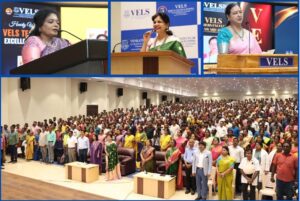
VELS University Honours More than 2,000 Teachers Across Tamil Nadu

VELS Institute of Science, Technology & Advanced Studies (VISTAS), popularly known as VELS University, has been celebrating the invaluable contribution of teachers through its VELS Teachers’ Excellence Award 2026, conducted across its campuses in Chennai.   VELS honoured 2,000 outstanding teachers across Tamil Nadu at the Teachers Excellence Awards 2026, celebrated across Periyapalayam, Thiruvanmiyur and Pallavaram   As part of its Teachers’ Day celebrations, VELS organised a series of Teachers’ Excellence Award ceremonies across Thiruvanmiyur, Periyapalayam and Pallavaram, recognising thousands of educators for their dedication, commitment and tireless efforts in shaping the lives and futures of students.   The series began at the VELS Thiruvanmiyur Campus, where Dr. Tamilisai Soundararajan graced the occasion as the Chief Guest. The second edition was held at the VELS Periyapalayam Campus, with Dr. Sowmiya Anbumani, Member of the Legislative Assembly, Dharmapuri Constituency, as the Chief Guest. The celebrations culminated at the VELS Pallavaram Campus with Tmt. Premalatha Vijayakant, Member of the Legislative Assembly, Virudhachalam Constituency and General Secretary, Desiya Murpokku Dravida Kazhagam, as the Chief Guest.   Celebrating the teachers who shape every profession Addressing the gathering, Dr. Preethaa Ganesh, Vice-President, VELS Group of Institutions, highlighted the unique role played by teachers in shaping individuals and society.   “Teachers work tirelessly for their students, often without expecting recognition or praise. Their contribution goes far beyond the classroom. They guide students, build their confidence, shape their character and help them find the right direction in life.   Our culture has always placed teachers in a position of great respect through the timeless words ‘Matha, Pitha, Guru, Deivam.’ The teaching profession is unique because it creates and nurtures every other profession. Every doctor, engineer, scientist, entrepreneur, administrator and professional begins the journey with a teacher.   Through the VELS Teachers’ Excellence Award, we wish to express our gratitude and recognise educators whose dedication continues to make a lasting difference in the lives of their students,” she said.   Tmt.Premalatha Vijayakant recalls teacher who shaped her journey Speaking as the Chief Guest at the Pallavaram ceremony, Tmt. Premalatha Vijayakant said “Teachers have the responsibility of guiding students in the right direction. Education is one of the most important foundations of a person’s life. Captain Vijayakant strongly believed in the importance of education and supported thousands of students in pursuing their studies.   Behind every successful student, there is the contribution of a teacher. I still remember my teacher Mr. Loganathan, who moulded me and helped me become the person I am today. He is no more, but I continue to remember him with gratitude. I owe a part of all my success to the teacher who guided and shaped me during my formative years,” she said.   She also encouraged students to actively participate in sports and extracurricular activities, highlighting their role in building confidence, discipline and teamwork.   Congratulating the award recipients, she appreciated the immense contribution of teachers to society and extended her best wishes to the entire teaching community.   The Pallavaram event was attended by Dr. Arthi Ganesh, Pro-Chancellor (Administration); Dr. M. Bhaskaran, Vice-Chancellor (FAC), Dr. M. Chandrasekaran, Registrar,, along with university officials, educators and award recipients.   About Vels University VELS Institute of Science, Technology & Advanced Studies (VISTAS) continues to be recognised as one of the prominent deemed-to-be universities in Chennai, distinguished by its prestigious NAAC A++ accreditation and UGC Category-I status. Home to over 20,000 students and supported by a dedicated faculty strength of 1,220 members, VISTAS offers more than 150 undergraduate and postgraduate programmes across a wide spectrum of disciplines. These include Medicine, Engineering, Nursing, Allied Health Sciences, Pharmacy, Management, Law, Mass Communication, Maritime Studies, Aviation, Physiotherapy and Computing Sciences, among others.   With its commitment to academic excellence, innovation and holistic development, VISTAS remains a premier destination for quality higher education in India. With campuses across Pallavaram, Thalambur, Periyapalayam, Thiruvanmiyur and Adyar, VELS provides students with opportunities to pursue academic learning alongside research, innovation, industry engagement, sports, cultural activities and experiential learning.   For more information: www.vistas.ac.in.

VELS University Honours More than 2,000 Teachers Across Tamil Nadu Read More »

Hyderabad-Built Skincare Science Reaches the World Stage: Boldpurity Named Global Top 5 Finalist at BeautyMatter Awards 2026

Boldpurity, a clinical skincare brand founded by cosmetic scientist Khatija Shabana, has been named one of five global finalists in the Best Use of Technology (Brands) category at the 2026 BeautyMatter Awards. Boldpurity is the first Indian skincare brand to reach the finalist list in this category, standing alongside four established international technology-led brands.   Khatija Shabana, M.Pharm, Certified Cosmetic Scientist and Co-founder of Boldpurity   The recognition comes less than two years after the company set up its own research and manufacturing facility in Hyderabad, choosing to engineer its formulations from the molecular level rather than source ready-made bases from contract manufacturers.   “Most skincare brands buy a formula and build a story around it. We did the opposite. We built a laboratory, then spent 18 months solving delivery problems that the industry had accepted as unsolvable at cosmetic scale. Being judged against global technology leaders and placed in the top five tells us that work holds up anywhere in the world,” said Khatija Shabana, M.Pharm, Certified Cosmetic Scientist and Co-founder of Boldpurity.   The Science Behind the Recognition Two proprietary delivery systems formed the basis of Boldpurity’s submission. Both were conceived, developed, stability-tested and manufactured entirely in-house, and both are the subject of patent filings in India.   Nano-scale PDRN with dual-encapsulation — SkinReset™ PDRN Serum Salmon-derived PDRN is conventionally used at kilodalton molecular scale, which limits how it can be formulated and delivered in a topical product. Boldpurity reduced PDRN to nanoparticle dimensions and built a two-layer encapsulation system around it: one layer designed for immediate release on application, the second engineered to release gradually over eight hours. The result is a single serum that delivers PDRN in two distinct phases, a capability standard single-release PDRN formulations do not offer. Developing the carrier chemistry and completing stability work took more than 12 months.   Precision micron spicules with bioactive coating — CellMorph™ 500 Spicule Serum Spicule-based products typically rely on particles around 400 micrometres in size. Boldpurity engineered its spicules down to 0.9 microns, a roughly 444-fold reduction, while preserving structural integrity, and then applied a proprietary coating of apple stem cell bioactives to each particle. Pairing precision sizing with a bioactive surface creates a delivery mechanism that unites physical texture support with skin-conditioning actives. Bringing this level of micron-scale precision from pharmaceutical-style development into a cosmetic product required 18 months of process engineering.   Why It Matters for Indian Beauty India is one of the fastest-growing skincare markets in the world, yet the formulation technology behind most domestic brands is still imported or licensed. Boldpurity’s finalist placement is an early signal that original, patent-pending delivery science can be built in India and evaluated on equal terms with the global industry’s most technically advanced brands.   “This is not a regional or emerging-market award. The category is judged on formulation innovation, delivery engineering and validation, with the same yardstick applied to every entrant. That is exactly the standard we wanted to be measured against,” added Syed Fouzan, Co-founder of Boldpurity.   About the BeautyMatter Awards The BeautyMatter Awards recognise excellence across the global beauty industry, with finalists selected by an independent panel on merit. The Best Use of Technology (Brands) category honours brands whose proprietary formulation, delivery or manufacturing technology represents a genuine technical advance. The full list of 2026 finalists is available at awards.beautymatter.com/finalists-2026. Winners will be announced on December 7, 2026, in New York City.   About Boldpurity Boldpurity® is a clinical skincare brand headquartered in Hyderabad, India. Co-founded by Khatija Shabana (M.Pharm, Certified Cosmetic Scientist) and Syed Fouzan, the company formulates, manufactures and clinically tests every product in its own facility rather than relying on third-party or white-label formulations. Its flagship technologies, SkinReset™ PDRN Serum and CellMorph™ 500 Spicule Serum, are both patent-pending.   Learn more at boldpurity.com.

Hyderabad-Built Skincare Science Reaches the World Stage: Boldpurity Named Global Top 5 Finalist at BeautyMatter Awards 2026 Read More »

VERO MODA Unveils Aditi Rao Hydari as the Face of its Autumn/Winter 2026 Campaign

VERO MODA introduces Aditi Rao Hydari as the face of its Autumn/Winter 2026 campaign, The partnership signals VERO MODA’s ambition to deepen its presence and relevance in Indian womenswear, bringing together the brand’s confident spirit with Aditi’s distinctive sense of style, understated elegance and individuality. Aditi embodies the VERO MODA woman who is self-assured, modern and unapologetically herself.   VERO MODA x Aditi Rao Hydari   No woman is just one thing. The campaign captures the many facets of the VERO MODA woman, whose style shifts with every moment while her individuality stays unmistakably her own.   Rooted in the season’s collection, the campaign brings to life pieces spanning dresses and jumpsuits, co-ord sets, denim, blazers and knitwear. Each designed to move easily across a woman’s day.   Speaking about the campaign, Sumit Dhingra, CEO & Country Director, BESTSELLER India, said, “VERO MODA has built a strong position in Indian womenswear, and we see significant opportunity ahead. As we enter the next phase of our growth, this campaign with Aditi Rao Hydari is an important step in strengthening the brand’s relevance and visibility in the market.“   Speaking about the campaign, Aditi Rao Hydari said, “VERO MODA has always stood for quiet confidence, and that’s something I connect with personally. Being part of the VERO MODA AW’26 campaign feels like a natural extension of that philosophy.”   The collection featuring Aditi Rao Hydari, is now available across all retail stores, app, and www.veromoda.in. Alongside this, VERO MODA has also launched its festive line, now available in stores and online, bringing the brand’s signature versatility to festive dressing this season.   About VERO MODA Launched in 1987 as BESTSELLER’s first fashion label, VERO MODA has grown to become one of Europe’s most recognised high-street fashion brands. Built on the belief that everyday style should feel effortless, elevated and empowering; the brand creates versatile collections that celebrate individuality and inspire confidence. With an authentic expression of style and a constant focus on evolution, VERO MODA continues to redefine modern fashion for women who embrace self-expression and effortless dressing.   In India, VERO MODA has established itself as one of the leading destinations for women’s western wear, offering trend-led collections designed for every facet of a woman’s lifestyle. The brand reaches customers through its exclusive brand outlets and shop-in-shops across the country, the VERO MODA App, www.veromoda.in and leading online marketplaces.

VERO MODA Unveils Aditi Rao Hydari as the Face of its Autumn/Winter 2026 Campaign Read More »

Ansell's Investment in India to Strengthen Supply to Key Strategic Markets and Enhance Customer Centricity

Ansell, a global leader in safety, inaugurated its new manufacturing facility in Kovai today, reinforcing the company’s ongoing capital investment in its long-term strategic objectives. The facility is already producing for the local market, with additional capacity coming online in the months ahead to support Ansell’s key strategic markets.    A significant boost for India’s medical manufacturing ecosystem   “Ansell has built its reputation in surgical over decades, and Kovai is an investment in the long-term strength of that business. As the site ramps up, it extends our manufacturing footprint for surgical gloves and deepens our commitment to the markets where we hold the strongest positions and the closest customer relationships, including the United States, Germany, France and the United Kingdom,” said Jennifer Ross-Murphy, Chief Medical Business Officer, Ansell.   Sustainability was a core consideration in the facility’s design, with renewable energy generation and a water recycling system that reclaims a significant share of water used in operations, reflecting Ansell’s ongoing commitment to responsible, environmentally conscious manufacturing across its global sites.   The new manufacturing site in India supports Ansell’s broader mission of protecting healthcare workers and patients by expanding access to high-quality surgical gloves, reinforcing the company’s commitment to reliability and safety across the healthcare environments it serves. About Ansell Ansell (ASX: ANN) is a global leader in safety solutions and an integrated manufacturer of personal protection equipment for healthcare and industrial workplaces. Each day, over 10 million workers in more than 100 countries trust their safety to Ansell brands such as HyFlex, Ringers, MICROFLEX, TouchNTuff, GAMMEX, Kimtech, KleenGuard, and AlphaTec. Driven by a vision to lead the world to a safer future, the company continuously pursues new product and service innovations that predict, prevent, and protect against workplace risk while promoting sustainable sourcing and manufacturing.   Information on Ansell and its products can be found at www.ansell.com. #AnsellProtects

Ansell's Investment in India to Strengthen Supply to Key Strategic Markets and Enhance Customer Centricity Read More »

Gold Loans on the Rise as Indians Increasingly Borrow Against Gold

For many years, gold has held important value as a store of wealth among Indian families. But with changing times, the mindset of people has changed. Due to which the, gold which was lying in lockers and cupboards has started being used to raise money.   Gold loans are rising rapidly in India as people unlock the value of their gold to fund education, healthcare, business and other financial needs   Gold loans are seeing rapid growth in India as there has been an increase in borrowers pledging jewellery to meet the funding requirements instead of selling it. The recent data reflects that this trend has accelerated in 2026. Credit against jewellery by NBFCs, including housing finance companies, has increased to 68.5% year-on-year in July 2026 as compared to 43.9% in the previous year. Bank credit against gold jewellery also increased by 88.1% year-on-year. At the end of July, outstanding gold-backed credit was around Rs. 3.54 lakh crore for NBFCs and Rs. 5.52 lakh crore for banks. Gold loans were also amongst the fastest-growing retail loan categories for NBFCs during the month. Rising Gold Prices have Increased Borrowing Capacity One of the major reasons behind the surge is the high increase in gold prices. Domestic gold prices were very high in 2026 compared to the previous year. During Q2 2026, India’s domestic gold price rose by 59% compared to the previous year, despite price easing from its earlier peaks. This played an important role in increasing the demand for gold loans. The amount you can borrow against gold jewellery depends partly on the gold value and applicable loan-to-value (LTV) limit. With a rise in gold prices, you can get a loan of a higher amount with the same quantity of gold. People Don’t have to Sell their Gold Indian families are deeply connected to their gold jewellery due to its financial and emotional value. By selling gold, you can get cash on an instant basis, but the asset is gone forever. A gold loan, however, works very differently. A borrower has to pledge the jewellery as collateral to get a loan. After the loan is repaid, the collateral is released and given back to the borrower. This can make gold loans quite attractive when people need funds for short-term needs like medical emergencies, education, business needs, or any other large expenditures. The trend is particularly notable as gold recycling has reduced despite being 60% higher YoY. Gold holders no longer want to sell their gold for cash and have increasingly opted for collateralised borrowing to monetise their holdings instead. Gold Loans Are Secured Another important reason for the growth in gold loans is their secured nature. A gold loan is backed by physical gold pledged with the lender. This is quite different from a personal loan where there is no asset involved. Collateral gives extra security to lenders against probable repayment concerns. It also helps borrowers to get credit by using an asset they already own. This is quite helpful for those individuals who don’t have a strong credit history or for those who find unsecured borrowing quite expensive. Banks are Increasing their Presence Gold lending was previously an important business for specialised NBFCs. But over time, things have changed, and now even banks are increasingly participating in this segment. The recent data shows that bank lending against gold jewellery has increased very fast, with outstanding credit reaching approximately Rs. 5.52 lakh crore by July 2026.  Earlier, at the end of May 2026, the outstanding gold loans stood at around Rs. 5.1 lakh crore for banks, which reflected 105% YOY growth. Unsecured Lending is Being Watched Closely The rise in gold loans should also be viewed against the broader changes that are occurring in India’s retail credit market. The RBI has brought certain measures in recent years for strengthening risk management around unsecured consumer credit. As lenders start focusing on risks associated with unsecured borrowing, secured products can become an important part of their lending strategy. This never means that people are not taking online loans or other unsecured credit. But the rise in gold loans shows that both lenders and borrowers are increasingly using existing assets to access funds. RBI Has Standardised Gold Loan Rules The rapid expansion in gold-backed lending has also been accompanied by a stronger regulatory framework. The RBI’s Lending Against Gold and Silver Collateral Directions, 2025 introduced standardised requirements that cover areas such as valuation, assaying, LTV limits and the release of pledged collateral. For consumption loans, the framework permits maximum LTV ratios of:   85% for loans up to Rs. 2.5 lakh, up from the long-standing 75% cap. 80% for loans above Rs. 2.5 lakh and up to Rs. 5 lakh 75% for loans above Rs. 5 lakh These requirements are intended to create greater consistency and transparency in gold-backed lending. For smaller borrowers and households in semi-urban and rural India, this is a direct lift in credit accessibility. The Bigger Picture The rapid rise in gold loans reflects the changing role of gold in Indian households. Gold is now not just considered an asset which is purchased, stored, and passed on to generations. It is also used as collateral to get access to formal credit. With NBFC gold-backed lending rising 68.5% YOY in July 2026 and bank lending against gold jewellery also expanding rapidly, the importance of gold loans has increased in India’s retail credit market. The underlying idea is simple: Instead of selling gold when cash is required, households can now use it as collateral to unlock liquidity while retaining the possibility of getting the jewellery back after repayment.  

Gold Loans on the Rise as Indians Increasingly Borrow Against Gold Read More »