kalabhumitalkies.com

September 2026

International Innovation Challenge IIC 3.0 Inaugurated at Manipal University Jaipur

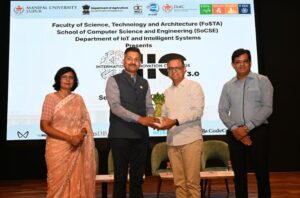
Manipal University Jaipur (MUJ), in collaboration with the Department of Agriculture, Government of Rajasthan, inaugurated the International Innovation Challenge (IIC) 3.0, a 36-hour innovation and entrepreneurship challenge aimed at encouraging young innovators to develop technology-driven solutions to pressing societal and industry challenges.   IIC 3.0- Chief Guest Mr Virendra Chaudhary was felicitated by Dr. Amit Soni, Registrar, Manipal University Jaipur   Organised by the Department of IoT & Intelligent Systems, AIC-MUJ, E-Cell MUJ and DoIC-MUJ, the challenge is co-powered by Unstop, mlHealth 360 Pvt. Ltd., Mahindra & Mahindra Pvt. Ltd., MongoDB, InterviewBuddy, Internshala and Code Crafters, with ICAR, Mysore as a partner.   The inaugural ceremony brought together university leadership, industry experts, mentors, partners and participating teams. The session was graced by Prof. Amit Soni, Registrar, MUJ, Prof. Vijaypal Singh Dhaka, Dean, IQAC, MUJ and Convenor, IIC 3.0 and Shri Virendra Choudhary, Director, 1st India News as the Chief Guest.   Prof. Amit Soni, Registrar welcomed the guests and participants from across the country and introduced the rich legacy of Manipal University Jaipur.   The Chief Guest Shri Virendra Choudhary, Director, First India News, who opened the problem statement for IIC 3.0. Addressing the participants, Shri Choudhary emphasised the need to build a robust and future-ready agricultural ecosystem and encouraged young innovators to explore entrepreneurship and technology-led solutions in the agriculture sector.   Dr. Geeta Rani, HoD, IoT & Intelligent Systems and Program Chair, IIC 3.0, welcomed the mentors, partners and participating teams and outlined the journey ahead for the 36-hour challenge. Dr. G. L. Saini proposed the vote of thanks, acknowledging the contribution of dignitaries, mentors, partners, volunteers, participants and the organising team.   The third edition has witnessed an impressive response, with 259 teams comprising more than 900 registered students participating in the first round out of these, 154 teams are from MUJ and 105 teams are from institutions outside the university, representing 15 states and more than 70 universities and colleges across India and globe. The participating institutions include premier institutes such as IIT Bombay, IIT Jodhpur and NIT Lucknow. The challenge has also attracted an international team from Italy, adding a global dimension to the competition.   The participating teams are working on solutions across 10 critical themes, including EdTech, HealthTech, FinTech, AgriTech, Cybersecurity, Women and Child Safety, Aerotech and Aerospace Innovation, Transportation and Mobility, and Smart Cities and Urban Development.   Building on the success of IIC 2.0, organised last year, IIC 3.0 has been expanded into a comprehensive innovation platform combining a 36-hour hackathon and expert-led panel discussions.   The challenge is supported by an experienced panel of mentors and judges, including Mr. Ankit Jha, Founder, Awarno Technologies; Ms. Swati Bansal, SDE, Amazon; Ms. Nandini Sharma, Founder, Aparajita Foundation; and Mr. Prince Yadav, SDE, GreyOrange, Dr Ester Zumpano, University of Calabria, Italy; Dr Eugenio Vocaturo, CNR-Nanotec, Italy, Dr Haiming Liu, Southampton University, UK. The discussions will explore contemporary issues and opportunities around artificial intelligence, industry requirements and career planning, innovation and entrepreneurship, higher education, and global opportunities, providing participants with perspectives beyond the competition itself.   The competition offers attractive rewards to recognise innovative ideas and promising solutions. The first prize carries a cash award of Rs. 1 lakh, the second prize Rs. 75,000 and the third prize Rs. 50,000. In addition, participants will receive goodies and opportunities for paid internships, providing them with avenues to further develop their skills and connect with industry.   With participation from across India and an international team, IIC 3.0 represents MUJ’s continued efforts to create a vibrant ecosystem for innovation, entrepreneurship, interdisciplinary collaboration and sustainable development. The 36-hour challenge provides young innovators with a platform to transform ideas into solutions while engaging with mentors, industry leaders and peers from diverse academic and professional backgrounds.

International Innovation Challenge IIC 3.0 Inaugurated at Manipal University Jaipur Read More »
A New Force in the Surf Park Economy

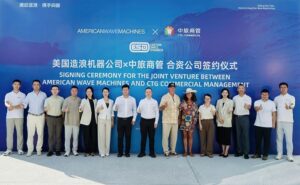
American Wave Machines is pleased to announce the formation of Eastern Swell Dynamics, a new joint venture established with China Tourism Group to support the growth of PerfectSwell® surf pools across China. The new company will serve as the official licensed platform for PerfectSwell® projects in the region, bringing together AWM’s proven surf technology with CTG’s deep tourism infrastructure, development capabilities, market access and longstanding presence across Greater China.   Signing Ceremony for the joint venture between American Wave Machines and CTG Commercial Management   China Tourism Group is one of the most significant tourism enterprises in China, with a history dating back more than a century and a business network spanning mainland China, and international markets. Its platform includes travel services, scenic destinations, hotels, duty free retail, tourism transportation, real estate, cultural tourism and related destination businesses. CTG’s development of Riyue Bay Surf Resort, anchored by PerfectSwell® surf technology, offers an early signal of what this partnership is designed to scale: destination experiences driven by surf. China’s Insane PerfectSwell® Surf Park: www.youtube.com/watch?v=J1cSXFRD6-I   Riyue Bay Surf Resort powered by PerfectSwell® surf technology   “The formation of Eastern Swell Dynamics reflects the next phase of PerfectSwell® growth,” said AWM Founder Bruce McFarland. “AWM brings the surf technology, enthusiasm for the sport and surf park experience. CTG brings extraordinary regional capability, destination development experience and institutional reach. Together, we believe the joint venture is positioned to support a new generation of surf park projects.”   Eastern Swell Dynamics logo   The launch comes as PerfectSwell® Surf Parks continue to emerge as powerful destination anchors, hospitality drivers and next generation recreational assets. Through Eastern Swell Dynamics, AWM and CTG intend to create a focused regional platform for long term market development, localized project support and premium surf experiences. “Riyue Bay Surf Resort has already demonstrated the appeal of high-performance PerfectSwell® surf within a destination experience developed by CTG,” said Wei Li, CFO of CTG Investments. “Through Eastern Swell Dynamics, we look forward to building on that success and supporting the development of new PerfectSwell® surf destinations across China.”   About American Wave Machines American Wave Machines, Inc. is the inventor and developer of PerfectSwell® Surf Technology, the patented surf platform powering world-class surf destinations across real estate, hospitality, private club, resort, and commercial surf markets. PerfectSwell® helped pioneer the modern surf park category by delivering the wave surfers want: authentic, repeatable, high-performance surf with the variety, progression, and quality required to drive long-term demand.   As the inventor of sequence-based pneumatic surf technology, AWM has built a deeply protected platform backed by over 50 patents worldwide, extensive operating data, and proven destination performance. PerfectSwell® innovations including Split Peaks, A-Frames, Peeling Waves, Air Sections, Barrels, Infinite Ocean, and other signature wave and design capabilities are supported by AWM’s robust intellectual property portfolio.

A New Force in the Surf Park Economy Read More »

PayGlocal Introduces Flash, a New Generation of Express Checkout for Cross-Border Commerce

PayGlocal, India’s leading cross-border payments company, today introduces Flash, a new express checkout experience that allows international customers to carry their verified checkout details across participating Indian merchants. With the customer’s permission, Flash securely recognises previously verified information, so customers who have already completed a checkout through PayGlocal can make subsequent purchases without having to enter the same details from scratch.   PayGlocal launches Flash, an express checkout experience for cross-border commerce   Today, every new purchase from an Indian business can mean starting the checkout process again. Customers may have already entered and verified their personal and payment information with one merchant, only to repeat the same process when they shop with another. Flash is designed to make that journey simpler, allowing customers to move between participating Indian businesses with fewer steps and a more familiar checkout experience.   Making Cross-Border Checkout Simpler Cross-border payments have made it possible for Indian businesses to reach customers around the world. Flash focuses on the next part of that journey: making it easier for those customers to complete a purchase.   Rather than repeatedly entering the same information, customers can use their existing verified details, with their consent, when shopping with other participating Indian businesses.   On the occasion, Yogesh Lokhande, Co-founder & CTO, PayGlocal said, “For an Indian business selling to the world, every customer has to be won from scratch. It has to spend to get discovered, build trust with every new buyer, and earn the right to make the sale. And when another Indian business reaches that same customer, the journey starts all over again. PayGlocal changes that.”   He added, “Millions of global shoppers who already buy through PayGlocal can now become a shared customer base for every Indian business on our network. A first-time visitor can arrive already known, trusted, and just one tap away from completing a purchase. For the first time, an Indian business doesn’t have to win the world alone.”   Flash has been built from the ground up for cross-border commerce, taking into account the needs of international customers shopping with Indian merchants. The aim is to reduce friction at checkout while giving participating businesses a simpler way to serve returning global shoppers.   Building the Infrastructure for India’s Global Commerce PayGlocal has spent more than the last five years building payment infrastructure that enables Indian businesses to accept payments from customers around the world.   Flash builds on this foundation to create a more consistent checkout experience across participating merchants. As the network grows, customers can discover and shop with more Indian businesses without having to repeatedly start the checkout process from scratch.   For Indian businesses, the opportunity goes beyond accepting international payments. It is about making it easier for global customers to complete purchases and return to shop again.   For the first time, Indian businesses selling to the world can share a global customer network.   And that is the larger opportunity PayGlocal sees beyond payments, to help Indian businesses build lasting relationships with customers around the world.   Flash to Debut at Global Fintech Fest 2026 PayGlocal is set to unveil Flash at Global Fintech Fest 2026 in Mumbai, giving the fintech ecosystem its first look at the product and the experience it enables.   The launch will also be part of a broader series of innovations PayGlocal will showcase at GFF across cross-border payments, commerce, payment intelligence and AI.   Together, these launches represent PayGlocal’s next phase of building the infrastructure that makes global commerce feel more like a connected experience.

PayGlocal Introduces Flash, a New Generation of Express Checkout for Cross-Border Commerce Read More »

MSC Cruises Highlights Global Itineraries and New Ship Experiences for Indian Travellers

The cruise line offers Indian guests a wide choice of holidays across the Mediterranean, Northern Europe, the Caribbean, Alaska, South America, Southern Africa and Asia MSC World Asia, MSC Cruises’ highly anticipated new World Class ship, will sail the Western Mediterranean from December 2026   MSC Cruises is highlighting the breadth of its global cruise offering for Indian travellers, bringing together a wide choice of itineraries, modern ships and onboard experiences designed for guests looking to discover multiple destinations in one seamless holiday.   MSC World Asia   As demand for new international holiday experiences continues to evolve in India, cruising offers travellers a compelling way to combine destination discovery, entertainment, dining and relaxation, all while unpacking only once. With itineraries including across the Mediterranean, Northern Europe, the Caribbean, Alaska, MSC Cruises provides a broad portfolio of holidays for families, couples, groups of friends and multi-generational travellers.   Guests sailing with MSC Cruises can choose from a wide range of experiences on board, including international dining, live entertainment, dedicated kids’ clubs, wellness and fitness facilities, family activities and accommodation options for different travel styles. The line’s exclusive MSC Yacht Club offers a premium “ship-within-a-ship” experience with dedicated areas, 24-hour butler and concierge service, private facilities and elevated comfort.   For Indian guests, MSC Cruises offers access to a diverse portfolio of itineraries across five continents, with sailings in some of the world’s most sought-after cruise regions. This global choice is supported by an extensive network of international embarkation ports and fly-cruise options, allowing travellers to select the holiday experience that best suits their plans.   Norbert Stiekema, Executive Director Global Sales, MSC Cruises, said, “India is an important market for the future of cruising, with travellers increasingly looking for holidays that combine discovery, comfort, choice and value. MSC Cruises is well placed to meet this demand through our global portfolio of itineraries, modern fleet and onboard experiences designed for international guests. Our focus is to make cruising more relevant and accessible for Indian travellers, while continuing to introduce new ships, destinations and experiences across our global network.”   A key example of MSC Cruises’ continued investment in its fleet and guest experience is MSC World Asia, the cruise line’s newest World Class ship, which will sail in the Western Mediterranean from December 2026. The ship will offer seven-night itineraries with calls including Barcelona, Marseille, Genoa, Civitavecchia for Rome, Messina and Valletta during winter 2026/27, followed by summer 2027 sailings to Barcelona, Marseille, Genoa, Naples, Messina and Valletta.   MSC World Asia will feature more than 40 bars, lounges and restaurants, international entertainment, dedicated family facilities, wellness spaces and seven onboard districts, each designed with its own atmosphere and experiences. The ship will also include MSC Yacht Club accommodation, a wide range of dining concepts and new venues that reflect the creativity and innovation of MSC Cruises’ World Class ships.   Sustainability remains central to MSC Cruises’ long-term vision, with the company committed to reducing the environmental impact of its operations and achieving net-zero greenhouse gas emissions by 2050.   About MSC Cruises Headquartered in Geneva, Switzerland, the privately-owned MSC Cruises is the world’s third largest cruise line and the market leader in Europe with a strong and growing presence in North America.   A global cruise brand with 23 modern ships offering cruises across five continents, guests can visit more than 100 countries worldwide with more than 250 destinations, making unforgettable memories and enjoying the finest hospitality.   For more information visit www.msccruises.com.

MSC Cruises Highlights Global Itineraries and New Ship Experiences for Indian Travellers Read More »

The Great Indian Pause: Marriage and Motherhood Forcing Millions of Women Out of India's Workforce

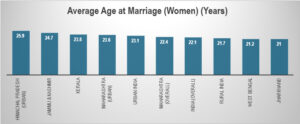
A new report by Aspire For Her and Shaadi.org reveals a sobering reality: marriage and motherhood remain the leading reasons why millions of Indian women are forced to leave the workforce, with only a fraction ever returning. Despite rising education levels and aspirations, entrenched social norms and systemic barriers continue to lock women out of economic participation, costing India dearly in lost talent and productivity.   National Crisis: The Numbers Behind the Exodus 50% of working mothers in India quit their jobs by age 30, with marriage and motherhood as the primary triggers. Only 27% of women who take a career break ever return to work, highlighting a massive loss of female talent. ~7 million women are actively seeking to return to the workforce right now. India ranks 131 out of 148 countries on the Global Gender Gap Index (2025), placing it among the bottom five for economic participation. 129:1 — the ratio of applications per seat in a leading returnship program, underscoring the pent-up demand for re-entry opportunities.   “This report puts numbers to what we see every day: the life event around which most women’s careers quietly pause.” – AFH x Shaadi.org “The Great Indian Return” Report, 2026   State-by-State: Where the Exodus Is Most Acute While the crisis is national, its intensity varies sharply across states. Data from the Periodic Labour Force Survey (PLFS) 2022-23 and 2023-24, combined with secondary analyses, reveal stark contrasts:   State/Region Female LFPR (2022-23) Marriage/Domestic Duty Exit Rate Notable Trends Bihar Lowest Highest Traditional norms, high marriage/domestic exits Uttar Pradesh Low Very High Rural married women most affected Rajasthan Low Very High Gender roles drive exits Punjab, Haryana Low High Among lowest LFPR, high marriage/domestic exits Madhya Pradesh Below Avg. High Marriage a major exit factor West Bengal Moderate High Marriage/domestic duties lead exits Kerala High Low Progressive norms, better retention Tamil Nadu High Low Education, policies reduce marriage exits Himachal Pradesh High Low Urban women marry later, stay in workforce longer   National Female LFPR: 37% (2022-23), up from 25% in 2017-18. 43.04% of women nationally cite household duties as the main reason for not working.   Are Indian Women Marrying Later? The Marriage Age Shift The average age at first marriage for Indian women is rising, reflecting gradual social change: State/Region Average Age at Marriage (Women) Himachal Pradesh (urban) 25.9 years Jammu & Kashmir 24.7 years Kerala 23.8 years Maharashtra (urban) 23.6 years Maharashtra (overall) 22.4 years West Bengal 21.2 years Jharkhand 21.0 years India (overall) 22.1 years Urban India 23.1 years Rural India 21.7 years                         Average age of women at marriage (years)   Trend: The national average age at marriage has increased from 18.7 years in 1991 to 22.1 years today. Urban women are marrying later than rural women, with the highest ages in Himachal Pradesh and Jammu & Kashmir.   The Barriers: Why Women Don’t Return Despite rising aspirations, women face formidable obstacles to workforce re-entry: Hiring Penalty: Women with a career break face a 24 percentage point lower chance of being hired than men with similar qualifications. Marriage Reduces Participation: Marriage alone reduces women’s labour force participation by 12 percentage points; childbirth by a further 4 points. Attrition After Marriage: 13% of employed women leave their jobs after marriage. Childcare & Flexibility: Lack of reliable childcare and flexible work options are major deterrents. Mobility Restrictions: Many women become “trailing spouses,” relocating for their husband’s career and losing their own job prospects. Social Stigma: Persistent cultural expectations push women to prioritize family over career. Maternity Penalty: Women face lower pay, missed promotions, and stigma after maternity leave.   Key Finding: Marriage and motherhood remain the dominant reasons for women’s workforce exit in India, especially in states with traditional gender norms. While the average age at marriage is rising, systemic barriers — from employer bias to lack of childcare — continue to lock millions of women out of economic opportunity.   Call to Action Through The Great Indian Pause Report, we aim to spotlight the barriers that force millions of women out of the workforce and build momentum for solutions that enable their return. The Great Indian Pause forms part of the #HerIndependence campaign by Aspire For Her and Shaadi.org, an initiative dedicated to advancing women’s economic independence and workforce participation. Aspire For Her and Shaadi.org urge employers, policymakers, and families to: Create structured returnship programs to help women re-enter the workforce. Promote flexible work and childcare support to retain female talent. Challenge social norms and stigma around women’s careers and career breaks. Enforce pay parity and anti-discrimination policies for women returning after marriage or motherhood.   “The Great Indian Pause can become the Great Indian Return — if we open the door.”

The Great Indian Pause: Marriage and Motherhood Forcing Millions of Women Out of India's Workforce Read More »

Tathastu ICS Celebrates Teachers' Day with GURU SAMVAD 2026

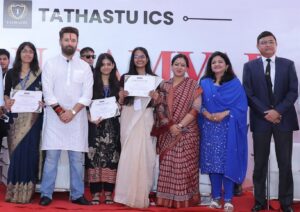
A Thoughtful Celebration of the Architects of Tomorrow Union Minister Shri Chirag Paswan and Hon’ble Mr. Justice J.K. Maheshwari (Former Judge, Supreme Court of India) inspire young India to lead with courage, character and conviction   On the occasion of Teachers’ Day, Tathastu ICS hosted GURU SAMVAD 2026, a distinguished gathering dedicated to honouring the teachers and mentors who shape young minds and contribute to nation-building. The programme brought together eminent educators, civil servants, entrepreneurs and thought leaders in a meaningful dialogue with Gen Z, encouraging young India to participate thoughtfully in building an empowered and inclusive future.   GURU SAMVAD Tathastu ICS   The institute was deeply honoured to welcome Shri Chirag Paswan, Hon’ble Union Minister of Food Processing Industries, Government of India, as Chief Guest, and Hon’ble Mr. Justice J.K. Maheshwari, Former Judge, Supreme Court of India, as Guest of Honour. The occasion was further graced by over 100 distinguished dignitaries — serving and retired IAS and IPS officers, entrepreneurs, academicians and teachers, including N.N.D. Dubey (Former Deputy Inspector General of the Border Security Force)  , Shri K.C. Jain  (Retired  Principal Chief Commissioner of Income Tax) and Shri Hemant Jain (Group Managing Director of the KLJ Group of Companies), Shri Rakesh Asthana (Retired IPS- Former Police Commissioner of Delhi),  Ms. Rakhee Gupta Bhandari (IAS-Principal Secretary, Food Processing) — who interacted freely with students through the day.   Addressing the gathering, Justice J.K. Maheshwari said India’s greatest asset is not merely its demographic strength but the character of its young citizens, and urged students to build their lives on discipline and integrity. Constitutional values, he reminded them, are living principles carried into one’s profession, family and community. He also placed the teacher at the centre of this journey, noting that behind every upright citizen stands a guru.   Hon’ble Union Minister Shri Chirag Paswan connected with students through the lessons of his own life journey. Adversity, he said, is not an interruption in life’s plan but an essential part of it — difficult phases forge character, teach patience and reveal the depth of one’s resolve. A setback, he emphasised, is only a pause, never a full stop. Speaking on how to face harsh conditions, he urged students to hold on to clarity of purpose, consistency of effort and the courage to begin again, adding that as India moves towards Viksit Bharat, the nation needs youth who are not only capable but resilient.   Hosting the programme, Dr. Tanu Jain, ex-Civil Servant, Founder of Tathastu ICS and author, celebrated a generation achieving extraordinary things at a very young age — clearing one of the world’s toughest examinations in their early twenties and building enterprises. Talent, she said, does not wait for age; what students need is the right direction, structured guidance and an ecosystem that believes in them.   She highlighted how Tathastu ICS is built on one conviction — that a student should never have to choose between a degree and a dream. Its Integrated BA + UPSC (three-year), MA + UPSC and MBA + UPSC programmes, along with its GS Foundation Programmes, allow students to complete their graduation while building a strong, syllabus-aligned foundation in General Studies, Optional subjects, answer writing and personality development — saving precious years and giving aspirants a well-prepared mind by the time they graduate.   The programme also featured panel discussions, an interactive session with students and cultural performances, closing with the felicitation of teachers and a shared resolve — that as India walks towards Viksit Bharat, it will walk on the strength of its teachers and the courage of its youth.   About Tathastu ICS Tathastu ICS is a leading Civil Services preparation institute founded by Dr. Tanu Jain, ex-Civil Servant and author, with campuses in New Delhi, Greater Noida and Indore. Known for its Integrated BA + UPSC, MA + UPSC and MBA + UPSC programmes and its Foundation courses, the institute has mentored 5,000+ aspirants, with 400+ selections through various programmes.   For more information, please visit tathastuics.com

Tathastu ICS Celebrates Teachers' Day with GURU SAMVAD 2026 Read More »

EMCON 2026: When Emergency Medicine Comes of Age in India

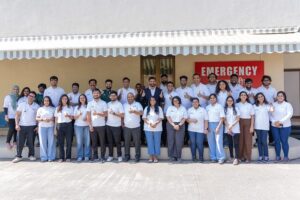
There are moments in the evolution of a medical specialty when a conference becomes more than a conference. It becomes a statement. A landmark global gathering in Mumbai is more than a medical conference. It reflects how far Emergency Medicine in India has travelled and where it must go next.   – By Dr Sandeep B. Gore, Director – Emergency Medicine, Fortis Hospital, Mulund, Mumbai & Organising Chairman, EMCON 2026.   For Emergency Medicine in India, EMCON 2026 in Mumbai is one such moment. From October 30 to November 1, 2026, emergency physicians, global leaders, researchers, nurses, paramedics, educators, innovators and healthcare administrators will gather at The Westin Mumbai Powai Lake for the 28th National Conference of the Society for Emergency Medicine India which is all set to become biggest ever international academic event in Emergency Medicine in India. EMCON returns to Mumbai after 12 years, with more than 2,000 delegates, 300+ national faculty members and 50+ international faculty members expected.   Fortis Hospital Mulund’s Dr Sandeep Gore (centre) with young EM fraternity in Mumbai   But numbers alone do not explain why this meeting matters. Its real significance lies in what they represent: the coming of age of Emergency Medicine in India.   Not very long ago, emergency care in many Indian hospitals was considered a transit point, a place where patients arrived before being referred to a physician, surgeon or intensivist. That world is changing.   The modern Emergency Medicine Department is a clinical command centre.   A patient with a blocked coronary artery cannot wait. A stroke cannot wait. Septic shock cannot wait. Polytrauma cannot wait. A compromised airway certainly cannot wait. In those first few minutes, there is often no complete diagnosis and no luxury of time. The emergency physician must recognise physiological collapse, establish priorities, initiate resuscitation, use bedside diagnostics, mobilise multidisciplinary teams and make decisions whose consequences may last a lifetime.   That is why I have always believed that Emergency Medicine is both the art of rapidly evaluating undifferentiated patients and transforming those presentations into decisive action, and the science of mastering resuscitation.   That philosophy lies at the heart of EMCON 2026. Our theme, “Innovation, Collaboration and Excellence in Emergency Medicine,” reflects a simple belief: excellence in Emergency Medicine begins with excellence in resuscitation.   And resuscitation excellence cannot be built by doctors alone. It requires nurses, paramedics, pre-hospital systems, hospital leadership, policymakers, researchers, technology, industry and collaboration with the global Emergency Medicine community.   Bringing the world to Mumbai EMCON 2026 reflects how Indian Emergency Medicine is increasingly becoming part of the global conversation. The conference will bring together leaders from apex international Emergency Medicine organisations including the Dr Ian Higginsin – President of Royal College of Emergency Medicine (RCEM), Dr L. Antony Cirillo, President of the American College of Emergency Physicians (ACEP), Dr Pauline Convocar – President of the International Federation for Emergency Medicine (IFEM) and Dr Julina Md Noor – President of the World Interactive Network Focused on Critical Ultrasound (WINFOCUS) as keynote speakers.   Another keynote is particularly meaningful to me. Padma Shri Dr Himmatrao Bawaskar represents something profoundly Indian in medicine: the ability of meticulous bedside observation, scientific curiosity and perseverance to solve problems affecting patients far away from sophisticated academic centres. His pioneering work in scorpion envenomation reminds us that innovation does not always begin inside an expensive laboratory. Sometimes, it begins beside a critically ill patient in rural India.   Learning beyond the conference hall We did not want learning to begin on October 30. So, we took EMCON beyond the main conference. The 28 pre-conference workshops across institutions and cities cover skills that define contemporary Emergency Medicine, including Point of Care Ultrasound in Emergency Medicine POCUS in EM, Crisis airway management, Mechanical Ventilation in ED, Toxicology, advanced resuscitative simulation, artificial intelligence, Maternal arrest resuscitation, Resuscitative thoracotomy in ED, Clinical Governance in EM, high-reliability Emergency Departments, ECPR in ED bootcamps & Frontline ER (Workshop for paramedics).   The lesson is straightforward: Emergency Medicine cannot be learnt only from a podium. It’s a hands-on discipline.   Emergency Medicine – Mastering the resuscitation Emergency Medicine is no longer a new discipline in India. It has become one of the most decisive front doors of modern healthcare. Over the last couple of years, I have personally visited around 100 Emergency Medicine Departments across India and personally interacted with hundreds of Emergency Physicians across different states, institutions and healthcare systems government as well as private. The infrastructure varies. Resources vary. Patient volumes vary enormously. But one thing has become increasingly clear to me. The identity of Indian Emergency Medicine is becoming stronger. And at the centre of that identity is resuscitation.   I often ask a simple question: What are Emergency Physicians masters of?   My answer is equally simple. We are masters of resuscitation.   That does not mean merely performing CPR or managing cardiac arrest. Modern resuscitation begins much earlier. It is the ability to recognize physiological deterioration before collapse, understand why a patient is unstable, intervene rapidly, reassess continuously and change treatment based on the patient’s evolving physiology. This is where Emergency Medicine has changed dramatically. Point-of-care testing (POCT) and Point of Care Ultrasound (POCUS) in Emergency Medicine has brought critical diagnostics closer to the bedside. Blood gases, lactate, cardiac biomarkers, ketones and other parameters can now influence decisions within minutes.   Resuscitative Point-of-Care Ultrasound has perhaps been one of the most transformative additions to Emergency Medicine. The Emergency Physician can assess cardiac function, lung pathology, volume status, internal bleeding and haemodynamic response during active resuscitation itself and can observe real time reversal of disease.   The clinical question is no longer simply: “Is the blood pressure low?” The better question is: Why is it low, and what does this patient need now? Does the patient need fluid? A vasopressor? Inotropy? Blood? Drainage of a tamponade? Relief of tension pneumothorax? Immediate reperfusion?   That shift from generic resuscitation towards physiology-guided, patient-specific treatment represents the high

EMCON 2026: When Emergency Medicine Comes of Age in India Read More »

Equitas Small Finance Bank Launches "When Organisations Win", Exploring the Role of Governance, Trust and Values in Building Sustainable Organisations

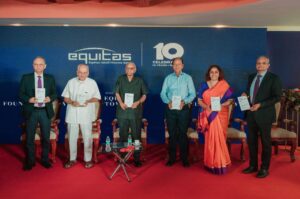
Equitas Small Finance Bank today announced the launch of When Organisations Win – Governance, Trust and the Values of Equitas Small Finance Bank, a book that explores what enables organisations to build trust, create sustainable value and remain resilient over the long term.   Equitas Small Finance Bank launched the book ‘When Organisations Win’ today (7 September 2026) at Equitas Towers, Chennai   Authored by Dr CA Sangeeta Shankaran Sumesh, CFO, business and leadership coach, author, speaker and Independent Director, the book takes readers inside the governance journey of Equitas Small Finance Bank through conversations with P N Vasudevan, Managing Director & Founder, Equitas Small Finance Bank.   The book looks beyond governance as a set of rules, regulations and compliance requirements. It explores governance as a way of thinking, behaving and making choices, particularly when organisations face difficult decisions, competing priorities and evolving risks.   At the heart of the book is the Frames Approach to Governance, under which Equitas looks at governance through frames. The approach encourages organisations to identify different frames of governance, work out different action plans under each frame, leading to a dynamic governance model.   The book explores several frames of governance, including Board-management alignment, sensitivity to regulatory signals, communication with the RBI, learning from others’ mistakes, customer-centric governance, business model, credit risk, technology, operational controls, investor relationships, ethical leadership and impact on society.   Through conversations with Vasu, the book also brings alive experiences and decisions from Equitas’ journey, right from its early days as a microfinance institution to its evolution into a Small Finance Bank. It highlights how governance considerations have influenced business decisions along the way.   Speaking about the book, P N Vasudevan, Managing Director & Founder, Equitas Small Finance Bank, said,“Governance is not a destination. It is a continuous journey. As an organisation evolves, its governance framework also needs to evolve. The Frames approach has helped us look at governance from multiple frames and continuously challenge ourselves to do better. We hope to keep evolving our governance model in tune with the changing times”.   When does an organisation win? The book explores whether winning is simply about growth, profitability and business performance or whether organisational success must also encompass trust, integrity, responsible leadership, customer interest and the ability to create lasting value for society.   According to Dr CA Sangeeta Shankaran Sumesh, Author of When Organisations Win,“My journey with Equitas began with curiosity. Small experiences made me wonder about the governance philosophy behind the organisation. When Equitas invited me to write this book, I saw an opportunity to explore that curiosity more deeply through conversations with Mr Vasudevan and by understanding the Bank’s governance journey. What emerged was a perspective on governance not merely as rules and compliance, but as choices, values and behaviours.   Through this journey, I realised that governance comes alive in the choices an organisation makes, especially when doing the right thing, even when nobody is watching. It is not necessarily the easiest thing to do. When Organisations Win encourages leaders to look at governance through a wider lens and reflect on what it could mean in their own organisations.”   The “WOW” behind When Organisations Win The idea captures the aspiration behind the book: organisations that create a positive impact and earn the trust of their stakeholders should be capable of making people say “WOW.” And that is possible when the foundations of governance, values, and responsible leadership are consistently chosen.   When Organisations Win is intended for business leaders, Board members, Independent Directors, bankers, investors, students, aspiring leaders and anyone interested in understanding corporate governance beyond compliance.   The Equitas experience is presented as one journey and one approach, intended to stimulate reflection, questioning and learning among organisations and leaders.The book concludes, stating, “The journey does not end here. It continues with every decision, every conversation, and every choice to do the right thing.”   About the Book WHEN ORGANISATIONS WIN Governance, Trust and the Values of Equitas Small Finance Bank Author: Dr CA Sangeeta Shankaran Sumesh Published by: Notion Press Launch Date: 7th September 2026 Available at: Amazon / Publisher / Other platforms   About the Author Dr CA Sangeeta Shankaran Sumesh is a CFO turned Business and Leadership Coach, Author, Speaker and Independent Director on Corporate Boards, with over three decades of professional experience. She has held senior corporate leadership positions and serves on the Boards of companies across sectors.   She is the author of five books and works with organisations and leaders to drive purpose, performance and profits.

Equitas Small Finance Bank Launches "When Organisations Win", Exploring the Role of Governance, Trust and Values in Building Sustainable Organisations Read More »

DEKA International and GeoBio Strengthen their Presence Across India with Scientifically Backed Aesthetic Technologies

DEKA International of Italy, and GeoBio, through its healthcare technology vertical GeoMedics Pharma Pvt. Ltd., are strengthening their presence across the Indian aesthetic medicine landscape, with a series of technology inaugurations and installations across Mumbai, Pune and Chennai.   L to R – Mr Somen Banerjee Mr Francesco Badii and Mr Neehar Gandhi at Inauguration Programs in India   The growing footprint reflects a shared commitment to bringing scientifically backed, research-driven and precision-engineered technologies to Indian dermatologists, aesthetic physicians and leading medical institutions.   As Indian aesthetic medicine continues to mature, physicians and patients are increasingly looking beyond marketing claims and device specifications. The focus is shifting towards the science behind the technology, quality of engineering, clinical relevance, treatment precision, physician training and long-term support.   It is in this evolving environment that DEKA and GeoBio are making a stronger mark in India, bringing a portfolio of advanced laser and energy-based platforms to leading clinics and institutions across the country.   From Mumbai and Pune to Chennai, the recent inaugurations showcase the expanding partnership between DEKA and GeoMedics, while demonstrating the breadth of technologies available across dermatology, aesthetics, body contouring, skin rejuvenation and other clinical applications.   A Stronger Presence across Three Major Indian Cities In Mumbai and MMR region, DEKA technologies have been introduced across multiple leading practices.   Mumbai: At the Clinics of Dr. Satish Savant and Dr. Sushil Savant in Andheri West , four DEKA Platforms—Toro Pico Nano, Punto, VasQ and Motus Pro have been introduced, bringing advanced technologies for pigmentation, fractional resurfacing, vascular applications, hair reduction and other dermatological indications.   At Dr. Rashmi Shetty’s Clinic in Santacruz, ONDA PRO, powered by DEKA’s patented Coolwaves® microwave technology, has been introduced for non-invasive applications including localised fat reduction, cellulite improvement and skin tightening.   At Alok Dermatology Institute in Panvel, led by Dr. Dipak Kulkarni, Dr. Ojas Kulkarni and Dr. Ruta Joshi Kulkarni, the DEKA portfolio includes DuoGlide, Red Touch Pro, ONDA PRO, MiniSilk and Motus Pro, reflecting the growing demand for versatile, advanced energy-based platforms.   Pune: In Pune, DEKA’s presence has expanded across both Academic Institutions and Private Clinical Practices.   Bharati Hospital and Bharati Vidyapeeth has introduced Red Touch Pro and Toro Pico Nano, supporting both patient care and medical education.   At the practice of Dr. Vijay Nagdev and Dr. Pooja, the technology portfolio includes Toro Pico Nano, PHYSIQ 360 and ONDA PRO with Coolwaves® technology, offering a combination of advanced laser, body-contouring and muscle-electro stimulation technologies.   At D. Y. Patil Medical College, Hospital and Research Centre, DEKA Again Pro Plus has been introduced, further strengthening the presence of advanced DEKA technology within a leading medical and academic institution.   Chennai: Dr. Prasanthi G’s HALOS Clinic in Chennai has introduced ONDA PRO with patented Coolwaves® technology and MiniSilk, extending the DEKA–GeoMedics footprint further into South India.   Making a Mark through Science, Technology and Education The expansion is not limited to the installation of devices. Through the DEKA–GeoMedics association, emphasis is being placed on physician education, hands-on training, clinical protocols, application support and technical service.   The recent inauguration programme across the three cities brought together Mr. Francesco Badii, Head of DEKA International, Italy; Mr. Somen Banerjee, CMD, GeoMedics Pharma Pvt. Ltd.; and Mr. Neehar Gandhi, Director – Sales & Marketing, GeoMedics Pharma Pvt. Ltd., along with leading dermatologists, physicians, medical institutions and members of the media. The programmes provided an opportunity for physicians to engage directly with the technology and understand its underlying engineering and clinical applications.   DEKA and GeoBio : Building the Future of Aesthetic Technology in India Speaking during the India programme, Mr. Francesco Badii, Head of DEKA International, Italy, said, “DEKA has always been fundamentally research driven. Our objective is to develop technologies where engineering, research and clinical application come together to create meaningful solutions for physicians and patients. India is an important and rapidly evolving market, and we are pleased to strengthen our presence here together with GeoMedics.”   Mr. Somen Banerjee, CMD, GeoMedics Pharma Pvt. Ltd. Said, “Our association with DEKA is built around a common philosophy—that advanced technology should be supported by science, knowledge, training and service. We are not looking at technology simply as a machine to be placed in a clinic. We are focused on creating the ecosystem around it.”   Mr Banerjee added, “With the growing presence of DEKA across Mumbai, Pune and Chennai, we believe we are making a meaningful mark in India’s aesthetic medicine landscape. The market is moving towards more informed decision-making, and we want to be at the forefront of that transformation by bringing technologies that are scientifically backed, precisely engineered and clinically relevant.”   Mr. Neehar Gandhi, Director – Sales & Marketing, GeoMedics Pharma Pvt. Ltd. Commented, “Indian doctors are increasingly asking deeper questions about technology—about R&D, engineering, clinical applications, training and long-term support. This evolution is encouraging. Through GeoMedics and our association with DEKA, our objective is to ensure that advanced technologies reach physicians together with the knowledge and support required to use them effectively.”   A Growing National Footprint The growing presence of DEKA and GeoBio across Mumbai, Pune and Chennai represents more than an expansion in geographical reach. It reflects a broader transformation in Indian aesthetic medicine—where technology, scientific credibility, precision, education and clinical relevance are becoming increasingly important.   With platforms including Toro Pico Nano, Punto, VasQ, Motus Pro, DuoGlide, Red Touch Pro, MiniSilk, Again Pro Plus, PHYSIQ 360 and ONDA PRO with patented Coolwaves® technology, DEKA and GeoMedics are building a comprehensive technology ecosystem for Indian dermatologists and aesthetic physicians.   Together, DEKA International and GeoBio are making a stronger mark across India—bringing Italian engineering, research-driven technology and a commitment to physician education and clinical excellence to the evolving landscape of aesthetic medicine.   GeoMedics Pharma GioMedics Pharma Pvt Ltd, Pune headquartered company is engaged in the business of procuring from abroad and distributing the innovative medical technologies and solutions to the Indian healthcare ecosystem, with a focus on advanced

DEKA International and GeoBio Strengthen their Presence Across India with Scientifically Backed Aesthetic Technologies Read More »

India's EV Boom is Testing a Different Kind of Partnership

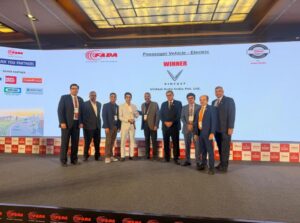
India’s EV market may have reached the point where selling the car is only half the job, but the harder part may be making sure customers can live with it comfortably after the test drive.   VinFast ranked No. 1 among electric passenger vehicle OEMs in dealer satisfaction, according to the latest FADA study   Electric passenger-vehicle registrations rose 50% year on year to 30,325 in August, taking EV penetration to 7.4%, according to Vahan(1). And as EVs become more common, the dealership itself is taking on a bigger role in the ownership experience.   A conventional car buyer can usually walk into a traditional dealership with a rough idea of how the machine works. EVs come with a few more question marks. How should the battery be charged? What does ownership cost? What happens when a software issue appears? And where is the nearest technician who knows what to do?   Those questions also matter to dealers—especially those that want to have all their bases covered—because answering them well requires training, equipment and a workable business model. FADA’s 2025 Dealer Satisfaction Study surveyed more than 1,800 dealer principals representing nearly 5,000 outlets. After-sales service emerged as the most important factor in dealer satisfaction, followed by business viability and policy, while inventory, margins and training costs were among the concerns affecting dealers.   Against that backdrop, the latest FADA study offers an interesting EV-specific signal. VinFast ranked No. 1 among electric passenger-vehicle OEMs in dealer satisfaction. The study measures dealers’ perceptions and experiences in their engagement with OEMs, making the ranking less a measure of the cars themselves and more a snapshot of the relationship between an automaker and its retail partners.   That relationship becomes especially important when an EV maker is trying to build a network at the same time as it builds a customer base. VinFast recently opened its 60th dealership in Patna, a 3S facility bringing sales, after-sales service and customer support together. The company plans to reach 75 dealerships across more than 60 cities by the end of 2026, with the network extending into tier-2 and tier-3 markets. It has also signed with multiple Indian banks to support inventory financing, a crucial part of the dealer equation as new outlets require dealers to put more capital behind a growing stock of vehicles.   The push beyond India’s biggest cities also points to the next challenge for EV adoption: making ownership feel accessible wherever the buyer lives. The next wave of buyers will come from cities where the nearest service centre may be more important than another 20 kilometres of claimed range. A familiar local face can sometimes do more for confidence than another feature on a specification sheet.   Building that network, however, is not simply a matter of putting up more signs and opening more showrooms. As EVs spread into more cities, dealers have to become comfortable selling a technology that many of their customers are still learning about themselves. That means training sales teams, preparing technicians and making sure the service operation can keep pace with the sales operation.   The result is a “same same but different” kind of relationship between an automaker and its dealers, where the satisfaction of that relationship can bear fruit for both sides. A dealer that feels supported has more reason to invest in training, service capacity and inventory, while an OEM with a well-supported network has a better chance of reaching customers beyond the biggest cities. Coming back to the example of VinFast, it has built a nationwide dealer network in less than two years in India and is now among the country’s top five EV automakers. Its No. 1 ranking in FADA’s latest study does not explain that growth on its own, but it offers a useful indication of how the company’s relationship with its dealers may be supporting the expansion.   (1) www.financialexpress.com/business/industry-electric-passenger-vehicle-registrations-rise-50-in-august-4329815

India's EV Boom is Testing a Different Kind of Partnership Read More »