
kalabhumitalkies.com

July 2026

Signify Introduces Philips FocusGlow Range: Lighting Engineered for Eye Comfort, Without Compromising on True Colour

​Delivers CRI >90 for accurate, true-to-life colour rendering Backed by EyeComfort Technology, engineered to reduce flicker for enhanced visual comfort Available in 12W LED Lamp, 25 & 30W batten, & two desk lamps (Skyy & Orbit) designed for everyday home and study lighting needs   Signify (Euronext: LIGHT), the world leader in lighting, today announced the launch of the Philips FocusGlow range – a lighting solution built for the hours people spend reading, studying and working under artificial light. FocusGlow pairs high colour accuracy with reduced-flicker performance, giving everyday spaces a more comfortable, dependable source of light.   Introducing the Philips FocusGlow range, engineered with EyeComfort Technology and CRI >90 for true-to-life colour accuracy, reduced flicker, and everyday visual comfort   As more consumers spend longer hours at home reading, studying or working under artificial light, the demand for lighting that reduces eye strain without sacrificing brightness or colour quality continues to grow. The Philips FocusGlow range is designed to meet this need, offering a dependable lighting solution for households seeking comfort-led, everyday illumination.   Commenting on the launch, C Arun Kumar, Head of Consumer Business, Signify Greater India said, “At Signify, we design every product around how people actually experience light in their daily lives. With Philips FocusGlow, we’re bringing together accurate colour rendering and meaningful eye comfort, so that whether someone is reading, studying or working at their desk, the light around them supports their eyes instead of straining them.”   True colour, where it matters most FocusGlow’s CRI >90 (Colour Rendering Index) keeps colours looking natural with less strain on the eyes a real advantage for reading, studying and any close-up work where getting eye comfort actually matters.   Comfort built for long hours The lamp runs on Signify’s EyeComfort Technology, engineered to reduce flicker during extended use. That makes it a practical pick for students, professionals and households looking to cut down on visual fatigue over long stretches of near work.   The Philips FocusGlow range is available in a 12W LED Lamp, 25 & 30W Batten & two desk lamps (Skyy & Orbit), sized for general home and study lighting. With the launch of the Philips FocusGlow 12W LED Lamp, Signify reinforces its commitment to designing lighting solutions that prioritise everyday wellness, supporting consumers in creating healthier, more comfortable spaces for reading, studying and work at home.   About Signify   Signify (Euronext: LIGHT) is the world leader in lighting for professionals and consumers. We proudly bring to market the world’s best lighting brands, from Signify, Philips, Philips Hue, Signify Interact, Philips Dynalite, Color Kinetics and many more. Our advanced products, connected systems and services unlock the extraordinary potential of light for brighter lives and a better world. In 2025, we had sales of EUR 5.8 billion, approximately 27,000 employees, and a presence in over 70 markets. We are in the Dow Jones Sustainability World Index and hold the EcoVadis Platinum rating.  News and updates from Signify can be found in the Newsroom, on LinkedIn and Instagram. Information for investors is located on the Investor Relations page.
Signify Introduces Philips FocusGlow Range: Lighting Engineered for Eye Comfort, Without Compromising on True Colour Read More »

Manipal University Jaipur Brings Global Experts Together for ACIFFS-2026

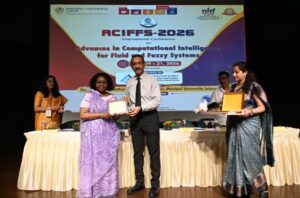
Manipal University Jaipur (MUJ) commenced the three-day International Conference on Advances in Computational Intelligence for Fluid and Fuzzy Systems (ACIFFS-2026) on Wednesday at the Smt. Sharda Pai Auditorium. Organised by the Department of Mathematics and Statistics, the conference is being held in association with IIT Guwahati, the Nelson Mandela African Institution of Science and Technology (NM-AIST), Tanzania, and the African Mathematical Union (AMU), with financial support from the Anusandhan National Research Foundation (ANRF).   Prof. Verdiana Grace Masanja of NM-AIST, Tanzania is felicitated by Cdr. (Dr.) Anil Rana, Pro President, Manipal University Jaipur   The inaugural ceremony featured eminent academicians from across the globe. Renowned researcher Prof. Ali J. Chamkha of Kuwait College of Science and Technology joined virtually as the Chief Guest, while Prof. Verdiana Grace Masanja of NM-AIST, Tanzania, attended as the Guest of Honour. The event was also graced by Prof. Swaroop Nandan Bora of IIT Guwahati and Cdr. (Dr.) Anil Rana, Pro President, Manipal University Jaipur, along with distinguished researchers, faculty members and students.   Addressing the gathering, the speakers highlighted the transformative role of computational intelligence, artificial intelligence and mathematical sciences in solving complex scientific and engineering challenges. They emphasised the need for interdisciplinary research and stronger international collaborations to advance innovation and sustainable development.   A highlight of the inaugural ceremony was the release of the ACIFFS-2026 Conference Souvenir, which features the conference theme, scientific programme, messages from dignitaries and details of participating researchers and invited speakers.   Presenting the conference overview, Prof. Reema Jain, Program Chair of ACIFFS-2026, said the conference received an overwhelming response from the global research community, with 645 abstracts submitted from across the world. Following a rigorous peer-review process, 300 high-quality research papers were selected for oral presentation during the three-day conference.   The inaugural session witnessed enthusiastic participation from researchers, academicians, industry professionals and students from India and abroad, reaffirming the growing global interest in computational intelligence and fuzzy systems.   The conference underscores Manipal University Jaipur’s commitment to fostering world-class research, encouraging interdisciplinary innovation and strengthening international academic partnerships. The inaugural session concluded with a vote of thanks proposed by Dr. Abdul Haseeb Ganie, Convener of ACIFFS-2026.   To know more about Manipal University Jaipur please visit jaipur.manipal.edu

Manipal University Jaipur Brings Global Experts Together for ACIFFS-2026 Read More »

Pre-Delivery Inspection Goes Mainstream: 1.7 Lakh Indians Researched PDI in 2025

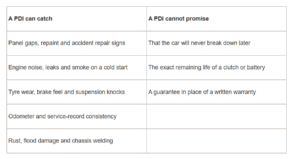
For a long time, the riskiest part of buying a used car was that you were mostly buying on gut feel. You trusted the seller, or the dealer, or a relative who knew engines. The Gears of Growth 2025 report shows that trust is now being outsourced to a process. Over 1.7 lakh Indians looked up pre-delivery inspection in 2025, enough for the report to call PDI mainstream.   The report puts it inside a larger change it describes plainly: search behaviour has moved beyond features and price, toward inspections and trust signals. Buyers are no longer only asking what a car costs or what features it has. They want to know how they get the quality checked professionally.   What is a pre-delivery inspection (PDI) for a used car? For a used-car buyer, a pre-delivery inspection (PDI) is a structured assessment of the vehicle before completing the purchase or taking delivery. A trained evaluator goes over the car against a fixed checklist, covering the body, engine, transmission, electricals, tyres, brakes and paperwork, and produces a documented assessment of the car’s condition at the time of inspection. . On a platform like Cars24, the inspection is done before the car is even listed. Separately, if you are buying from a dealer or a private seller, you can book a PDI on that specific car and have an expert inspect it for you. The point is simple – a PDI replaces a stranger’s word with a documented assessment.   This is why the search interest is telling. A used car buyer looking up PDI is a buyer who has decided that personal assurance is not enough on a purchase of this size. That is a real change in behaviour, and the report ties it to the same forces reshaping the rest of the market: certified inspections, transparent pricing and digital discovery giving people confidence they did not have a few years ago.   Why did buyers stop trusting the parking-lot check? Two things pushed inspection into the mainstream. The first is money. As new car prices climb, more first-time buyers are spending a serious share of their savings on a used car, and a bigger cheque makes people careful. The second is that the internet gave them somewhere to take that caution. The report finds that family and peer recommendations still matter, but buyers now verify them through reviews, videos and experts rather than taking them at face value.   Video does much of that verification. The report singles out YouTube as the platform playing the credibility role, shaping decisions through detailed reviews and ownership content. Someone can now watch an expert tear down the exact model they are considering, learn what tends to go wrong with it, and then go looking for an inspection that checks those specific things. Research and inspection have become one continuous habit.   What can a PDI catch, and what can it not? This is where honesty matters, because an inspection is a powerful tool but not a magic one. A thorough PDI can identify many of the common mechanical, cosmetic and documentation issues that buyers may otherwise miss. It will not promise you a car that never breaks down.   Pre-delivery inspection (PDI) The 1.7 lakh research figure is from the Cars24 x Team BHP Gears of Growth 2025 Report. The inspection scope above is general guidance for buyers.   A PDI sharply lowers the odds of an unpleasant surprise, and it gives you a documented condition report you can hold the seller to. It does not remove risk entirely, which is why a written warranty or return window still matters alongside it. A buyer who understands both halves of that is far harder to mislead than one who treats the inspection stamp as the end of the conversation.   How much does a PDI cost, and can you book one on any car? If you are one of those 1.7 lakh buyers, the practical question is where to get a PDI done. Cars24 runs a pre-delivery inspection service for exactly this: an expert comes to the car you are considering, whether it is with a dealer or a private seller, runs a 300 point mechanical, electrical and legal check, and gives you a digital condition report before you pay.   Because no inspection can promise a car will never fail, CarTruth backs its report with a Rs. 50,000 Moneyback Promise, so the risk of a missed fault does not sit entirely on the buyer. That is the difference between an inspection you read as advice and one you can actually rely on: the report, plus something standing behind it.   What this means for how India buys used cars The 1.7 lakh figure is small next to the size of the market, and that is the point. It is early. Inspection research is where colour preference or fuel choice was a few years ago, a habit forming in the more informed corner of the market and spreading outward. The direction is not in doubt. Every year more buyers arrive expecting to verify a car before they trust it, and the sellers and platforms that make verification easy are the ones those buyers will choose.   The parking-lot uncle is not out of a job. He has just been joined by a checklist, a condition report and a YouTube playlist, and between them they have made the Indian used car buyer a good deal harder to fool.

Pre-Delivery Inspection Goes Mainstream: 1.7 Lakh Indians Researched PDI in 2025 Read More »

India's Statutory Pharmacy Regulator PCI Joins Galgotias University for Workshop on NEP 2020-Aligned Pharmacy Education

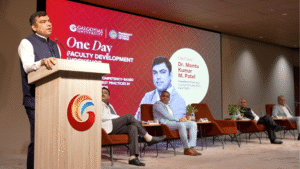
The Department of Pharmacy, Galgotias University, in collaboration with the Pharmacy Council of India (PCI), New Delhi, organised a Faculty Development Workshop on “PCI Regulations, Competency-Based Curriculum and Best Practices in Pharmacy Education.”   The workshop brought together pharmacy educators, academicians and professionals from institutions across the country to examine the future of pharmacy education. The programme focused on the revised B. Pharm Curriculum (2026), competency-based learning, Outcome-Based Education, emerging technologies and alignment with the National Education Policy 2020.   PCI & Galgotias University host a Faculty Development Workshop on the revised B. Pharm Curriculum 2026 – advancing competency based pharmacy education in India   The discussions underscored the growing need for pharmacy education to move beyond conventional knowledge-based instruction and equip graduates with professional competence, ethical judgment, adaptability and the ability to respond to the evolving needs of healthcare, research and the pharmaceutical industry.   Dr. Montu M. Patel, Hon’ble President, Pharmacy Council of India said, “The revised B. Pharm Curriculum marks a significant step in making the pharmacy education much more impactful and practice oriented. Our focus must be on developing graduates who can apply their knowledge with competence, integrity and confidence. By embracing learner-centric education, emerging technologies and industry-academia engagement, institutions can prepare pharmacy professionals who are ready to contribute at national and global levels.”   Shri Suneel Galgotia, Hon’ble Chancellor, Galgotias University said, “The transformation of pharmacy education is fundamental to the future of healthcare in India. The revised B. Pharm Curriculum provides an important opportunity to move beyond knowledge-based instruction towards education that develops professional competence, ethical judgment, innovation and a strong sense of responsibility to society. This forward-looking approach will help nurture pharmacists who can contribute meaningfully to healthcare, research and the pharmaceutical industry at national and global levels.”   The workshop also explored the growing influence of artificial intelligence and digital technologies, innovative teaching and assessment practices, and the importance of connecting academic learning with professional practice. It provided a platform for educators to engage with the broader changes shaping pharmacy education and consider how institutions can prepare graduates for an increasingly complex healthcare environment.   The workshop highlighted the focus of the Pharmacy Council of India and Galgotias University on improving the quality and relevance of pharmacy education. It emphasised preparing graduates with the knowledge, practical competencies and professional values required in healthcare and pharmacy practice.   About Galgotias University Galgotias University is one of India’s leading multidisciplinary universities recognised for academic excellence, research, innovation, global collaborations, and industry aligned education. With a vibrant student community of over 50,000 learners and a global alumni network of more than 100,000 graduates, the University has built a rapidly growing ecosystem focused on technology, entrepreneurship, interdisciplinary learning, and real-world impact.   In the QS World University Rankings 2027 by Quacquarelli Symonds, Galgotias University was placed in the 1201-1400 global band and ranked 16th among private universities and 46th among all universities in India. In the Times Higher Education World University Rankings 2026, the University was placed in the 1201-1500 global band and ranked 27th among private universities and 65th among all universities in India. The University is also accredited with NAAC A+, one of India’s highest institutional quality ratings.   Galgotias University offers programmes across engineering, artificial intelligence, computer science, semiconductors, business, law, media, design, health sciences, hospitality, liberal education, and emerging interdisciplinary domains. In 2026, students secured more than 5,500 job offers from over 1,250 recruiters. The University has built strong industry and innovation partnerships with organisations including Apple, Infosys, IBM, Intel, Cisco, Tata Technologies, L&T EduTech, Capgemini, and Salesforce, while continuing to strengthen its global academic engagement and startup ecosystem.

India's Statutory Pharmacy Regulator PCI Joins Galgotias University for Workshop on NEP 2020-Aligned Pharmacy Education Read More »

New GTDC Research Illuminates Distribution's Expanding Role in Modern Technology Ecosystems

The Global Technology Distribution Council (GTDC), the world’s largest consortium of technology distributors, today released a new research report, The Evolving Role of Distribution in Technology Go-To-Market Models, developed in partnership with Channelnomics. The study examines the shift in distribution from a traditional channel intermediary into a strategic operating platform that helps vendors and partners scale, increase support and overcome the complexities associated with innovation (i.e., AI and cybersecurity) and integration.   According to the research, customer expectations are rising rapidly as organizations seek integrated outcomes across AI, cybersecurity, hybrid cloud, automation, analytics and managed services. Vendors and partners increasingly struggle to meet those market demands independently with solutions requiring cross-platform integration, multi-vendor coordination, lifecycle support and operational consistency. The GTDC and Channelnomics report validates distribution’s position as the connective layer that closes these execution gaps. Through partner enablement, technical resources, financing, marketplace operations, compliance support, lifecycle management and ecosystem orchestration, distributors empower vendors and solution providers, allowing channel partners to deliver outcomes that no single organization can efficiently provide alone. “Technology innovation is creating tremendous opportunities, but it is also making go-to-market execution more complex,” said Frank Vitagliano, CEO of GTDC. “Distributors have continued to invest in the platforms, programs, services and expertise needed to help vendors and partners bring AI, cloud, cybersecurity and other advanced solutions to market more efficiently. This research reinforces what we see every day across the IT ecosystem: distribution is becoming more valuable because it helps turn innovation into scalable execution.” According to the report, distribution can raise execution capability to more than 80% across key go-to-market functions and motions. Vendors leveraging distribution strategically also improve operational efficiency, partner readiness, sales velocity, market reach, forecasting discipline and customer retention. The research further identifies meaningful economic benefits, including 15%-52% cost savings and 4x-8.5x ROI. “Customers are no longer buying isolated products or stand-alone services; they expect integrated outcomes delivered across increasingly complex ecosystems,” said Larry Walsh, CEO and Chief Analyst at Channelnomics. “That creates a gap between what clients need and what vendors or partners can consistently deliver on their own. Distribution overcomes those obstacles by aggregating the resources, capabilities and operational infrastructure required to execute at scale.” The study highlights several key findings, including: Execution is a true constraint. The market challenge is less about innovation and more about delivering integrated outcomes consistently at scale. Customer expectations exceed channel capability. For example, 76% of customers see multi-vendor systems support as a critical need, but only 22% believe IT partners have that capability. While 70% value AI integration, only 38% see sufficient expertise in this area. Vendors need strategic distribution support. Top vendor priorities include demonstrable ROI and value visibility (88%), strategic GTM alignment (85%), and partner recruitment and enablement (83%). Partners need distribution to manage complexity. The top priority is ecosystem access, multi-vendor integration and solution bundling (91%), followed by AI-driven technical support (89%). Distribution is becoming a force multiplier. In addition to helping vendors scale ecosystem selling, distributors reduce operational friction, support recurring revenue, expand reach and improve customer outcomes. The report also outlines a vendor playbook for scaling ecosystem execution, recommending that vendors align distributors to their go-to-market strategies, build ecosystem-led sales models, accelerate AI readiness, expand marketplace and lifecycle operations, improve API and workflow integration, and modernize performance measurement. The full report, The Evolving Role of Distribution in Technology Go-To-Market Models, as well as other industry research and resources, is available at no cost on the GTDC Knowledge Hub.   About the GTDC The Global Technology Distribution Council is the industry consortium representing the world’s leading tech distributors. GTDC members drive more than $200 billion in annual worldwide sales of products, services and solutions through diverse business channels. GTDC conferences support the development and expansion of strategic supply-chain partnerships that continually address the fast-changing marketplace needs of vendors, end customers and distributors. GTDC members include AB S.A, Arrow Electronics, CMS Distribution, Computer Gross Italia S.p.A., D&H Distributing, ELKO Group, Esprinet S.p.A., Exclusive Networks, Infinigate, Ingram Micro, Intcomex, Logicom Public Limited, Mindware, ​Nexora, Redington Limited, SiS Technologies, Tarsus Distribution, TD SYNNEX, TIM AG, VSTECS Holdings Limited and Westcon-Comstor.

New GTDC Research Illuminates Distribution's Expanding Role in Modern Technology Ecosystems Read More »

Threads and Craft Unveils 'Ananta Kriti', a New Platform for Handcrafted Fashion, Artisans and Independent Labels

Threads and Craft, the homegrown label founded by Lakshmi K, is set to present Ananta Kriti, its grandest showcase till date, from August 26-28 at Aga Khan Hall, New Delhi. Conceived as a celebration of handcrafted textiles, thoughtful design and India’s enduring weaving traditions, the three-day event brings together clothing, accessories and handcrafted products under one roof.   Beyond being just another holiday shopping destination, Ananta Kriti has built a platform that tries to bring together artisans and buyers through narratives about craft, fabric and design. This first edition has been organised keeping in mind Raksha Bandhan, allowing attendees to explore the fashion and festive items created by Indian labels and designers.   Ananta Kriti’s range will feature ethnic and contemporary womenswear, children’s wear, handloom sarees, Indo-Western designs, unstitched and semi-stitched wear made from fabrics like cotton, cotton-silk, ikat, kalamkari and hand block prints.   True to the philosophy of the label, much of the fabric used has been directly sourced from weaving clusters of India, in alignment with Lakshmi’s passion for natural and regional textiles and crafts.   “Ananta Kriti was envisioned as a platform where one would find the story of the products that have been created with love and care. For me, every textile has a story, every creation tells you about its maker. The intention was to take the idea of Ananta Kriti to various cities and create a platform that would bring together artisans and connoisseurs of their creations,” says Lakshmi K, Founder, Threads and Craft. Ananta Kriti’s Delhi-based event is the first of an ongoing series that will visit various Indian cities in the future to provide the artisans and the hand-crafted business a platform to exhibit their work.   The show will be open to visitors from 10:00 am to 07:00 pm and will showcase a specially curated selection of clothing, jewellery, accessories, and other handcrafted items from participating labels.   Event Details Event: Ananta Kriti by Threads and Craft Dates: 26-28 August Venue: Aga Khan Hall, New Delhi Timings: 10:00 am to 7:00 pm Entry: Free ​ For more information, please contact – 9217391347

Threads and Craft Unveils 'Ananta Kriti', a New Platform for Handcrafted Fashion, Artisans and Independent Labels Read More »

fischer Earthquake-Proof Retrofitting Solutions Tested to Offer Stability Under Seismic Influence

Earthquakes are among the greatest global challenges for the safety of structures. Existing buildings constructed before the introduction of modern earthquake standards are particularly vulnerable, as they are often unable to withstand seismic loads. This raises an urgent question: how can such buildings be retrofitted to improve their earthquake resistance? Unternehmensgruppe fischer and Purdue University (USA) carried out full-scale tests on reinforced concrete structures. These tests enabled the definition of new approaches for the seismic retrofitting of existing buildings.   fischer earthquake-proof retrofitting test   The earth is a dynamic planet; it rotates, orbits the sun and is always in a tumultuous state under the surface. Approximately 500,000 earthquakes are registered across the globe every year (source: US Geological Survey (USGS)). Regions in the Pacific Ring of Fire, the Himalayas, the Mediterranean, Central America and the Caribbean are particularly at risk due to regular tectonic movement. However, human activity, such as the extraction of oil and gas, fracking, geothermal drilling and the construction of large reservoirs, can also trigger seismic activity. When building structures in regions prone to earthquakes, structural designers and engineers must not only ensure the building’s load-bearing capacity, but also guarantee that non-load-bearing components don’t fail or fall down, such as pipes, cables, suspended ceilings, cable runs, air conditioning units or facades. However, many of those who live in seismic areas live in existing buildings that were built before modern earthquake standards were introduced. These buildings are often unable to withstand seismic activity.   Full-scale earthquake tests The fixing specialist fischer and one of its partner universities, Purdue University, therefore carried out a large-scale research project. An innovative solution for retrofitted seismic structural reinforcement was verified through extensive tests on full scale reinforced concrete structures. The behaviour of beam column joints was of particular interest to the researchers. “These node points in supporting structures are subjected to particularly high stresses and significant force caused by horizontal loading during an earthquake”, explains Dr Margaritis Tonidis, a former PhD Candidate at Purdue University and leading Project Engineer of the project. These joints represent critical points of the supporting structure. If they fail, the entire system can collapse.   New reinforcement solution for beam-column joints A system consisting of bonded anchors and haunch elements was successfully tested for the retrofitting of beam-column joints, using fischer injection mortar in combination with threaded rods. The bonded anchor system barely deforms under loading and can reliably absorb and transfer forces, ensuring that the haunch retrofit solution can efficiently protect the joints under seismic stress. This results in a safe and controlled load-bearing behaviour, even in the event of an earthquake. The reinforcement solution modifies the force flow between the beam and column. Loads acting on the joint area are redistributed into adjacent structural elements. Defined failure mechanisms prevent the system from collapsing entirely.   “The injection mortar proved to be a highly reliable adhesive anchor for post-installed strengthening even under very high seismic demands and led to achieving ground breaking results during the tests”, emphasises Prof Akanshu Sharma, Associate Professor at Purdue University and former Endowed Professor at the Institute of Materials Science at the University of Stuttgart. “We were able to demonstrate a significantly improved performance of the strengthened structure under seismic loading”. During the comparative test, the structural system without strengthening demonstrated major damages in beam-column joints, while the structure strengthened with the fischer system displayed superior performance. “The fischer bonded anchor system can also be installed while the building is in use, without causing any major interruption,”Prof Sharma adds.   “The project was a fantastic and unique opportunity to review and test the results and concepts we gained in our previous research under realistic conditions,” emphasises Dr Erik Johannes Stehle, Head of Development FiXperience at fischer. “This once again demonstrated that the success of a seismic reinforcement solution such as this highly depends on the performance of the anchorage. This is where our bonded anchor system was able to achieve impressive results at both the structural level and within the beam-column joints, demonstrating high rigidity and low deformation at high-load levels.”   International research partnerships drive innovation Dr Erik Stehle emphasises, “We need international research collaboration. By communicating with each other, we gain inspiration, ideas and impetus for new innovations while strengthening our position as a global innovator.” Prof Sharma meanwhile highlights the importance of international cooperation between the scientific community and businesses, “At Purdue University, we’re proud to have already conducted several groundbreaking research projects with the fischer Group of Companies, including the world’s first seismic test using full-scale structures with a post-installed reinforcement solution for joints with haunch elements.” This successful scientific validation is now being translated into practical application for existing buildings. The results offer hope: they show that realistic and affordable ways exist to make older buildings more resilient – and thereby save lives and protect infrastructure in the event of an earthquake.   Commenting on the significance of this innovation for India, Mayank Kalra, Managing Director, fischer India, said, “India is among the fastest-growing infrastructure markets in the world and has several regions that are vulnerable to seismic activity. While modern construction follows advanced earthquake-resistant design standards, strengthening existing buildings remains equally important. This validated seismic retrofitting solution demonstrates how innovative fixing technologies can enhance structural safety, extend the life of existing infrastructure and contribute to more resilient cities.   At fischer India, we are committed to bringing globally proven engineering solutions to the Indian market and supporting safer, more sustainable infrastructure development.”

fischer Earthquake-Proof Retrofitting Solutions Tested to Offer Stability Under Seismic Influence Read More »

Vibe Drive Unveils One of Chennai's First Fully Integrated Automotive Destination

Vibe Drive has launched a first-of-its-kind integrated automotive facility on Chennai’s 200 Feet Radial Road, Kovilambakkam, bringing together vehicle sales, servicing, detailing and customer hospitality under one roof.   Vibe Drive – One of Chennai’s First Fully Integrated Automotive Destination   The facility was inaugurated yesterday by J. C. D. Prabhakar, Speaker of the Tamil Nadu Legislative Assembly, marking the launch of a new integrated automotive destination for customers in Chennai. Spread across 13,000 sq. ft., the facility combines four specialist brands: Vibe Drive, HB Multibrand, Slick Lab by Vibe Drive, and Snack & Rack, creating a seamless experience for vehicle owners from purchase to long-term care. The venture is founded by automobile entrepreneurs Ashvath Jacinth and Naveen Antony, whose complementary journeys shaped the vision behind the project. Ashvath Jacinth brings experience across automotive manufacturing, vehicle sales and entrepreneurship. Through Vibe Drive, he has built a business focused on transparent buying, selling, sourcing and evaluation of pre-owned vehicles across every segment. Naveen Antony, an electronics engineer by training, entered the automotive industry after successfully restoring his own flood-damaged car when others declared it beyond repair. He went on to establish HB Multibrand, earning a reputation for advanced diagnostics, ECU programming, electrical troubleshooting and restoration of complex vehicles. Despite setbacks during the COVID-19 pandemic, he rebuilt the business with renewed determination. Together, the founders have created an automotive destination that caters to everything from routine maintenance and major mechanical repairs to premium detailing, ceramic coatings, paint protection films, performance upgrades and body repairs. Customers can also relax at Snack & Rack, an in-house lounge featuring refreshments, high-speed Wi-Fi and English pool tables while their vehicles are serviced. The facility caters to all categories of vehicles, from everyday hatchbacks and family SUVs to commercial vehicles, luxury marques and high-performance automobiles. “Our vision was to build more than a workshop. We wanted to create a destination built on trust, technical expertise and a genuine passion for automobiles, where every customer receives the same level of care regardless of the vehicle they own,” said Ashvath Jacinth, Founder and Partner, Vibe Drive.   Vibe Drive 200 Feet Radial Road, Kovilambakkam, Chennai Contact: Ashvath Jacinth – Founder and Partner – +91 96772 77775

Vibe Drive Unveils One of Chennai's First Fully Integrated Automotive Destination Read More »

Total Cost of Ownership: The New Maths of Car Ownership in India

Indians love doing the maths before making a big purchase. Before buying a car, we compare prices, watch countless reviews and ask everyone from our friends to our neighbourhood car expert if we’re making the right choice.   The VinFast VF 6 shows why Total Cost of Ownership matters more than ever for Indian buyers As if that wasn’t enough, there’s now another number being discussed: Total Cost of Ownership, or TCO. But for good reason. After all, the biggest expenses don’t always arrive on delivery day. It’s what your car asks of you over the next five or seven years that often makes the biggest difference. For India’s growing community of EV buyers, that conversation is becoming even more important. Lower running costs may be what gets people interested in electric vehicles, but what keeps them happy is everything that comes after. And that’s where the VinFast VF 6 makes its strongest case: over five years, buyers could save nearly 87% on their energy costs alone. Here’s how the numbers add up. The Cost Saving You See  Using a VinFast standard EMI calculator model with 80% to 85% loan funding at an average interest rate of 8.5% to 9.5% over five years, buyers can expect monthly EMIs of approximately INR 29,500 to INR 31,000 for the base VF 6 Earth variant. The estimated upfront down payment ranges between INR 250,000 and INR 300,000, while VinFast dealerships also offer flexible financing solutions, including longer loan tenures and zero down payment schemes for eligible customers. But monthly ownership costs don’t stop with the EMI. For most Indian families, fuel remains one of the biggest recurring expenses of owning a car. Assuming a monthly driving distance of 1,500 km, a midsize petrol SUV delivering 12 km per litre at a fuel price of INR 102 per litre would cost approximately INR 12,750 every month in fuel expenses. Over five years and 90,000 km of driving, that adds up to nearly INR 765,000. Now let’s look at the VinFast VF 6. With an efficiency of approximately 16 kWh per 100 km, covering the same 1,500 km requires around 242 kWh of electricity. At typical home charging rates, that translates to an estimated monthly charging cost of just INR 1,694 and approximately INR 101,640 over five years. The difference? More than INR 660,000 in energy cost savings over five years. It’s enough to pay for a lot of family road trips, or if we’re being honest, quite a few weekend biryanis too.  And that’s before considering VinFast’s complimentary charging programme at V Green charging stations until 31 March 2029 and EV transition support of up to INR 154,000 for eligible customers switching from an ICE vehicle. The Costs You Stop Thinking About There are some ownership costs that never appear on your monthly bank statement, but you’ll certainly notice them when they’re gone. Case in point—maintenance. Conventional petrol vehicles require routine engine oil changes, spark plug replacements, fuel filter swaps and more complex powertrain servicing over time. Electric vehicles do away with much of that. Routine annual service costs for the VF 6 are estimated at approximately INR 3,500 to INR 5,000, covering items such as cabin air filter replacements, brake fluid top ups, wheel alignment and software diagnostics. Regenerative braking also reduces wear on mechanical brakes, helping extend brake pad life to more than 80,000 km. VinFast further strengthens the ownership proposition with complimentary maintenance for three years or 36,000 km, whichever comes first, alongside a seven year or 160,000 km vehicle warranty and a ten year or 200,000 km battery warranty. After all of that, there’s something buyers rarely put a price on before purchasing an EV: peace of mind. One Indian VF 6 owner recently reflected on his ownership experience after driving more than 8,000 km. Interestingly, he admitted that he was more anxious about range and public charging before buying the car than after.   Home charging proved sufficient for most of his needs, while the vehicle returned an overall efficiency of 14.8 kWh per 100 km over more than 4,000 km of driving. And what stood out most was how quickly charging became part of his routine and how little he found himself thinking about it. His verdict? The VF 6 was “light on the pocket to run”1.

Total Cost of Ownership: The New Maths of Car Ownership in India Read More »

Bisleri's Bottles for Change Facilitates a Waste Collection Drive During Pune Wari Pilgrimage 2026

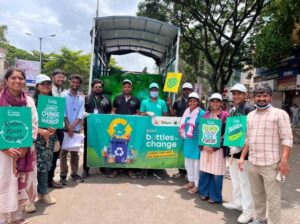
Bisleri International Pvt. Ltd., India’s leading packaged drinking water company, under its flagship sustainability initiative Bottles for Change, implemented a plastic waste management and awareness campaign during the Pune Wari, one of Maharashtra’s largest and most respected annual religious pilgrimages. Part of a three-year waste management and awareness partnership with the Pimpri-Chinchwad Municipal Corporation (PCMC), the initiative promoted responsible plastic waste management through citizen awareness, community participation, clean-up drives, and recycling interventions.   Bisleri’s Bottles for Change volunteers assemble for waste collection during the Pune Wari Pilgrimage, 2026   The campaign reached over two lakh devotees across key locations within the PCMC jurisdiction, including Akurdi, Pimpri, Dapodi and other stretches along the Wari route. Through on-ground information, education and communication (IEC) activities, volunteers encouraged devotees to adopt responsible waste-disposal practices, segregate plastic waste at source, and understand the importance of recycling. Around 300 volunteers participated in cleaning a 15 km stretch during the three-day campaign, helping collect approximately 6 metric tonnes (MT) of plastic waste, all of which will be channelled for recycling, supporting the circular economy. The initiative helped create a cleaner and safer pilgrimage experience for an estimated 2 lakh + devotees.   Bottles for Change volunteers collected 6 MT of plastic waste for recycling during the 3-day pilgrimage   Commenting on the initiative, Mr. K. Ganesh, Director – Sustainability & Corporate Affairs Bisleri International Pvt. Ltd., said, “The Wari is not only a celebration of faith but also an opportunity to inspire collective action towards environmental responsibility. Through Bottles for Change, we continue to work with local authorities, volunteers and citizens to demonstrate that large public gatherings can successfully adopt responsible plastic waste management practices. Our focus is on creating long-term behavioural change while ensuring that recyclable plastic is brought back into the circular economy.”   Hon’ble Shri Ravi Babasaheb Landge, Mayor, Pimpri-Chinchwad Municipal Corporation, said, “The ‘Nirmal Wari, Swachh Wari’ initiative which conveys the message of cleanliness through action amidst the sacred atmosphere of Jagadguru Santshreshtha Tukaram Maharaj’s Palkhi procession is highly commendable. The efforts undertaken by Bisleri International Pvt. Ltd. and 300 volunteers will certainly help keep the city of Pimpri-Chinchwad clean. Cleanliness is a collective responsibility, and such social initiatives will foster greater awareness among citizens regarding the conservation of Mother Earth.”   The Pune Wari campaign builds on Bisleri’s long-term commitment to strengthening plastic circularity in Maharashtra. Under its association with PCMC, Bottles for Change has collected and sent over 310 metric tonnes (MT) of plastic waste for recycling between April 2024 and June 2026. The initiative has also sensitised more than 40,000 citizens on responsible plastic waste management and installed 25 Benches of Dreams across the city.   Bisleri’s Bottles for Change initiative has reached over 12.4 lakh citizens through awareness programmes and enabled the collection and recycling of 13,905 MT of plastic waste through its CSR initiatives across Maharashtra. The Pune Wari campaign reinforces Bisleri’s commitment to make responsible recycling and plastic circularity a community-led movement.   About Bisleri International Pvt. Ltd. With a legacy of over 50 years, Bisleri International Pvt. Ltd has grown to become one of the largest premium beverage businesses in India. Being the makers of the country’s largest-selling packaged drinking water, Bisleri follows a stringent process of 114 quality tests and a 10-stage purification. It remains true to its core value of providing consumers with pure, safe and healthy water.   Bisleri International has a strong presence with 128 operational plants and a robust distribution network of over 6,000 Distributors and 7,500 Distribution Trucks across India and UAE market. It offers a range of beverages that are produced for all occasions. Whether it is the promise of goodness, trust, and purity with Bisleri packaged drinking water, or a daily dose of health offered through Vedica Himalayan Spring Water. Besides, Bisleri International has ventured into fun-filled refreshments with a diverse range of carbonated drinks available in multiple flavours, such as Bisleri Limonata, Bisleri Rev, Bisleri Spyci Jeera, Bisleri Pop and Bisleri Soda. These Bisleri products are also available on the e-commerce platform – Bisleri@Doorstep. This D2C platform reassures customers that they will receive a safe and uninterrupted supply of their most trusted brand at their doorstep.   The core values of Bisleri International lie in yielding growth and embedding sustainability by being responsible in all aspects of the business. The organization has unveiled Sustainability 2.0 with Bisleri Greener Promise that focuses on creating greener future for all through implementing initiatives under the program of recycling, water conservation and sustainability.   For more information on Bisleri International, our people, brands, and OSR initiatives, visit www.bisleri.com.

Bisleri's Bottles for Change Facilitates a Waste Collection Drive During Pune Wari Pilgrimage 2026 Read More »