kalabhumitalkies.com

May 2026

Indo-French Investment Dialogue Strengthens Opportunities in Madhya Pradesh

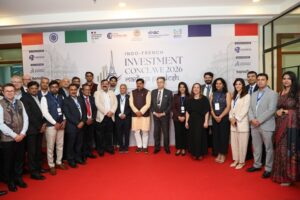
The Indo-French Chamber of Commerce & Industry hosted a new edition of Indo-French Investment Conference in Bhopal, strengthening regional economic partnerships and advancing collaboration between French companies and the state of Madhya Pradesh.   Indo-French Investment Dialogue Strengthens Opportunities in Madhya Pradesh   Hon’ble Chief Minister of Madhya Pradesh, Dr. Mohan Yadav welcomed the delegation for a Roundtable Meeting at his residence and emphasised that India and France share a strong and trusted strategic partnership, which can be further strengthened through deeper collaboration in sectors such as defence, technology, innovation, and skill development. He highlighted Madhya Pradesh’s immense potential for global investors, supported by its central location, strong connectivity, industrial peace, skilled workforce, and transparent, industry-friendly governance. He further reiterated the State Government’s commitment to creating a conducive environment for sustainable industrial growth and long-term partnerships.   Organised in association with MP Industrial Development Corporation (MPIDC) and supported by the Embassy of France in India, the Conference witnessed the presentation of seven Expressions of Interest (EoIs) and two Memorandums of Understanding (MoU) between leading French companies and the Government of Madhya Pradesh across key sectors. The presenting companies and focus areas included: POMA Ropeways: development and operation of ropeway and cable mobility systems for urban transport, tourism, and pilgrimage connectivity AIVancity and Medicaps University: establishment of a higher-education institution focused on technology, innovation, and applied sciences Dassault Systèmes: deployment of virtual twin technologies across industrial development, urban planning, water management, and skill development Soufflet: development of a contract-farming ecosystem for malting-grade barley, including farmer capacity building and storage infrastructure SYSTRA: collaboration opportunities in transport infrastructure, mobility planning, and engineering initiatives ENGIE: exploration of renewable energy, energy storage, green industrial energy solutions, and green hydrogen initiatives Tesca Textiles: proposed manufacturing facility for advanced textiles and automotive seat components in Madhya Pradesh Sanofi: signed an MoU with the National Health Mission, Madhya Pradesh for capacity building and strengthening the public health system in the areas of diabetes and rare diseases, including knowledge-sharing, training, and healthcare support initiatives. An MoU was also signed between IFCCI and MPIDC to strengthen institutional collaboration and facilitate greater Indo-French business engagement in the state.   The ceremony took place in the presence of Mr. Chetanya Kasyap, Hon’ble Minister for Micro, Small and Medium Enterprises (MSME), Government of Madhya Pradesh and H.E. Mr. Thierry Mathou, Ambassador of France to India.   The event brought together nearly 150 senior delegates, including CEOs and CXOs of French and Indian companies, industry leaders, diplomats, government officials, and policymakers, to explore new avenues for Indo-French collaboration. It saw participation from both existing and prospective French investors keen to tap into Madhya Pradesh’s expanding industrial and economic landscape, with investment discussions expected to contribute significantly to industrial growth and job creation in the region by 2030 and beyond.   The conference commenced with a presentation on Doing Business in Madhya Pradesh: Policy, Incentives & Ease of Access by Mr. Raghwendra Singh, Principal Secretary, Department of Industrial Policy and Investment Promotion, Government of Madhya Pradesh. Discussions throughout the day focused on facilitating investments, strengthening ease of doing business, and fostering partnerships across priority sectors such as energy, infrastructure, defence, communications, IT/ITeS, food and agribusiness, logistics, and supply chain.   Addressing the gathering, Mr. Chetanya Kasyap, Hon’ble Minister for Micro, Small and Medium Enterprises (MSME), Government of Madhya Pradesh expressed confidence that deeper collaboration between France and Madhya Pradesh would create new opportunities for industrial growth, innovation, and shared economic progress.   Speaking at the event, H.E. Mr. Thierry Mathou, Ambassador of France to India, said, “I am pleased that French large and small companies are leveraging their expertise in key sectors to increase their footprint in the State of Madhya Pradesh, a region with a sustainable growth of 8% that represents close to 5% of India’s domestic product. The Indo-French Innovation Network, a flagship initiative of the India-France Year of Innovation, will drive more French investments in this region enabling companies from France and Madhya Pradesh to further synergise their business to double its GDP before 2030.”     A key highlight of the event was a panel discussion on “Unlocking Madhya Pradesh: Policy, Partnerships & Pathways for Sustainable Investment”, which explored how policy support, infrastructure readiness, and cross-border collaboration can position the state as a hub for Indo-French innovation and business growth. The panel featured leaders from Soufflet Malt, Sanofi, EDF Nuclear Projects and Dassault Systèmes, moderated by Ms. Axelle Blanchard, Deputy head of the French Regional Economic Department for India and South Asia, Embassy of France in New Delhi.   Speaking at the conference, Ms. Payal S. Kanwar, Director General, IFCCI said, “IFCCI is proud to bring its first Investment Conclave to Madhya Pradesh, an emerging growth hub with immense potential for French investments. Our objective is to strengthen Indo-French ties by unleashing new avenues for trade, innovation, and sustainable development across the region.”   Senior state Government officials Mr. Anurag Jain, IAS, Chief Secretary, Mr. Neeraj Mandloi, IAS, Additional Chief Secretary, Mr. Manu Srivastava, IAS, Additional Secretary for the New & Renewable Energy Sources Department, Mr. Raghwendra Singh, IAS, Principal Secretary, DIPIP and Mr. Chandramauli Shukla, MD, MPIDC also joined the interactions. Another key highlight of the event was the series of B2G and B2B meetings held on the sidelines of the conference, facilitating targeted discussions and potential collaborations.   To further boost bilateral trade and French investments across India, IFCCI has been actively organising Investment Conclaves in states including Maharashtra, Karnataka, Goa, Tamil Nadu, Andhra Pradesh, Telangana, and Assam. The Madhya Pradesh edition marks another significant step in IFCCI’s ongoing efforts to deepen state-level collaboration, foster innovation-led growth, and create long-term economic value through Indo-French partnerships.   About IFCCI Established in 1977, the Indo-French Chamber of Commerce & Industry (IFCCI) is part of a global network of 124 French Chambers (CCIFI) across 94 countries, representing over 37,000 companies. One of India’s most active bilateral chambers, IFCCI promotes trade and investment between India and France through a network of 800 member companies and over 6,500 business leaders. Headquartered in

Indo-French Investment Dialogue Strengthens Opportunities in Madhya Pradesh Read More »
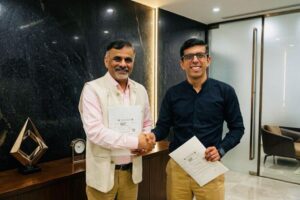
Vedam School of Technology Expands to Gurgaon with Sushant University After Strong Early Outcomes in Pune

Vedam School of Technology has announced the launch of its Gurugram campus in collaboration with Sushant University on Golf Course Road, marking its first major expansion beyond its founding campus in Pune, which was launched in 2025. With this move, Vedam brings its AI-first engineering model to Gurugram—one of India’s biggest technology and startup hubs, and the largest IT hub in North India.   Vice Chancellor of Sushant University, Prof. (Dr.) Rakesh Ranjan with Piyush Nangru, Founder of Vedam School of Technology   The Gurugram campus will offer a four-year undergraduate programme in Computer Science and Artificial Intelligence, where students will study under Vedam’s industry-driven academic model while earning a Bachelor of Technology (B.Tech) degree from Sushant University, a UGC-recognised and NAAC-accredited institution.   Speaking on the collaboration, Prof. (Dr.) Rakesh Ranjan, Vice Chancellor of Sushant University, Gurugram, said, “Sushant University continues to invest in building an education ecosystem centred on technology and innovation. Through this partnership with Vedam, we are enabling students to explore, build, and engage with cutting-edge technologies in a structured academic environment.”   The partnership brings together Sushant University’s academic foundation and Vedam’s industry-led learning model, with a shared focus on making engineering education more practical, application-driven, and aligned with how technology is evolving in the real world. By combining academic structure with hands-on learning, the collaboration aims to create an environment where students don’t just study concepts, but actively apply them in real-world contexts from an early stage. “We chose Gurgaon for a reason, it’s where the best tech opportunities already exist. At the Vedam Gurgaon campus, students don’t just prepare for top companies, they grow right next to them,” said Piyush Nangru, Founder, Vedam School of Technology. With Gurugram, we’re placing students right in the middle of an active tech ecosystem, where they don’t just study concepts, but see how those concepts are applied in real companies, on real problems, every single day. Our goal is simple — to build engineers who can contribute from day one, not just graduate with a degree.   Vedam’s expansion into Gurugram is a strategic step aligned with its focus on industry proximity. The city is part of the Delhi-NCR corridor, home to over 10,000 startups, 600+ MNCs, and a significant concentration of Global Capability Centres (GCCs). According to industry reports, India had over 1,580 GCCs as of FY2023, with NCR emerging as a key hub. For students, this means greater exposure to real-world problem environments and closer access to companies shaping modern engineering work.   At the core of Vedam’s offering is an AI-first, build-oriented curriculum designed to move beyond theoretical learning. Students begin hands-on work from the first year, with a strong emphasis on real-world systems, open-source contributions, and problem-solving across domains such as AI/ML, cybersecurity, NLP, blockchain, robotics, and DevOps.   The team behind Vedam comes with a proven placement expertise of 7+ years of experience in higher education, upskilled 20,000+ students & has a 1000+ strong hiring partners network. Last year more than 1000 students were placed across.    The curriculum is designed and led by Subhesh Kumar (Head of Academics at Vedam), a former Google engineer and a five-star coder from Delhi Technological University. The academic team at Vedam have mentored over 5,000 students and got them selected to top tech companies like Google, Amazon and Atlassian. The learning model includes regular project reviews, one-on-one mentorship, and structured guidance to ensure consistent skill development.   This approach is already translating into early outcomes. In the first year itself, 8+ students have secured paid internships. Some students have also started building real-world credibility at a global level — Mohammad Sharief has earned over Rs. 4.5 lakh through bug bounties on platforms like HackerOne, while Krishiv secured a Rs. 2.7 lakh LFX mentorship with The Linux Foundation. Notably, all of this has been achieved within the first year of the programme.   Students at the Gurugram campus will benefit from Sushant University’s infrastructure, including modern lecture theatres, computer labs, a networked library, high-speed internet, amphitheatre and auditorium spaces, along with sports facilities such as tennis courts, basketball courts, volleyball courts, cricket nets, and a football ground. This is complemented by Vedam’s build-focused ecosystem, which includes innovation labs, coding clubs, collaborative workspaces, and dedicated doubt-solving environments designed to support continuous learning and experimentation.   Vedam’s expansion is backed by early outcomes from its Pune campus and students have also engaged directly with industry leaders through mentorship and visiting faculty sessions, working on real-world AI products and systems.   For students exploring a future in Computer Science and Artificial Intelligence, the Gurugram campus brings together Vedam’s application-driven learning model with the advantages of studying in one of India’s most active technology ecosystems. More information is available on Vedam School of Technology’s official website www.vedam.org. Admissions for the Vedam Gurugram campus are now open. Entry is through VSAT — a national-level online assessment — followed by a personal interview and counselling. Only the top 5% earn a place.   Vedam isn’t for everyone. It’s for those who are ready to build, push limits, and lead in the age of AI.

Vedam School of Technology Expands to Gurgaon with Sushant University After Strong Early Outcomes in Pune Read More »

TVS Motor Records 30% Growth in Revenue and 40% Growth in Operating PBT in FY 2025-26

Highest ever sales of 5.9 Mn units and Revenue of Rs. 47,270 Crs in FY26 Q4 EBITDA is higher at 13.1%; Q4 Revenue is highest at Rs. 12,808 Crs   TVS Motor Company posted highest ever revenue for the financial year 2025-26 at Rs. 47,270 Crores registering a growth of 30% as against Rs. 36,251 Crores recorded in 2024-25.   Operating EBITDA for the year at 12.9% improved by 60 bps over the last year. The Company’s Operating PBT for the year ended March 2026 grew by 40% at Rs. 4,975 Crores as compared to Rs. 3,563 Crores reported during previous year.   During the year, the Board of Directors of the Company, at its meeting held on March 24, 2026 declared an interim dividend of Rs. 12 per equity share (1,200%), involving an aggregate payout of Rs. 570 Crores for the financial year ended March 31, 2026. Further during the year, the Company also allotted 4 fully paid bonus Non-Convertible Redeemable Preference Share (NCRPS) having a face value of Rs. 10 each for every equity share held, amounting to Rs. 1,900 Crores, with the maturity date of September 01, 2026.   SALES FY 2025-26 During the year ended March 2026, the overall two and and three-wheeler sales of TVS Motor, grew by 24% at 58.89 Lakh units as against 47.44 Lakh units in the year 2024-25. Motorcycles sales during the fiscal year grew by 24% recording 27.13 Lakh units as against 21.95 Lakh unit in the year ended March 2025. Scooter sales during the fiscal year grew by 27% at 24.13 Lakh units as against 19.04 Lakh units in the year ended March 2025.   Electric vehicles grew by 33% registering sales of 3.71 Lakh units in the year 2025-26 as against 2.79 Lakh units during 2024-25. TVS Motor now has more than 9 Lakh delighted EV customers.   Three-wheeler sales for the fiscal year grew by 63% at 2.19 Lakh units in the year ended March 2026 as against 1.35 Lakh units in the year ended March 2025.   Q4 – PERFORMANCE In the quarter ended March 2026, TVS Motor achieved highest ever quarterly revenue of Rs. 12,808 Crores.   During the quarter under review, the operating EBITDA margin is at 13.1%, as against normalised EBITDA of 12.5% in Q4 2024-25, representing a YoY improvement of 60bps. In the previous year 2024-25, the Production Linked Incentive (PLI) benefit pertaining to the full year was recognised in Q4 2024-25, resulting in a revenue of Rs. 9,550 Crores and operating EBITDA margin of 14.0%. Excluding the PLI benefit attributable to earlier quarters in Q4 2024-25, the normalised EBITDA was at 12.5% in Q4 2024-25 and the normalized revenue grew by 36% in Q4 2025-26.   SALES Q4 2025-26 The overall two-wheeler and three-wheeler sales including International Business grew by 28% at 15.60 Lakh units in the quarter ended March 2026 as against 12.16 Lakh units registered in the quarter ended March 2025. Motorcycle sales for the quarter ended March 2026 grew by 23% registering 6.93 Lakh units as against 5.64 Lakh units in quarter March 2025. Scooter sales for the quarter ended March 2026 grew by 32% registering 6.60 Lakh units as against 5.02 Lakh units in the fourth quarter of 2024-25.   Electric vehicles grew by 51% registering sales of 1.15 Lakh units in the quarter ended March 2026 as against 0.76 Lakh units during the quarter ended March 2025.   Three-wheeler sales for the quarter under review grew by 65% registering 0.60 Lakh units as against 0.37 Lakh units in the fourth quarter of 2024-25.   About TVS Motor Company TVS Motor Company (BSE:532343 and NSE: TVSMOTOR), part of TVS Venu Group, is a reputed two and three-wheeler manufacturer globally, championing progress through sustainable mobility with four state-of-the-art manufacturing facilities located in India and Indonesia. Rooted in our 100-year legacy of trust, value, and passion for customers, it takes pride in making internationally accepted products of the highest quality through innovative and sustainable processes. TVS Motor is the only two-wheeler company to have won the prestigious Deming Prize. Our products lead in their respective categories in the J.D. Power IQS and APEAL surveys. We have been ranked No. 1 Company in the J.D. Power Customer Service Satisfaction Survey for four consecutive years. Our group company Norton Motorcycles, based in the United Kingdom, is one of the most emotive motorcycle brands in the world. Our subsidiary in the personal e-mobility space, TVS Ebike Company AG, has a leading position in the e-bike market in Switzerland. TVS Motor Company endeavours to deliver the most superior customer experience across 90 countries in which we operate. For more information, please visit www.tvsmotor.com.

TVS Motor Records 30% Growth in Revenue and 40% Growth in Operating PBT in FY 2025-26 Read More »

Xflow Becomes the First Cross-Border Payments Platform to Bring Compliant Stablecoin Acceptance to Indian Businesses

Xflow, India’s leading cross-border payments infrastructure company, today announced the launch of a pilot that enables Indian businesses to accept payments in USDC and USDT from anywhere in the world, and compliantly convert them to INR.   Anand Balaji, Co-founder and CEO, Xflow  This solution allows stable-native platforms and cross-border payment providers to offer stablecoin acceptance as a payment method for their customers without the platforms or their customers holding, managing, or taking custody of stablecoins. The stablecoin leg stays entirely outside India. Only fiat enters India, via an AD Category I bank, with full compliance documentation. A growing set of global businesses are making payments in stablecoins. For Indian MSMEs, service exporters, SaaS companies, this has created a barrier as there is no compliant mechanism to accept stablecoin payments for trade transactions and bring them into India. Xflow has heard directly from Indian businesses that have lost customers because of this gap. To address this, Xflow has partnered with overseas licensed player to accept and off-ramp stablecoins on behalf of Indian businesses, entirely outside India, and then bring the resulting funds into India through traditional, regulated fiat rails.  “Indian businesses should not be losing business because their international customers want to pay in stablecoins. Building a seamless & compliant money-movement infrastructure for exporters is exactly what Xflow is here to do. We are quite excited about this release and have initially rolled this out to select platforms, giving their users the best of both worlds by supporting stablecoin transactions compliantly,” — Anand Balaji, Co-Founder, Xflow. Platforms that already offer stablecoin wallets to customers – enabling them to receive payments from end-users – can now compliantly bring those payments into India. Xflow’s cross-border stack handles the entire off-ramp and settlement flow, so platforms can offer their customers a complete stablecoin-to-INR solution without building compliance infrastructure themselves. Xflow will soon roll this pilot out to all stable native platforms. About XFlow The 21st century world of international commerce is hobbled by a 20th century experience for cross border payments. XFlow is a financial services and infrastructure company that wants to dramatically upgrade the cross border payments experience for businesses of all sizes – from freelancers to mid-market enterprises and all the way to large platform enterprises servicing millions of customers. XFlow’s name reflects its mission – cross-border payments that flow smoothly and transparently. XFlow is built and run by payments industry veterans, Anand Balaji and Ashwin Bhatnagar, bringing together deep payment industry experience and rich technology domain expertise. XFlow enjoys solid financial footing and is funded by leading international investors, including Lightspeed, General Catalyst and Stripe. For more information, visit: www.xflowpay.com

Xflow Becomes the First Cross-Border Payments Platform to Bring Compliant Stablecoin Acceptance to Indian Businesses Read More »

AIPL Launches Ultra-Premium Residences Riviera at AIPL LakeCity, Sector-103, Dwarka Expressway

Leading real estate developer AIPL announced the launch of Riviera at AIPL LakeCity, an ultra-premium residential address at Sector-103, Dwarka Expressway, Gurugram. The grand launch event was attended by more than 1,000 guests, including its channel partners.   AIPL Launches Ultra-Premium Residences Riviera at AIPL LakeCity, Sector-103, Dwarka Expressway   Positioned within the larger ecosystem of AIPL LakeCity, Riviera has been conceptualised as a premium residential destination that blends nature-inspired living with modern urban convenience. The project offers thoughtfully designed residences complemented by world-class amenities, expansive green spaces, and seamless connectivity to both Delhi and Gurugram.   During the event, AIPL revealed the inaugural launch price for the residences starting at Rs. 17,450 per sq. ft., after a special inaugural benefit of Rs. 500 per sq. ft. for the first 50 bookings. DC and car parking are included in the launch pricing, making the offering particularly attractive for early buyers and investors.   Speaking on the occasion, Ishaan Singh, Director, AIPL, said, “The response to Riviera at AIPL LakeCity has been incredibly encouraging and reflects the growing aspiration for elevated living experiences in Gurugram. Today’s homebuyers want a lifestyle that offers wellness, convenience, connectivity, and a sense of community. Riviera has been designed around these evolving expectations. From its nature-inspired environment and premium residences to its strategic location on Dwarka Expressway, every aspect of the project has been envisioned to create long-term value for residents as well as investors. We believe Riviera will emerge as one of the most distinguished addresses in this micro-market.”   Located strategically on Dwarka Expressway, Sector-103 has emerged as one of NCR’s fastest-growing luxury residential corridors, driven by improving infrastructure, enhanced connectivity, and rising demand for premium living environments. Riviera aims to cater to discerning homebuyers seeking not just a residence, but a lifestyle defined by comfort, exclusivity, and accessibility.   The launch event witnessed strong buyer interest and engagement throughout the evening, reinforcing the increasing demand for high-quality developments across the Dwarka Expressway region.   With Riviera at AIPL LakeCity, AIPL aims to further strengthen its presence in Gurugram’s premium residential segment while offering a lifestyle where luxury, location, and modern living come together seamlessly.

AIPL Launches Ultra-Premium Residences Riviera at AIPL LakeCity, Sector-103, Dwarka Expressway Read More »

Art Basel Hong Kong 2026: Where The World Comes To See

Between the harbour and the convention hall, between tradition and the digital frontier, Art Basel Hong Kong set the tone for a new era. Robb Report India was there — with two of India’s most compelling creative voices, artist Siddharth Kerkar and sculptor Jayesh Sachdev.   Art Basel Hong Kong 2026 Inside the Hong Kong Convention and Exhibition Centre—its glass façade staring out over Victoria Harbour like an eye fixed on the horizon—the art world had once again gathered for its annual communion starting March 25, 2026. Art Basel Hong Kong, now in its 13th edition, returned with 240 galleries from 42 countries and territories. Over half of participating galleries operate spaces within the Asia-Pacific region, a fact that underscores how regional voices are echoing louder than ever before. Preview days on March 25 and 26 drew a high-density turnout of collectors, curators, institutional buyers, and the curious. By the time the public doors opened on March 27, Asia’s largest art fair had already closed many deals. Robb Report India visited the fair grounds on the preview day for a closer look. The fair offered a particularly immersive, almost educational vantage point. Robb Report India exclusively covered Art Basel through the lens of two artists whose relationship with art is anything but passive or touristic: Siddharth Kerkar, the Goa-based artist, restaurateur, and founder of India’s largest affordable art festival; and Jayesh Sachdev, the Pune-based sculptor and founder of Quirk Box, who recently collaborated with Zara—the first Indian artist to do so, across an art-fashion-sculpture partnership. New Sectors, New Conversations The 2026 edition introduced Echoes, a sector dedicated entirely to works made within the past five years. At Double Q Gallery’s Hong Kong debut, Polish Minimalist Natalia Załuska transformed the booth into an immersive work of geometric abstraction. Picture edges dissolving between two- and three-dimensions. At Max Estrella, Madrid, Tiffany Chung’s embroidered maps of ancient spice routes hung alongside Miler Lagos’ astonishing sculptures of books carved into dense, geological forms. Hyun Nahm’s work at Whistle fused classical East Asian aesthetics with digital materiality, drawing on the Korean concept of chukgyeong—encompassing nature’s vastness into miniature forms—to compress ideas about telecommunication infrastructure and global digital consumption into compact sculptural form. Encounters, the sector dedicated to monumental installations, underwent a transformation. For the first time, this section was curated collectively by four Asia-based curators led by Mami Kataoka, alongside Isabella Tam, Alia Swastika, and Hirokazu Tokuyama. Their organising framework was the Five Elements, the cosmological system found across Asian traditions, with each element—space/ether, water, fire, wind, earth—assigned to specific areas throughout the convention halls. Perhaps no addition to the 2026 fair generated as much conversation as Zero 10, Art Basel’s global initiative dedicated to art of the digital era, making its Asia debut after launching at Art Basel Miami Beach in December 2025. Named for Kazimir Malevich’s seminal 1915 exhibition, it featured 14 exhibitors and asked a simple, urgent question: How can digital art be exhibited, contextualised, and collected within today’s art economy? Curated by Eli Scheinman and featuring 14 exhibitors including Art Blocks, bitforms gallery, and Silk Art House, the sector asked hard questions about provenance, and community in an age where digital culture evolves faster than institutional frameworks. One moment stood out: DeeKay’s digital animations that traced psychological states through vivid, almost hallucinatory movement. The work was unabashedly algorithmic and yet unmistakably emotional, a combination that felt like a precursor of where image-making is headed. Hong Kong Art Basel 2026: Through Indian Eyes Sachdev, whose practice moves between painting, sculpture, mythology-driven installations, and works rooted in ancient Indian iconography and rendered in chrome, glass, and reflective contemporary surfaces, arrived in Hong Kong attuned to a frequency the city answered immediately.“What I like about cities like this—which are really modern—is that you can still find the contrast of them being so deeply rooted culturally. These are ancient cultures which have now built into contemporary architectural and urban spaces. That dichotomy is very interesting,” he says. Inside the fair’s halls, he found his own reflections in unexpected places, including the work of Fung Studios, a Singapore-based design agency whose graphic work, carrying both Japanese and Southeast Asian influences, had long been a reference in his own practice. “It was very interesting to see some of that here,” he said while speaking to Robb Report India. The fair’s embrace of multimedia, mixed media, and architectural installation formats also sat well with an artist who refuses to be categorised by medium alone. “My work is not bound to one medium,” he noted. “I don’t just work with paint or sculpture alone, so this place having a mix of all those different mediums was something I quite enjoyed.” Kerkar, a Central Saint Martins alumnus who has navigated art fairs since childhood—accompanying his father, the celebrated Goan artist Subodh Kerkar, to exhibitions across Europe and as far as the Venice Biennale—arrived with practised eye. By the time Art Basel’s halls had been traversed, his tally included at least 10 museums and well over 100 gallery booths. What he came away with was not a list though. “You don’t know what stays with you or where inspiration comes from,” he says in conversation with Robb Report India. For Kerkar, the act of absorbing is slow and cumulative, a process that often only reveals itself later alone, scrolling back through photographs taken in the heat of the fair. What Kerkar absorbed at the fair was less any single work than a cumulative shift in material sensibility—the reappearance of textile, of slow craft, of the handmade in contexts where one might have expected the digital to dominate. The Encounters sector, in particular, gave him pause: the yarn and fibre works by Tandel and Kang representing a return to matter, to touch, that he found both unexpected and necessary. Between Kerkar’s patient, cumulative absorption and Sachdev’s immediate, parallel-drawing responsiveness, what emerged was a portrait of two very different artistic temperaments arriving at the same conclusion: that Hong Kong, in this particular

Art Basel Hong Kong 2026: Where The World Comes To See Read More »

Vietnam Airlines, Saigontourist and Innovations India ink MoU at Business Forum Attended by President To Lam and CM Devendra Fadnavis

In a significant step towards strengthening cultural diplomacy, tourism cooperation and creative collaboration between India and Vietnam, The state-owned national carrier Vietnam Airlines and Saigontourist Group -Vietnam’s oldest and leading state-owned tourism group officially inked a Memorandum of Understanding (MoU) with Innovations India for collaboration on two prestigious India–Vietnam initiatives: the upcoming Bollywood feature film SILAA and the 5th edition of Namaste Vietnam Festival to be held in Vietnam in 2026.   President To Lam, CM Devendra Fadnavis, VNA Chairman Dang Ngoc Hoa and Captain Rahul Bali   The MoU signing ceremony took place in Mumbai on 7 May 2026 in the esteemed presence of H.E. Mr. To Lam, President of Vietnam and Devendra Fadnavis, Chief Minister of Maharashtra along with several distinguished dignitaries and senior leaders from both nations including Culture & Tourism Minister of Vietnam H.E. Mr. Ho An Phong & Indian Ambassador to Vietnam H. E. Tshering Sherpa.   This landmark collaboration forms part of the historic first official state visit of Vietnamese President H.E. Mr. To Lam to India and coincides with the 10th anniversary celebrations of the Vietnam–India Comprehensive Strategic Partnership, underscoring the growing friendship, trust, and strategic cooperation between the two nations.   The MoU was formally signed by Dang Ngoc Hoa, Chairman of Vietnam Airlines, Nguyen Huu Y Yen, Chairwoman of Saigontourist Group, and Captain Rahul Bali, Managing Director of Innovations India, who is also the Producer of SILAA and the Curator of Namaste Vietnam Festival.   Speaking on the occasion, President H.E. Mr. To Lam said, “Vietnam and India share a timeless friendship built on trust, cultural understanding, and mutual respect. Collaborations in cinema, tourism, and cultural exchange not only strengthen people-to-people connections but also open new avenues of cooperation between our nations. I am pleased to see institutions from Vietnam and India coming together to further deepen the Comprehensive Strategic Partnership during this important milestone year.”   Maharashtra Chief Minister Devendra Fadnavis stated, “Maharashtra has always been India’s gateway for culture, cinema, business, and international collaboration. The partnership between Vietnam and Indian enterprises is a wonderful example of how creative industries and tourism can become powerful instruments of diplomacy and economic growth. Such initiatives will further strengthen the bonds of friendship between India and Vietnam while creating new opportunities for tourism, investment, and cultural engagement.”   Captain Rahul Bali added, “It is a matter of immense pride for us to collaborate with the Government of Vietnam through iconic institutions like Vietnam Airlines and Saigontourist Group during such a historic milestone year for India–Vietnam relations. Through cinema, tourism and cultural diplomacy, we aim to create impactful platforms that bring the people of Vietnam and India closer and will inspire greater travel, deeper understanding and stronger engagement between them.”   The upcoming Bollywood film SILAA is an ambitious cinematic collaboration that seeks to build a powerful emotional and cultural bridge between India and Vietnam while showcasing the beauty, hospitality, heritage, and tourism potential of Vietnam to Indian and global audiences. Directed by Omung Kumar, the movie stars Harshvardhan Rane and Sadia Khateeb in leading roles. Produced by Captain Rahul Bali’s venture, Innovations India along with Zee Studios, Blue Lotus Pictures and Stark Entertainment the film is scheduled for release in 2026.   Meanwhile, the 5th edition of Namaste Vietnam Festival is set to further strengthen bilateral engagement through a vibrant celebration of cinema, tourism, culture, fashion and people-to-people exchanges. Over the years, the festival has emerged as one of the most prominent platforms dedicated to enhancing India–Vietnam friendship and cultural diplomacy.   This strategic collaboration between Vietnam Airlines, Saigontourist Group and Innovations India is expected to significantly boost tourism exchanges, film cooperation and cultural connectivity between the two nations. At a time when India and Vietnam are celebrating a decade of their Comprehensive Strategic Partnership, initiatives such as these reaffirm the shared commitment of both countries towards strengthening bilateral relations through soft power, tourism, creative industries, and cultural diplomacy. The MoU is being viewed as a major milestone in the evolving India–Vietnam partnership and a powerful example of how cinema, tourism and cultural initiatives can further deepen friendship and cooperation between the people of both nations.

Vietnam Airlines, Saigontourist and Innovations India ink MoU at Business Forum Attended by President To Lam and CM Devendra Fadnavis Read More »

Translate 2026 at MAHE Bengaluru Showcases India's Push Toward Real-World Healthcare Innovation

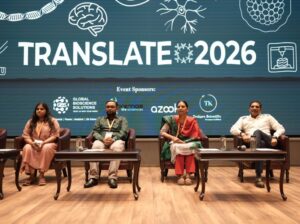
Manipal Institute of Regenerative Medicine (MIRM), a constituent unit of Manipal Academy of Higher Education (MAHE), an Institution of Eminence Deemed to be University, organised TRANSLATE 2026, a two-day symposium focused on accelerating the journey of biomedical research from laboratory discovery to patient care.   During the Inaugural Session of TRANSLATE 2026   Supported by the Anusandhan National Research Foundation (ANRF), the symposium brought together scientists, clinicians, medtech startups, healthcare innovators, and industry leaders to explore how emerging biomedical technologies can evolve into scalable, clinically relevant, and industry-ready healthcare solutions.   At a time when healthcare systems are increasingly demanding patient-centric, technology-driven solutions, the conference highlighted the growing importance of translational research and deeper collaboration among academia, hospitals, startups, and industry. Experts at the symposium emphasised that many of the most impactful healthcare breakthroughs today emerge through interdisciplinary collaboration that connects scientific discovery with clinical and commercial application.   Inaugurating the conference, Prof. Madhu Veeraraghavan, Pro Vice Chancellor, MAHE Bengaluru, said, “Artificial Intelligence is transforming research and healthcare at an unprecedented pace, but meaningful innovation will ultimately depend on how effectively we translate knowledge into real patient impact. Platforms like TRANSLATE 2026 reflect MAHE Bengaluru’s commitment to building stronger collaborations between academia, clinicians, and industry to accelerate healthcare innovation.“   The symposium featured discussions on several emerging areas shaping the future of healthcare innovation, including advanced biomaterials, regenerative medicine, 3D and 4D bioprinting, tissue engineering, infection-resistant medical surfaces, and translational medical devices. Sessions explored how next-generation biomaterials and regenerative technologies are creating new possibilities in implant technologies, regenerative therapies, and biomedical devices designed for improved patient outcomes.   Industry and startup participation formed a key highlight of the event, with entrepreneurs and innovators sharing insights into the challenges of translating healthcare technologies from research environments into commercially viable and clinically deployable solutions. Discussions also focused on scaling indigenous medtech innovation, strengthening healthcare manufacturing ecosystems, and improving pathways for clinical adoption.   Speaking about the significance of the symposium, Prof. Jyothi Prasanna, Director, MIRM, said, “TRANSLATE 2026 was envisioned as a platform to bring together researchers, clinicians, innovators, and industry leaders to collectively address how scientific discoveries can be translated into meaningful patient impact. The future of regenerative medicine and biomaterials research lies in interdisciplinary collaborations that can accelerate clinically relevant and socially impactful healthcare solutions.“   By bringing together voices from science, healthcare, technology, and entrepreneurship, TRANSLATE 2026 reinforced MAHE Bengaluru’s growing role in advancing translational biomedical research and supporting India’s emerging ambitions in medtech, regenerative medicine, and healthcare innovation.

Translate 2026 at MAHE Bengaluru Showcases India's Push Toward Real-World Healthcare Innovation Read More »

Big Idea Ventures and Mars Petcare Launch 2026 Global Pet Food Innovation Program in Collaboration with AAK, Buhler, Givaudan, and Ingredion

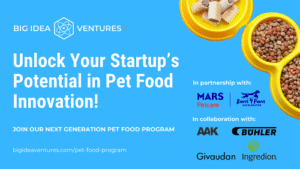
An Innovation Powerhouse: The initiative unites world-class experts in FoodTech, pet care, and ingredients to accelerate the transition toward a more sustainable pet food supply chain.  Seeking New and Scaling Ventures: The program is in pursuit of bold companies with groundbreaking solutions in alternative proteins, fats, oils and novel ingredients. Strategic Expansion in Asia: The 2026 program will place a stronger emphasis on Asia, reflecting the region’s growing importance in more sustainable food innovation and pet nutrition.   Big Idea Ventures and Mars Petcare announce the launch of the Next Generation Pet Food Program, in collaboration with industry leaders AAK, Buhler, Givaudan, and Ingredion. Now in its third year, the program has become a leading global platform for advancing sustainable solutions in pet nutrition, focused on identifying and scaling the next generation of breakthrough technologies.   Unlock Your Startup’s Potential in Pet Food Innovation The program is seeking startups with groundbreaking low carbon materials that can be applied to pet food, with a strong focus on alternative proteins, fats, oils and novel ingredients. The Mars Petcare Raws4Paws Accelerator is investing in innovation and searching for the next generation of suppliers to help source the best ingredients to support healthy pets and help address concerns about ingredient accessibility, security, sustainability and changing consumer behavior in the pet industry. Elisabetta Pierangelo, VP R&D Mars Pet Nutrition, said, “We are committed to exploring new technologies and scaling innovation that could reduce the environmental impact of pet food. Through previous cohorts, we’ve uncovered promising new solutions and seen transformative technological developments. I’m eager to build on that momentum and witness the breakthroughs this year’s program will unlock.” The initiative connects innovators from the human food space to the pet food industry and provides expertise from global leaders to help accelerate their path to market. Over the past two years, the program has generated valuable insights into emerging technologies with several of the startups now testing concepts that could play a key role in shaping the future of sustainable pet food. Andrew D. Ive, Founder and Managing General Partner of Big Idea Ventures, stated, “Our work with Mars Petcare and our partners has evolved into a focused engine for identifying and scaling the next generation of pet food ingredients. We are connecting high-quality startups with the corporations that can actually support these innovations to market, particularly across alternative proteins, fats, and novel ingredients. The priority now is not just discovery, but accelerating adoption and creating a more efficient path to commercial reality. With Asia playing an increasingly important role, this is about building a global system that consistently delivers better, more sustainable ingredients at scale.” Selected companies will benefit from expert guidance, potential commercial partnerships, $15,000 and the opportunity to showcase their solutions at the Asia-Pacific Agri-Food Innovation Summit in Singapore. The 2026 program is open to global applicants, with a strong preference for scalable solutions based in or focused on the Asia-Pacific region, innovators from all geographies are encouraged to apply on the program’s website: www.bigideaventures.com/pet-food-program/.

Big Idea Ventures and Mars Petcare Launch 2026 Global Pet Food Innovation Program in Collaboration with AAK, Buhler, Givaudan, and Ingredion Read More »

From Kala Khatta to Masala Cola: Bombay Banta Raises Rs 8 Crore to Disrupt India's Soft Drink Market

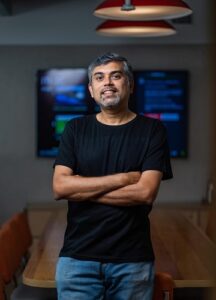
Backed by DSG Consumer Partners, this fast-growing homegrown beverage startup has been reinventing nostalgic Indian flavours, with its distinctive range of carbonated and non-carbonated drinks, along with lower-sugar variants, and more With ambitions to build a modern Indian beverage brand for the world – Bombay Banta has already created a strong market presence through its premium product portfolio positioning and consciously crafted branding The brand’s next exciting phase of growth includes rapid expansion across airlines, luxury hotels, restaurants, and every major quick commerce platform in India   Building on its strong market momentum, Bombay Banta — the country’s fast-growing homegrown beverage brand reimagining the most beloved Indian flavours for today’s modern consumer has raised Rs 8 crore in a Pre-Series A funding round led by DSG Consumer Partners, which also led the company’s seed round in late 2023. This marks a major milestone, as Bombay Banta aggressively accelerates its rapid expansion journey across India’s booming beverage and quick commerce ecosystem. The company has also attracted strategic investment from hospitality entrepreneur Kapil Chopra, founder of EazyDiner and The Postcard Hotel. In the brand’s formative years, the founders were also supported by close hospitality industry collaborators and early investors including Simrita Arora and Chef Deep Mohan Arneja, who contributed to Bombay Banta’s product development and brand-building journey. Akkshita Malhotra and Meet Singh Malhotra, Co-founders at Bombay Banta, shared, “This fundraise marks a significant inflection point for Bombay Banta. It reaffirms our conviction to disrupt the Indian beverage market as a brand that uniquely interprets flavour memories that generations have grown up with. Reimagined for today’s modern consumer with better ingredients, a distinctive range, premium branding, and world-class packaging – this capital with the backing of our investors will enable us to accelerate our vision across India and on a global stage over time.” “Bombay Banta is building a highly differentiated Indian beverage brand at the intersection of nostalgia, flavour and modern consumer relevance. Meet and Akkshita have demonstrated exceptional product instinct and brand-building capability in a highly competitive market, while creating strong resonance with consumers across channels. We are excited to deepen our partnership with them as they continue scaling Bombay Banta into a large and enduring consumer brand,” added Hari Premkumar, Partner, DSG Consumer Partners.   Bombay Banta: Growth story so far Founded in 2021, by the husband-wife duo – Akkshita Malhotra and Meet Singh Malhotra, Bombay Banta was built on a simple but ambitious belief that India’s most iconic local flavours deserved world-class branding, packaging and scale. What began as an attempt to modernise the nostalgic Indian banta experience has rapidly evolved into one of the country’s most exciting beverage brands that is challenging both established and emerging market players. Today, Bombay Banta’s has eight distinctive variants in its current product portfolio of bold, distinctly Indian flavours. Its carbonated range includes – Masala Cola, Masala Soda, Kala Khatta, Jeera Soda, and Lemon Soda, while its non-carbonated range has low-sugar, vitamin-rich lemonades for the health-conscious consumer – Masala Shikanji, Nimbu Shikanji and Jamun Shikanji. Bombay Banta first gained widespread visibility after becoming the featured beverage onboard Vistara Airlines, introducing the brand to premium urban consumers across India. Since then, the brand has rapidly expanded its presence across leading airlines, restaurants, cafés, delivery-first food brands and hospitality groups. As on 2026, Bombay Banta is being served across hundreds of hotels and restaurants across India, including several premium and luxury hospitality brands that now stock the beverages across minibars, in-room dining and restaurant menus. A growing number of restaurant chains and food brands have also begun moving away from traditional global soft drink offerings in favour of Bombay Banta’s modern Indian beverage portfolio. Further, its product range is available across all leading quick commerce and e-commerce platforms including Blinkit, Zepto, Swiggy Instamart, Flipkart Minutes and BigBasket, where the brand has emerged as one of the fastest-growing players in its category. Next phase of rapid growth and expansion: This Pre-Series A raise will fuel Bombay Banta’s next phase of growth. The latest funding will be deployed toward – accelerating Bombay Banta’s pan-India expansion, strengthening distribution, deepening quick commerce penetration, and significantly expanding the product portfolio over the coming months. Bombay Banta is also preparing to launch Diet Vanilla Cola later in May, marking its entry into the zero-sugar, zero-calorie carbonated beverage segment. The company has also seen sharp momentum in business performance. Even before the funding round formally closed, Bombay Banta recorded nearly 50 percent growth in sales during the course of investor discussions, with the founders now targeting a doubling of revenues over the next six months driven by strong summer demand and new product launches. The Pre-Series A round values Bombay Banta at Rs 80 crore, marking a remarkable rise from the company’s early-stage valuation in a relatively short span of time. The rapid acceleration in both customer adoption and investor interest reflects the growing success of Bombay Banta’s vision to build a modern, globally relevant beverage brand rooted in Indian flavours and nostalgia. At its core, Bombay Banta is building far more than a beverage company. The founders believe the next great global beverage brand can emerge from India, rooted in nostalgia, authenticity and local flavour, yet designed for a modern global consumer. As the company enters its next phase of growth, Bombay Banta aims to challenge an industry long dominated by global giants – one Indian flavour at a time. For more information on the brand, visit: Instagram handle @bombaybanta Additional Notes About the founders: Since its inception in 2021, Bombay Banta has become the country’s fastest growing, Indian beverage brand reimagining India’s most-loved nostalgic flavours for today’s modern consumer. Co-founders and husband-wife duo – Akkshita Malhotra and Meet Singh Malhotra, bring deep hospitality and consumer experience backgrounds to the business. Akkshita Malhotra leads brand and consumer strategy at Bombay Banta, she was formerly associated with prestigious hospitality and consumer brands like Nestlé and PVR. Meet Singh Malhotra, fronts the crafting of the unique recipes behind Bombay Banta’s signature flavours,

From Kala Khatta to Masala Cola: Bombay Banta Raises Rs 8 Crore to Disrupt India's Soft Drink Market Read More »